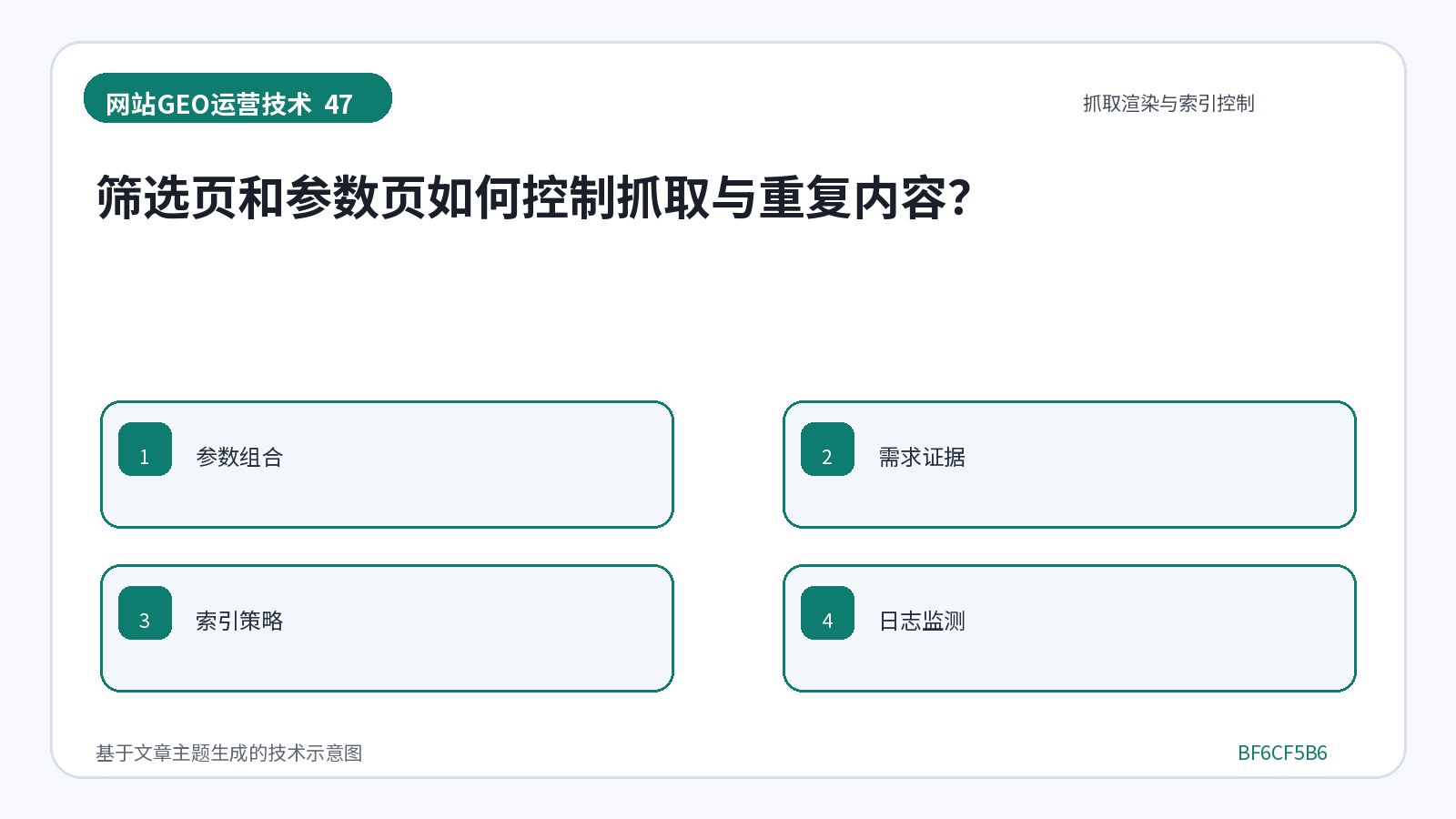
The topic should be seen as a chain of information: who confirms the source data, how the page is displayed, how the machine reads, what the user does next, and how the team reviews it. “How does the filter page and parameter page control capture and repeat content?” First, the filter page and parameter page control capture and duplicate content should be judged back in the full process of “capture render and index control”. The filtering combination can quickly produce a large amount of near-URLs. Only a combination of stable needs, unique aggregations and maintenanceable descriptions is worthy of falling pages, and the rest should control the link discovery and indexing. This means that the page requires both clear conclusions for users and identical information for the grabper, and retention of sources, conditions and updates.
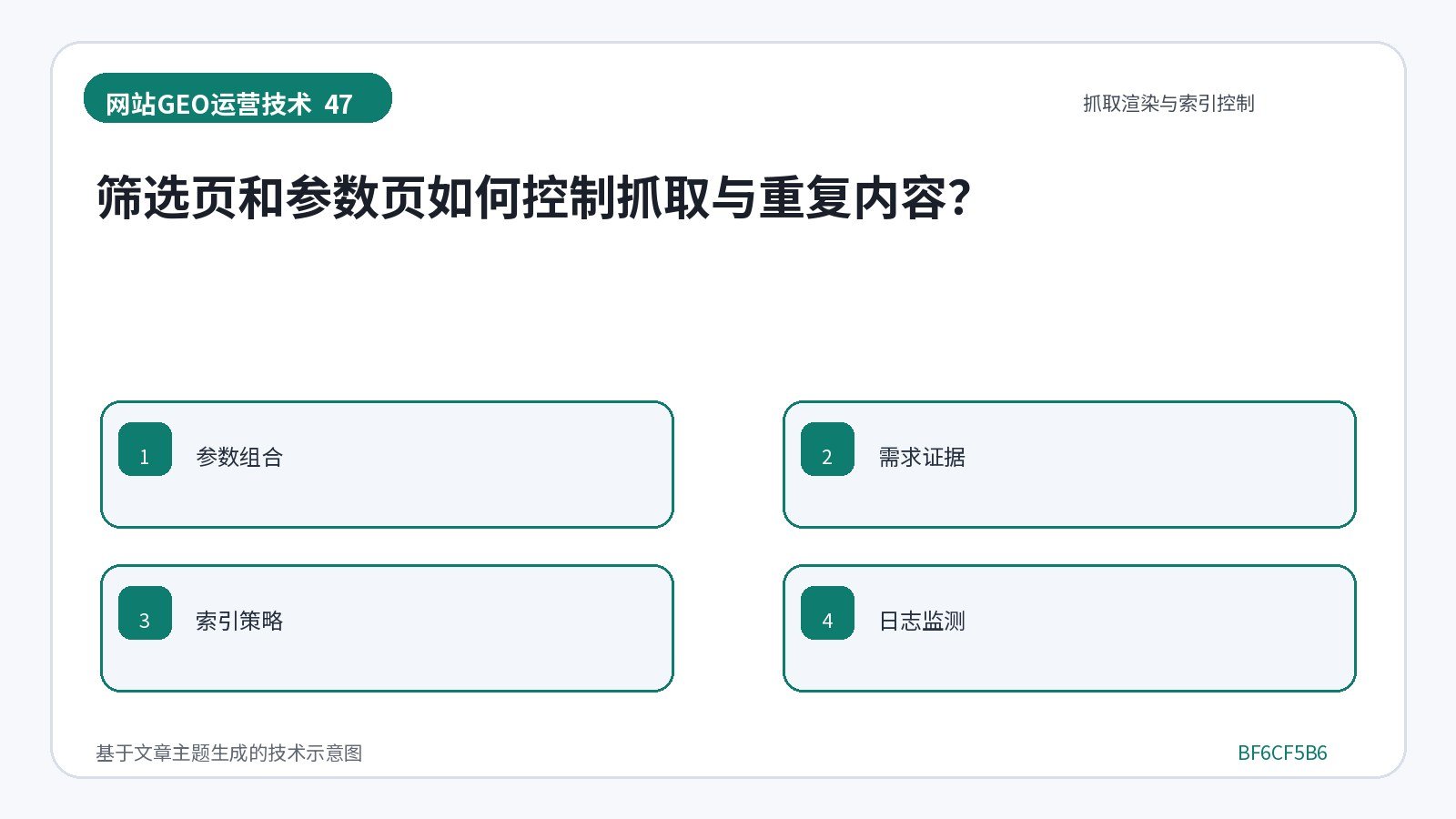
The answer system cannot use the text that it cannot reach in a stable way. The initial HTML, the state code, the link, the normative web site and the rendering of resources determine whether the page can be found; the technical check must be based on the actual capture results, rather than simply looking at the browser. When resources are limited, priority should be given to the parts that block capture, create factual conflicts or mislead procurement. Visual optimization and extension questions can be done later, and cannot take the same priority as high-risk questions.
It is recommended that the work be broken down into three segments: preparation, online and review. The preparation phase completes the number of statistical parameters and combinations, the online phase implements the combination of real needs for retention and the review phase implements the treatment strategy for the unified non-value variant.
This is a question that requires data to be set up with a manual check. Read the log's parameter requests, duplicate page reports and valid landing pages.
The most likely deviation on this topic is that all open-up expands the index, with all shielding and possibly a valuable classification. Therefore, the conditions of exclusion, the cessation rules, and the roll-back should be stated in advance.