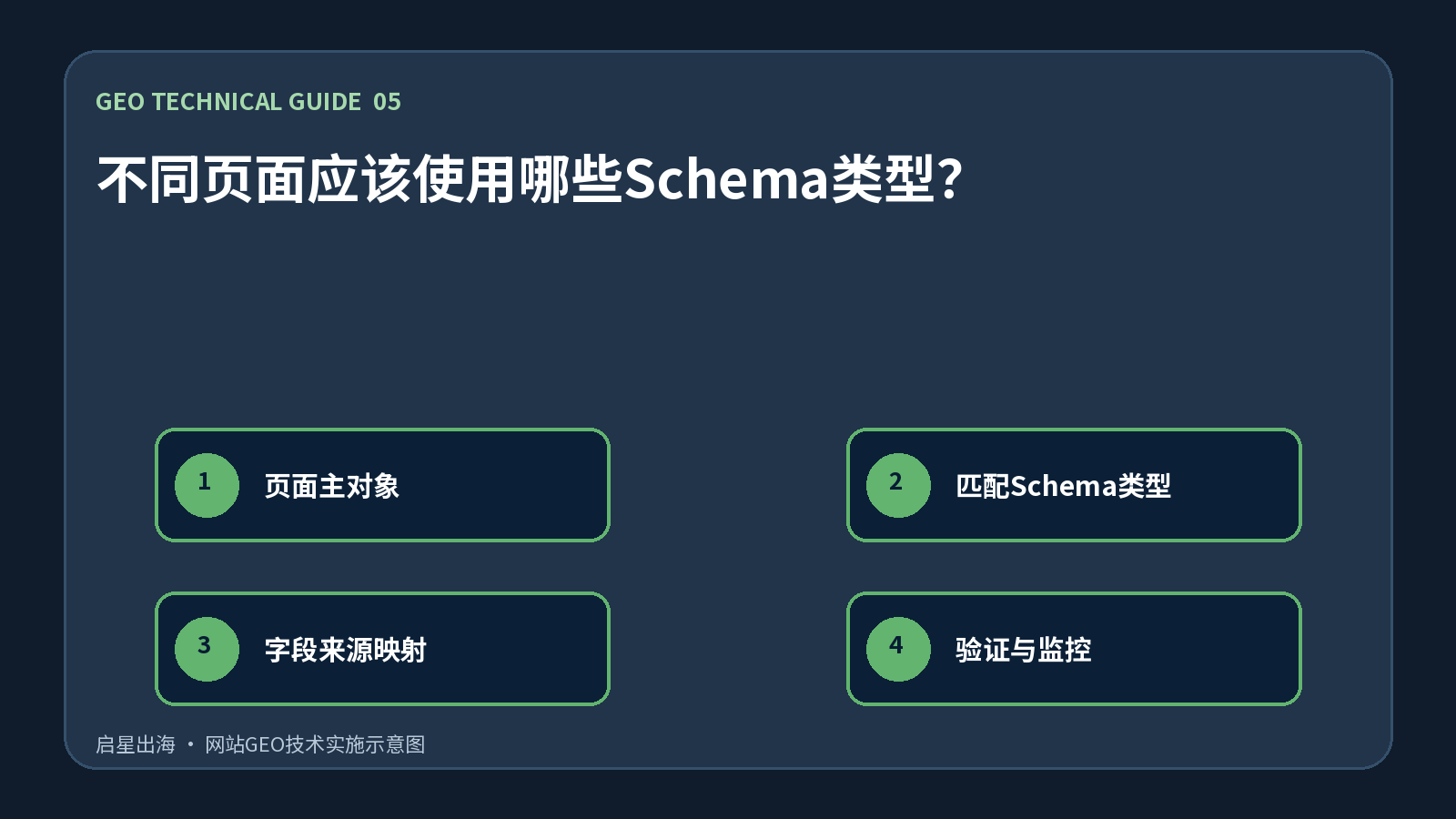
The same website usually includes companies, services, products, courses, lecturers, articles, cases, and FAQ. If all pages are only exported, the machine can only know that the site belongs to a company, but it is not able to judge exactly the main object of the current page. On the contrary, the stacking of Schema, which has nothing to do with the page, creates noise.
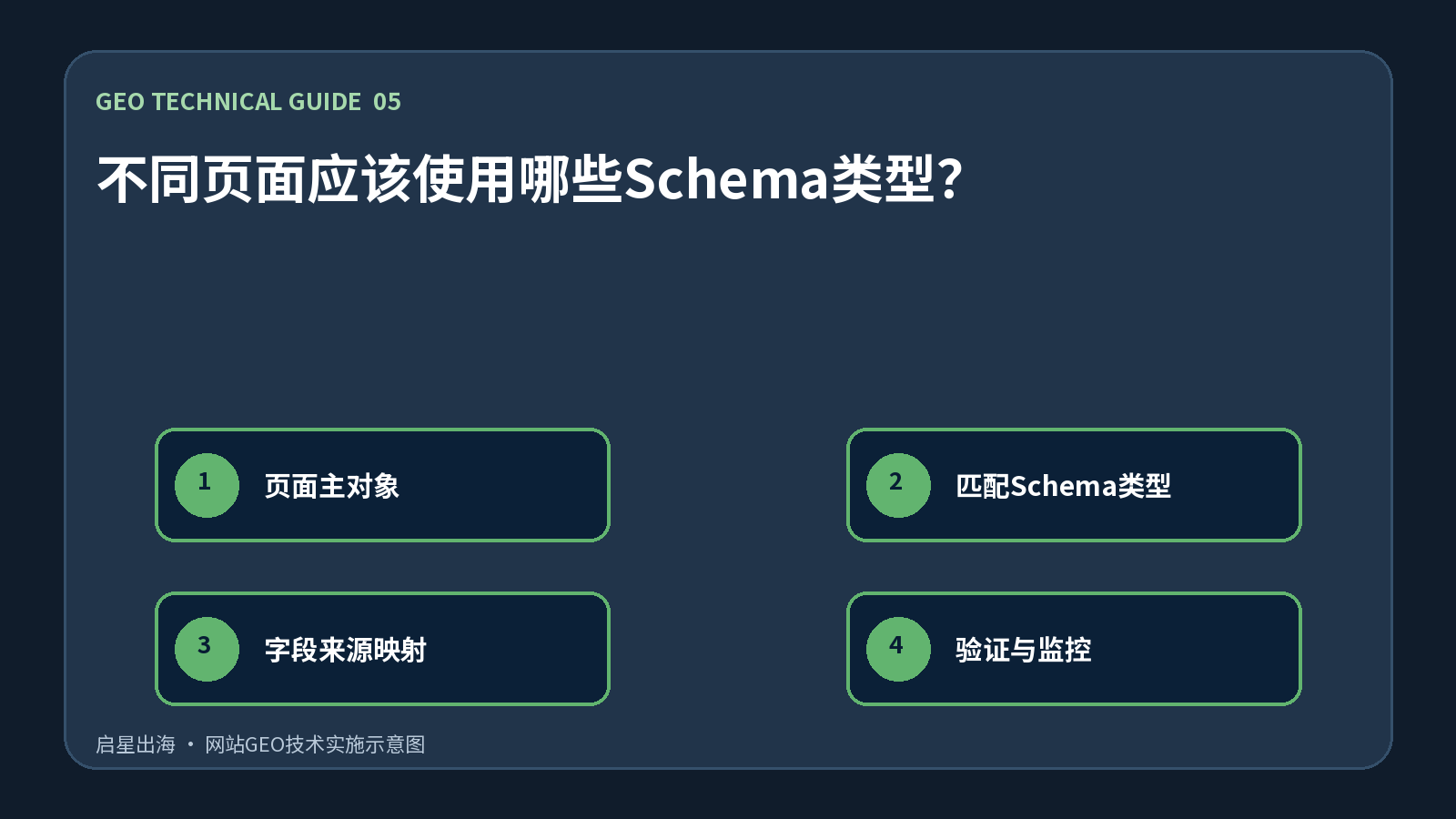
The Schema type should follow the "Performance priority of the page." The company's introduction page can use either Organization or more specific sub-types; the service page is used, the service page is used, the training course is used, the lecturer page is used, the knowledge article is used either Article or BlogPosting, and the navigation path is used to use Breadcrumblist. If the case page primarily describes the project process, it can be used in Article and linked through about, provider, or documents, without creating the non-existent "CaseStudy" wealth.
Creates a page type map that lists template names, main Schema, mandatory fields, recommended fields and data sources. The CMS saves the JSON-LD from a visible field, e.g. the title of the course corresponds to name, the text summary corresponds to description, the face-to-face image, and the lecturer corresponds to the instructor in provider or HasCourseInstance. If the data is missing, it is preferable not to output the attribute, nor not to fill the placeholder. Before the template is up, it is tested separately with a complete record and an incomplete record of a field, confirming that no empty string or invalid date is generated.
Monitoring can add JSON resolution, URL accessability and mandatory field check to the release stream line; use a rich result test and Seach Console to enhance the observation error of the report. A distinction needs to be made between Schema.org semantics that are effective and Google rich: a type that helps the machine to understand, but does not necessarily correspond to Google’s demonstrable results.
Errors include choosing the type of effect based on the desired display, rather than the page content; using the service as a Product and making up the price inventory; exporting FAQPage without a visible question and answer; and exporting a page with multiple conflicting main entities. The more specific the type, the more complete and real data support is required.
When you land on the ground, you should include "page main object, matching Schema type, field source map, validation and monitoring" in the same release form, identifying the content manager, technical officer and date of review. Any change must be accompanied by a check of the page ' s visible content, HTML source code, structured data, internal links and site maps, so as to avoid that the front desk has been updated and machine reading layers remain old values. GEO is not a one-time installation plugin and does not guarantee that any platform will be quoted; it is a set of content and technical projects that continuously improves the accessibility, validation, attribution and citation of information.