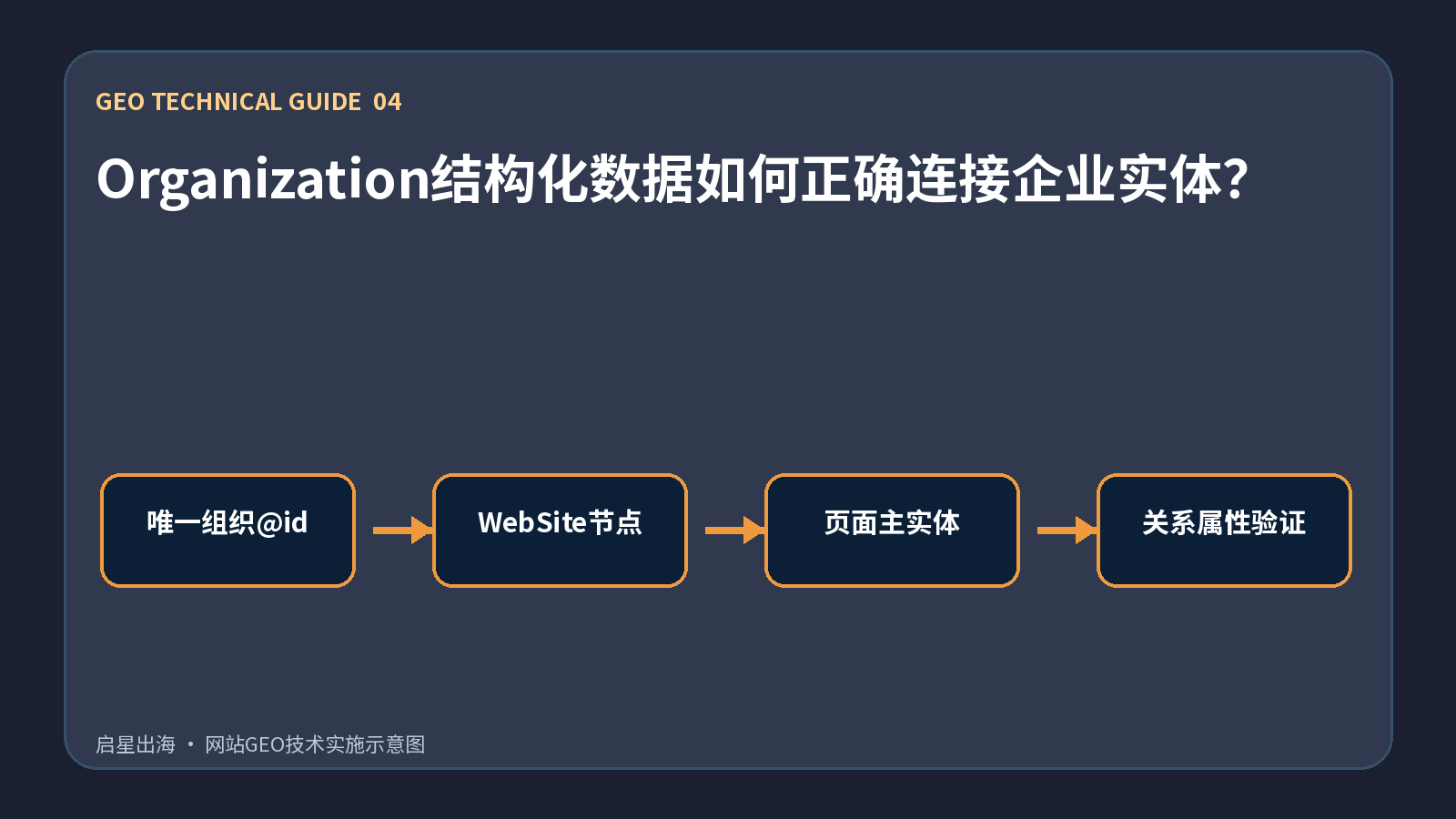
The value of structured data is to organize business names, web sites, Logo, contact details and official accounts into clear machine-readable nodes, rather than directly to allow the website to receive AI recommendations. It should become the root of a site-wide physical map, with the publishers, course providers, service providers and employees associated with the business through the same @id. If a random organizational object is generated on each page, the system sees a large number of similar but not identical entities.
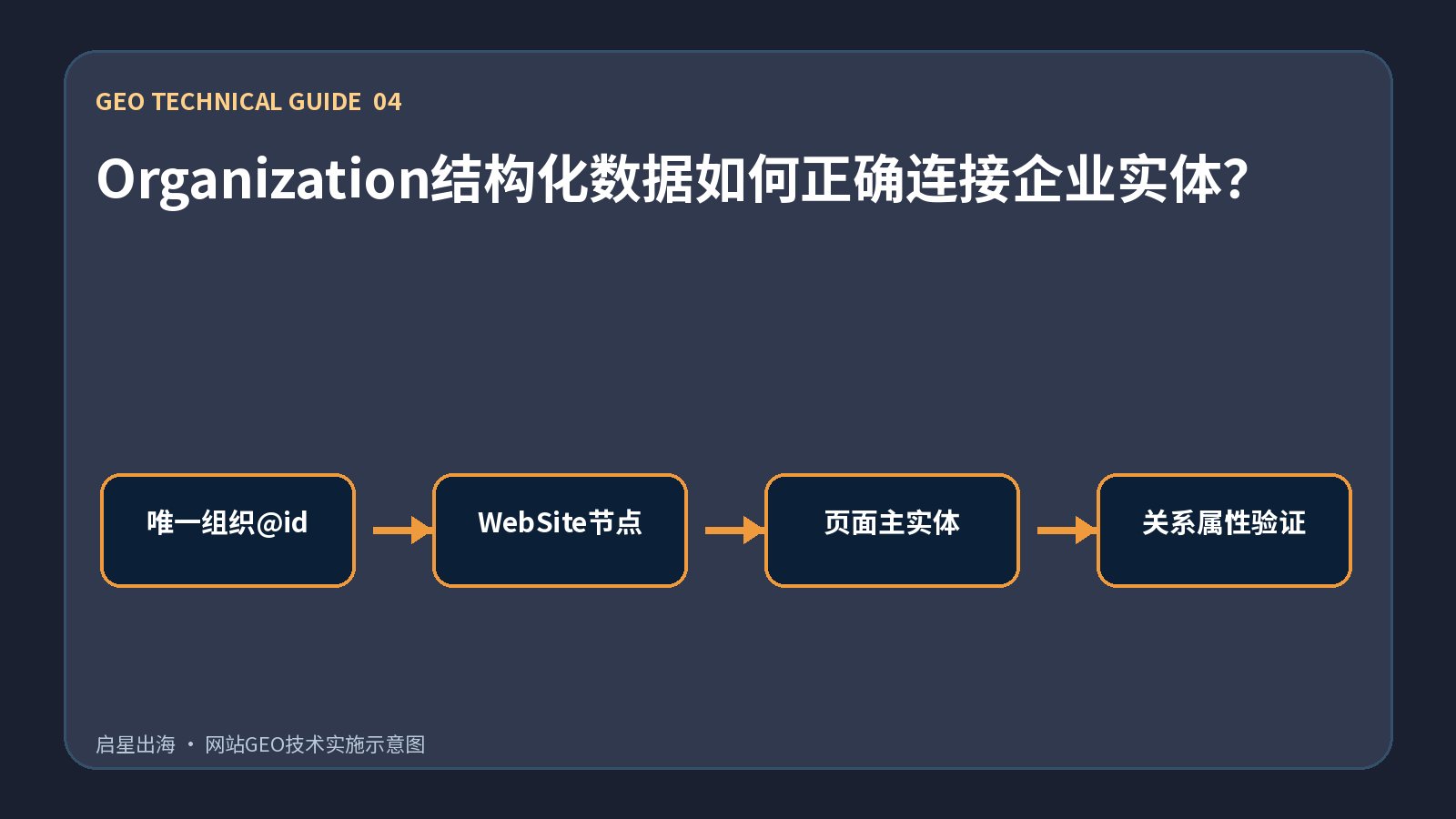
JSON-LD is suitable to place multiple entities in @graph. The organizational node uses a fixed @id, WebSite node to describe the website, WebPage to describe the current page, Article or Service to describe the main object of the page. Publicsher, provider, IsPartof and about properties are responsible for establishing relationships. The Google structured data guide emphasizes that tags must truly reflect the visible content of the page, and code syntax does not guarantee a rich result, so Schema should act as a semantic, rather than a container that hides marketing information.
It is recommended that the only Organization nodes are exported from the global template, including at least @type, @id, name, url and logo; when real data are available, add legalName, fundingDate, Address, contactPoint and sameAs. Logo should use the exact address that can be retrieved.
The technical acceptance check is performed on three levels at the same time: the JSON syntax is valid, the attributes are consistent with the Schema.org definition, and the content is consistent with the visible text on the page. It is possible to add the organizational nodes to automated tests, assert fixed values for @id, url and logo, and, after deployment, randomly check the front pages, articles, services and course pages. Structured data errors should record the impact, as template-level errors usually spread to the entire site.
The common problem is to keep false ratings after copying examples, erroneously fill multiple social sharing links as sameAs, or use a relative Logo path that leads to external decomposition failure. It is also important to avoid any random mixing of the Local Business, Educational Organization and Organization; it is important to select the specific type that best fits the business and to ensure that its attributes and page contents are real.
When you land on the ground, the term “sole organization@id, WebSite node, page owner, relationship attribute” should be included in the same release checklist, identifying the content manager, technical manager and date of review. Any change should be accompanied by a check of the visible content of the page, HTML source code, structured data, internal links and site maps, so as to avoid that the front desk has been updated and the machine reading layer retains its old values. GEO is not a one-time installation plugin and does not guarantee that any platform will be quoted; it is a set of content and technical works that continuously improves the accessibility, validation, attribution and citation of information.