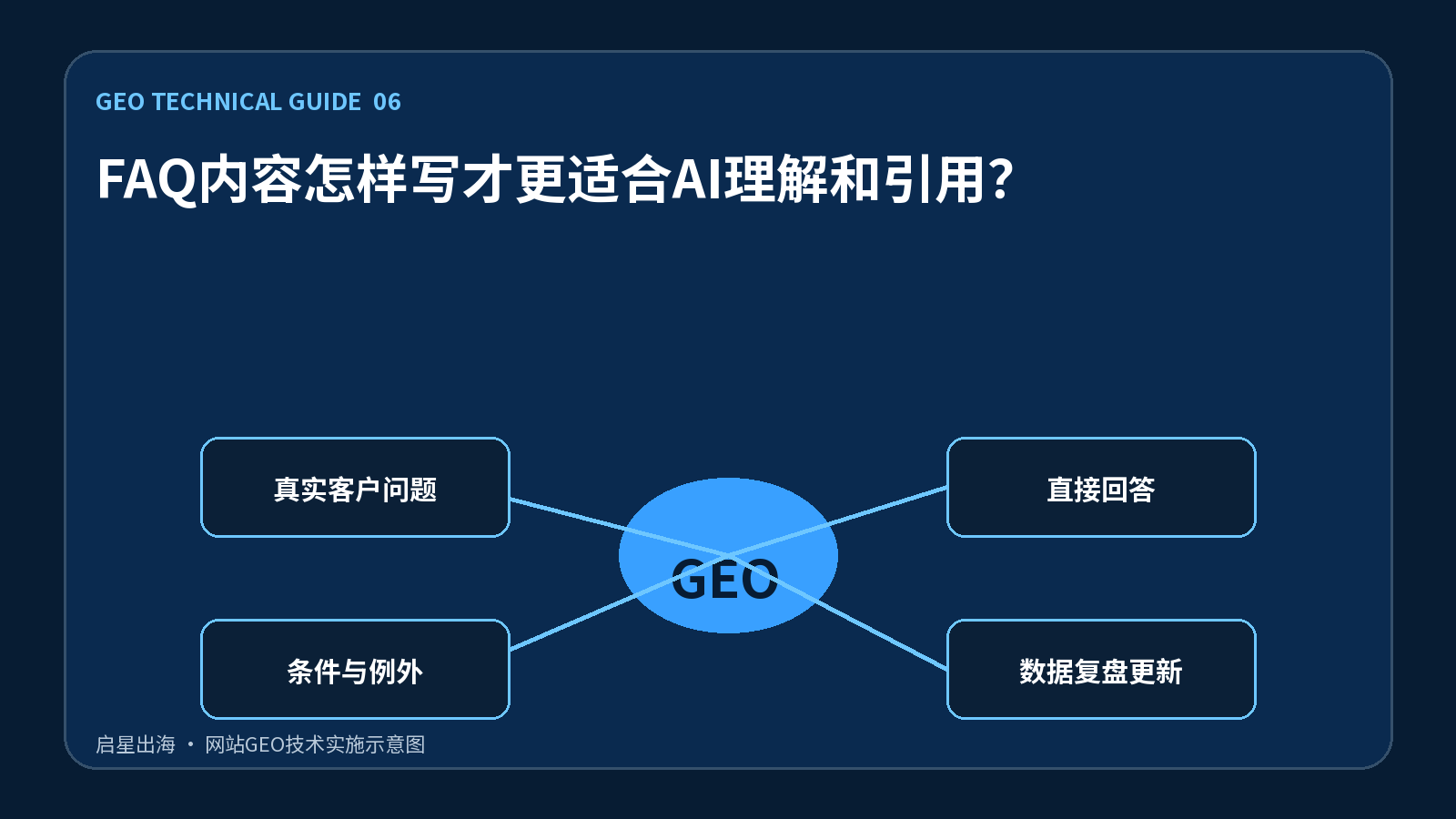
FAQ does not help GEO by increasing the number of words, but rather by placing the true questions and implementable answers of the client within a clear boundary. High-quality FAQ answers the question of the terms of the procurement, the applicable scene, the limitations, the process, the time, the materials and the risks, rather than repeating marketing questions such as “Are we of good quality?” The answer system makes it easier to use questions and answers with clear scope, clear conclusions and conditional explanations, but the reference still depends on overall quality and accessibility.
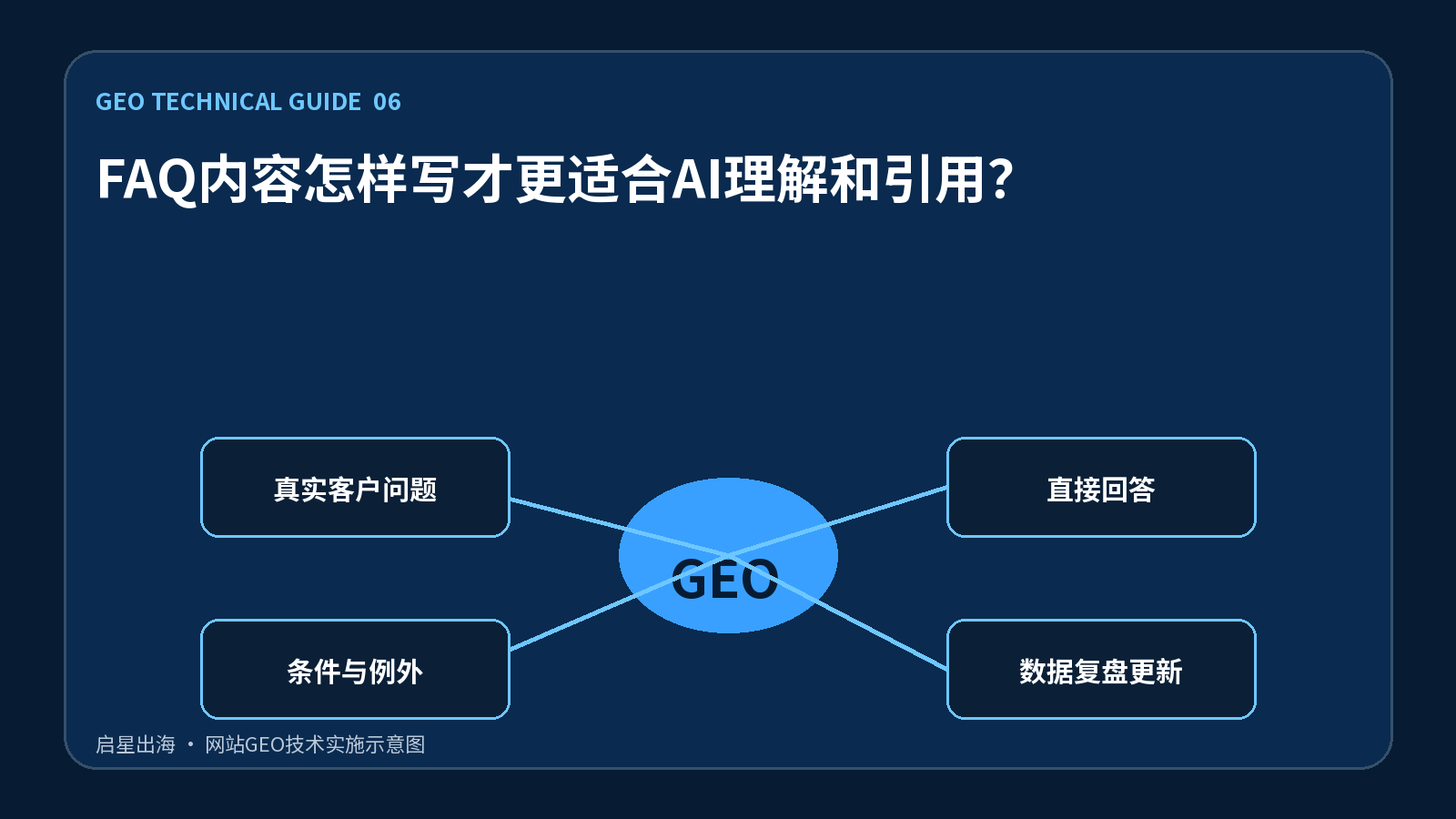
An available FAQ answer usually includes direct conclusions, conditions of application, key variables, and next steps. For example, the answer to the delivery period should indicate when the delivery period is calculated, what specifications and quantities are affected, what information the customer needs to provide, rather than just “fast delivery”. This structure meets user decision-making and reduces the number of errors in AI in the absence of context. The FAQPage tag can only describe real questions and answers on the page and cannot code hidden keywords.
The content team first collates questions from sales records, on-site searches, inquisition lists and guest calls, by type of information, comparison, risk type and action type. Each core service page selects the questions directly related to the subject, the first sentence of the answer is drawn, followed by two to four short paragraphs explaining the conditions and exceptions. The title of the question uses the natural language of the client, but avoids creating multiple questions and answers that are short of one word.
When assessing, look at the clicks on the FAQ folding items, the page search, the path to access before conversion, and the long-term questions in the search query. If the answer is often added to the client’s description, you should go back to the page and add a limit. Check every quarter whether the product specifications, policy, cost and time type answers are expired; synchronize the changes to the structured data and page update.
A common error is that dozens of blank questions and answers are generated in bulk, sales slogans are answered, different pages are copied with the same FAQ, or only Schema is put in question and the front desk is not shown. Google's presentation of the results of the FAQ wealth is limited in scope and cannot be the sole goal; the core value of the FAQ remains an accurate solution to the user problem.
When you land, “real customer questions, direct answers, conditions and exceptions, data reset updates” should be included in the same release checklist, specifying who is responsible for the content, who is responsible for the technology, and the date of the review. Any change must be accompanied by a review of the visible content of the page, HTML source code, structured data, internal links and site maps, so that the front desk is not updated and machine reading layers remain old values. GEO is not a one-time plugin and does not guarantee that any platform will be quoted; it is a set of content and technical works that continuously improves the accessibility, validation, attribution and citation of information.