
To solve the problem of "How to establish credibility of LinkedIn profile if personal SOHO is not endorsed by a big company", the first step is not to find skills, but to eliminate wrong assumptions.The team may well interpret the problem as a lack of traffic, but the real reason is using company size as the only source of credit and ignoring demonstrable industry experience, process and project evidence.The two judgments lead to completely different actions.
Start by sampling recent content, interactors, or leads to answer three things: are they your target customers, do they understand your value, and are the next steps clear enough.The LinkedIn profile is not only the business card of the content publisher, but also the first place for buyers to verify their identity after receiving interactions or messages. It must also describe the service recipients, professional capabilities and credible evidence.If you cannot answer one of the three items, it means that the account positioning still needs to be reconstructed.
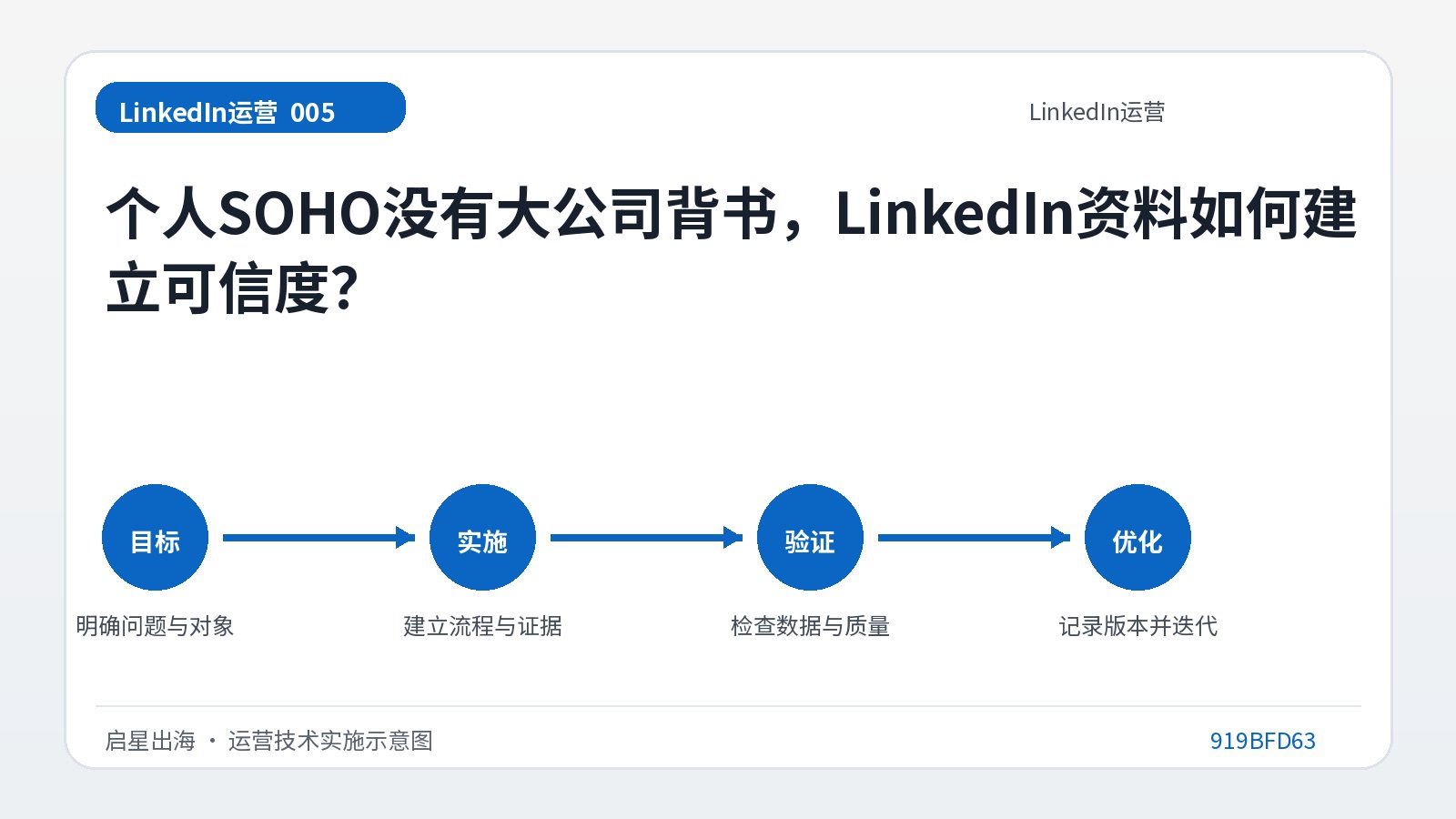
Prioritize execution: combine trust through segmented positioning, real experiences, anonymous cases, methodological content, customer recommendations and stable contact information.At the same time, check the avatar and name, Headline, About, experience, selected content, skill certification, contact information and action entry in order, and make all information focus on the same type of target customers.order, do not skip the previous positioning and evidence and directly pursue the final inquiry.Only test one key difference in each round and set stopping conditions to avoid constantly adding resources without reaching a conclusion.
Evaluation metrics are divided into two categories: leading and results.Leading indicators are target customer profile visits, search exposure, attention growth, featured content clicks, website visits and effective conversations, and outcome indicators are effective leads, offers and business opportunities.This question should record the information access, recommendation requests and effective responses of similar customers.Only when the two types of indicators are in the same direction can the changes be truly effective.
A common misconception is to immediately amplify when you see a drop in costs or an increase in engagement.The B2B sample is small, so customer identity and needs should be verified first, and then a stable period should be observed.Results that can be used by sales, can be followed up, and can be traced to their source are results worth retaining.
When this question is implemented, you can first use a small group of real target accounts to verify: trust through segmented positioning, real experience, anonymous cases, method content, customer recommendations and stable contact information.After execution, do not just judge based on your feelings, but record information access, recommendation requests and effective responses from similar customers; at the same time, save the customer identity, version, date and subsequent sales results to avoid mistaking accidental responses for replicable methods.



