
This question cannot be answered with a one-size-fits-all setting.The decision-making cycle of foreign trade B2B is long. First of all, we must determine whether the data is poor because no one has looked at it, because they are not interested, or because they are interested but have not entered the sales process.The most questionable thing at present is that the avatar lacks professional identification, and the background image is filled with products and text, making it impossible for customers to quickly confirm their identity and professional field.
It is recommended to conduct a reverse check first: work backwards from the final quotation opportunity you want to obtain, and determine what content the customer needs to see, what evidence to obtain, where to click, and what information to submit.The LinkedIn profile is not only the business card of the content publisher, but also the first place for buyers to verify their identity after receiving interactions or messages. It must also describe the service recipients, professional capabilities and credible evidence.If these steps are not connected, optimizing for reach, clicks, or fans alone will be difficult to produce stable results.
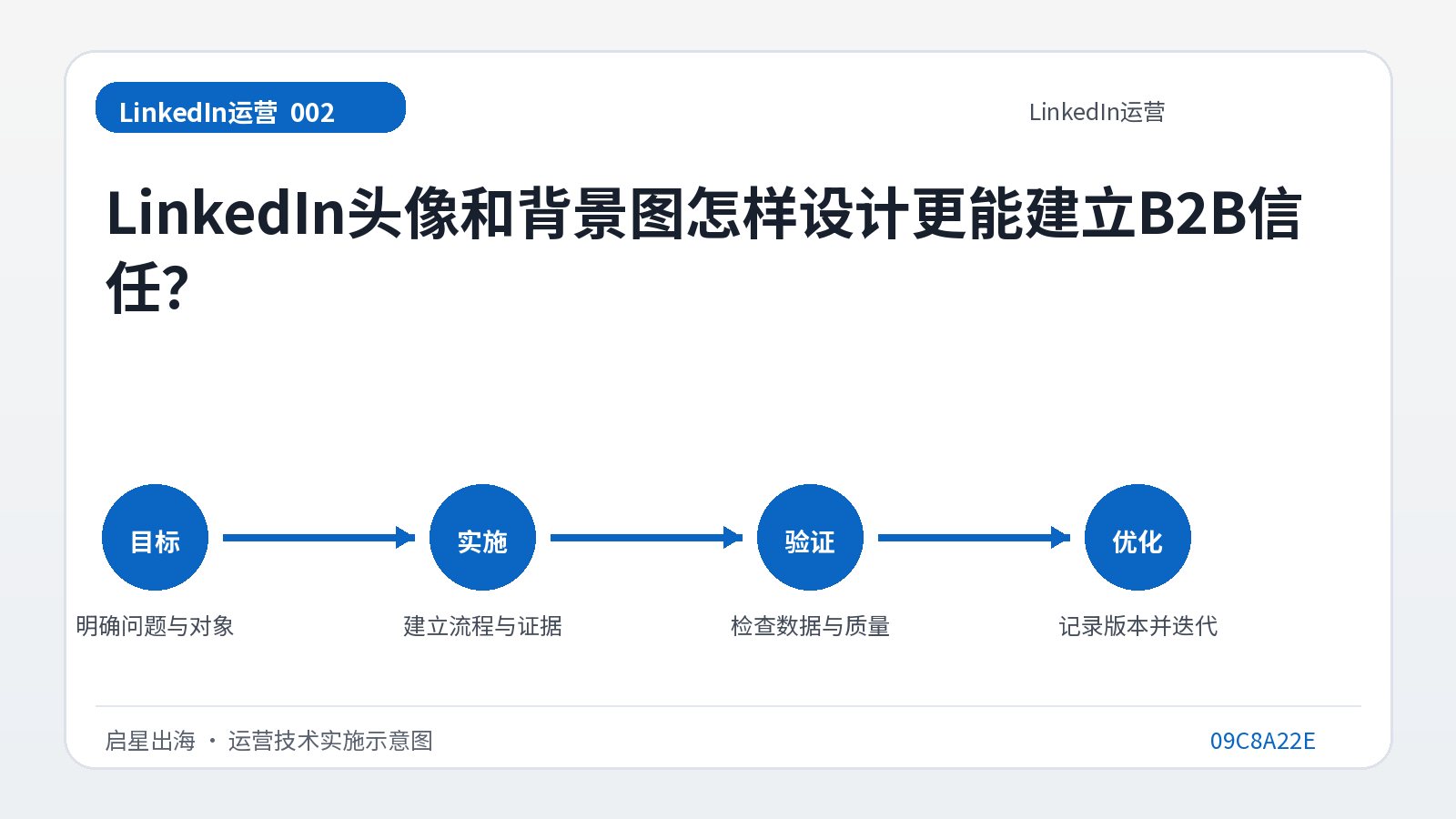
The first step in this question is: use a clear and real avatar, and keep only the main industry, core values, trustworthy capabilities and concise contact points in the background image.Then follow the steps of "Check the avatar and name, Headline, About, experience, selected content, skill certificates, contact information and action entry in order, and make all information focus on the same type of target customers." Check item by item.Don’t change positioning, materials, audiences, and hosting pages on the same day; if you change too many variables at once, you won’t be able to replicate the results even if they get better.
Two sets of data are used when measuring: the platform side looks at target customer profile visits, search exposure, attention growth, selected content clicks, website visits and effective conversations; the sales side looks at company matching, demand authenticity, quotation possibility and follow-up results.In particular, it is necessary to use the stay, attention and message change verification after data access to prevent the operation team from only reporting good-looking superficial data.
A practical judgment is: if the data is small but the customers are accurate, it can continue to be accumulated; if there is a lot of data but the customers are wrong, the screening and expression should be corrected immediately.It takes a week to observe implementation issues, a month to judge trends, and then a complete procurement cycle to test whether account positioning truly creates business opportunities.
When implementing this question, you can first use a small group of real target accounts to verify: use clear and real avatars, and the background image only retains the main industry, core values, trustworthy capabilities and concise contact entrances.After execution, don’t just rely on your feelings to judge, but use the stay, attention and message changes after data access to verify; at the same time, save the customer’s identity, version, date and subsequent sales results to avoid mistaking accidental replies for replicable methods.



