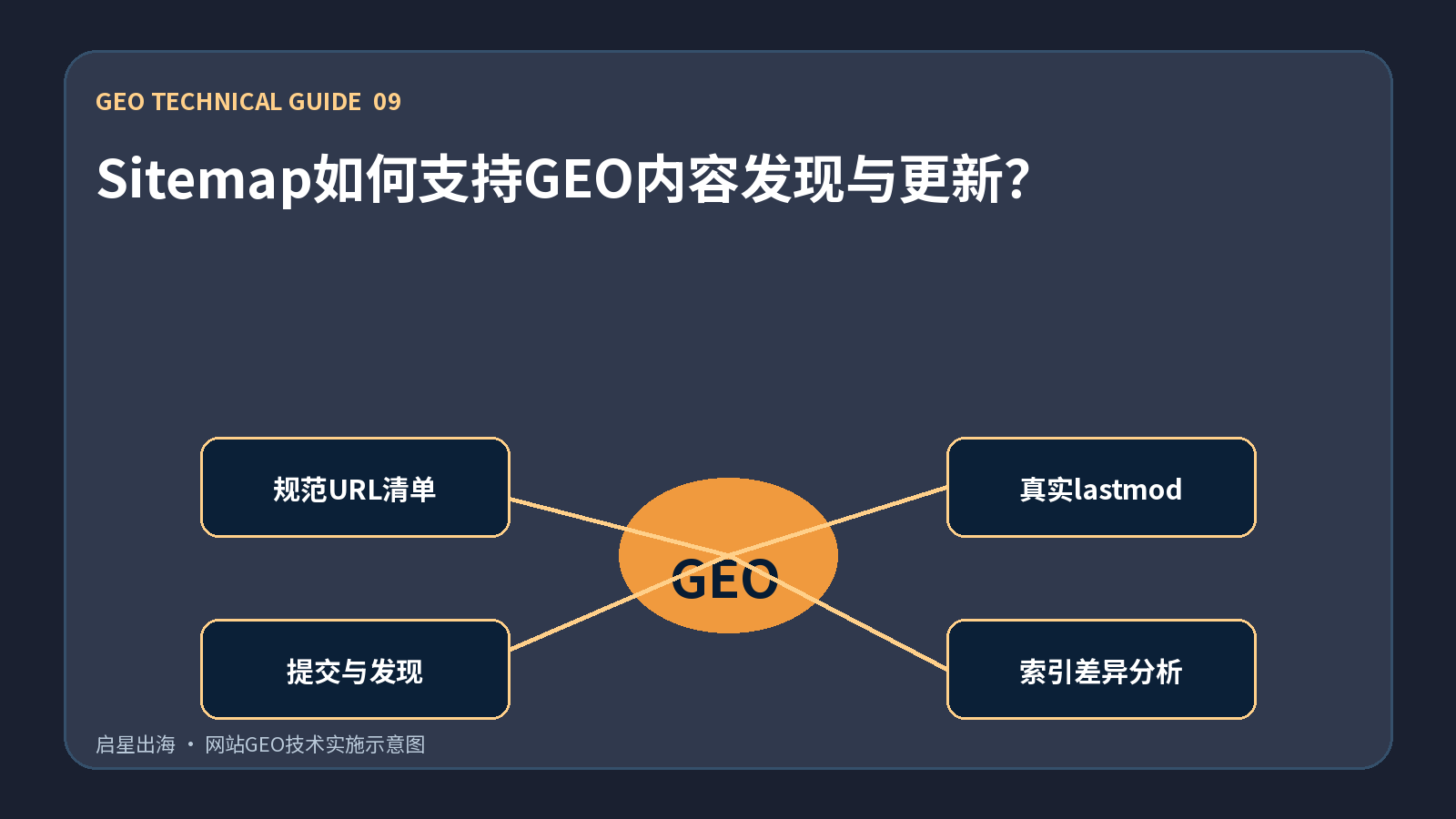
The role of Sitemap is to provide the search system with a standardized URL list and an updated time trail, which does not replace the normal inner chain or ensure that pages are recorded. The common problem for GEO projects is that site maps contain drafts, re-direction, 404 or parameter URLs, leaving out real service pages and new articles. Such lists waste resources and discredit updated time signals.
High-quality Sitemap should contain only pages that allow indexing, return 200, and use a regular address. Lastmod must reflect real changes to the main contents of the page, rather than refreshing every server generated file. Multilingual pages can state the hreflang relationship in Sitemap, but each language URL still needs to be accessible and has corresponding content. Large sites can be split by content type or language and then managed centrally by the Setmap index.
When implemented, generate URLs from CMS release status, excluding records of noindex, drafts, deletions, re-direction and Canonical pointing to other pages. Saves page updates only when the title, body, core picture, specification or structured data are substantially changed. After generation, autochecks are performed: URL format, protocol, host name, status code, duplicate item, character transfer and file size.
Monitoring involves comparing Sitemap with URLs, found URLs, indexed URLs and flowed URLs. When a page has not been indexed for a long time, check the quality of content, the inner chain, and Canonical, instead of submitting them repeatedly. Up-to-date postings will allow you to see the first reptile return time and to update the Setemap, Indexnow and internal links as the same issue, avoiding inconsistencies in the three sets of URL lists.
Errors include using Sitemap as a pledge to accept, filling out the same day ' s lastmod for all pages, submitting a version of HTTP and HTTPS at the same time, or making URLs listed on site maps conflict with Canonical. Isolated pages that exist only in Sitemap should also be avoided; important pages must be accessible from navigation, columns or text links.
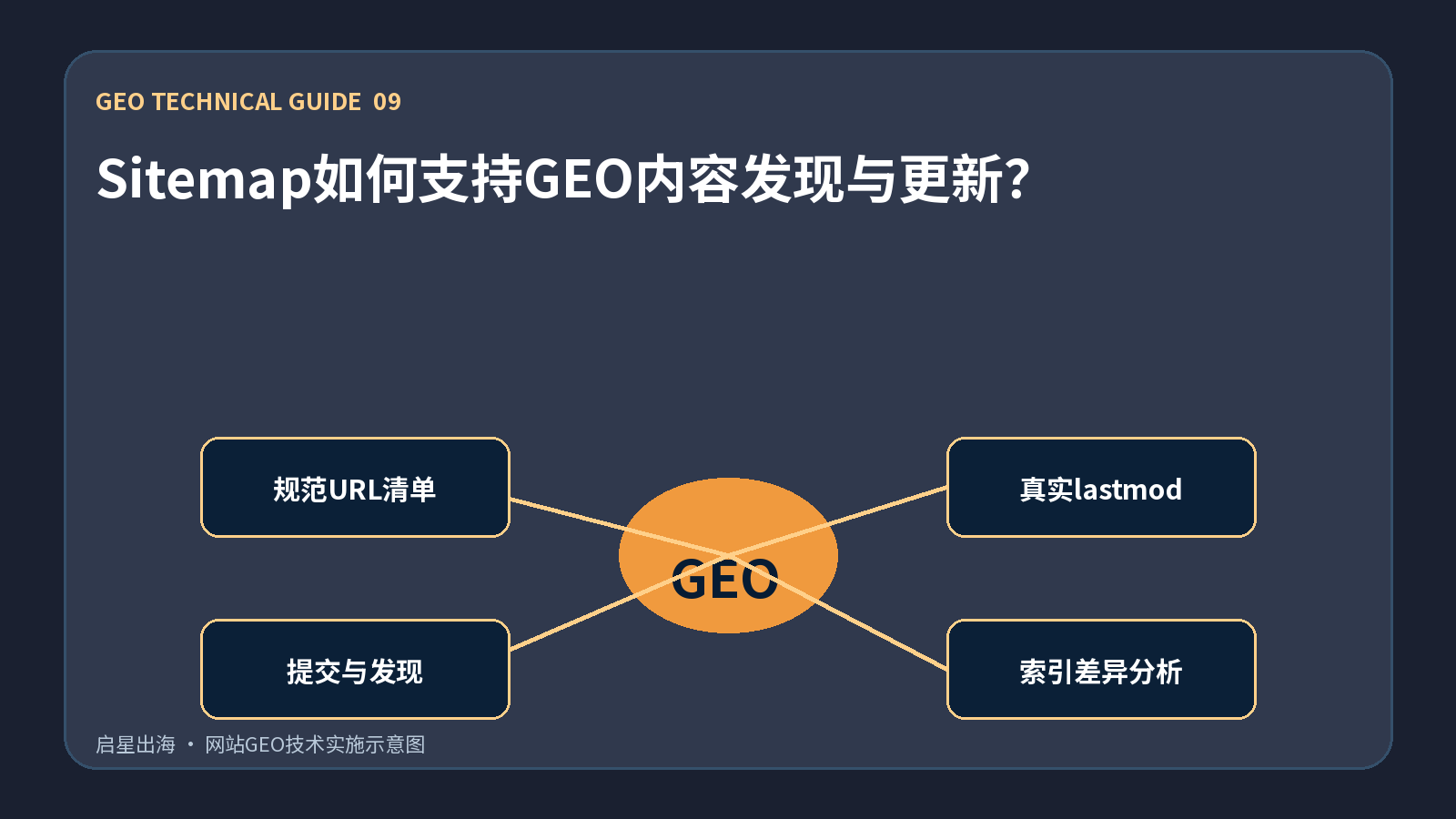
When you land, you should include the "Registration URL List, Real Lastmod, Submission and Discovery, Index Difference Analysis" in the same release checklist, specifying the content manager, technical officer and date of review. Any change must be accompanied by a check of the visible content of the page, HTML source code, structured data, internal links and site maps, so that the front desk is updated and the machine reading layer retains the old values. GEO is not a one-time plugin and does not guarantee that any platform will be quoted; it is a set of content and technical works that continuously improves the accessibility, validation, attribution and citation of information.