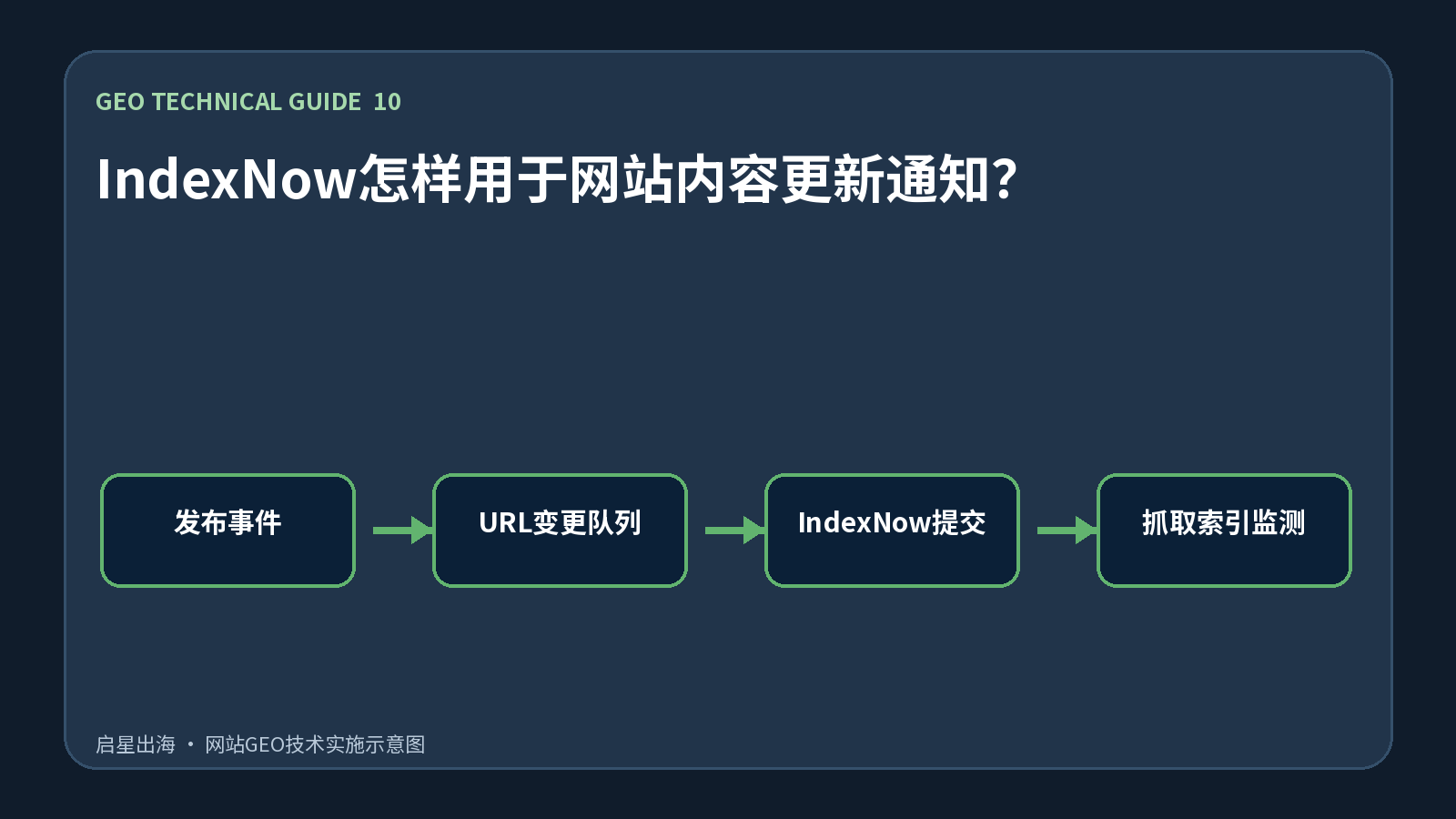
Indexnow, which informs the participating protocol that a URL has been added, updated or deleted, is a change notification, not a ranking or recording interface. Automatic delivery of a website that publishes products, articles, courses and cases more frequently reduces the system's time to rediscover changes.
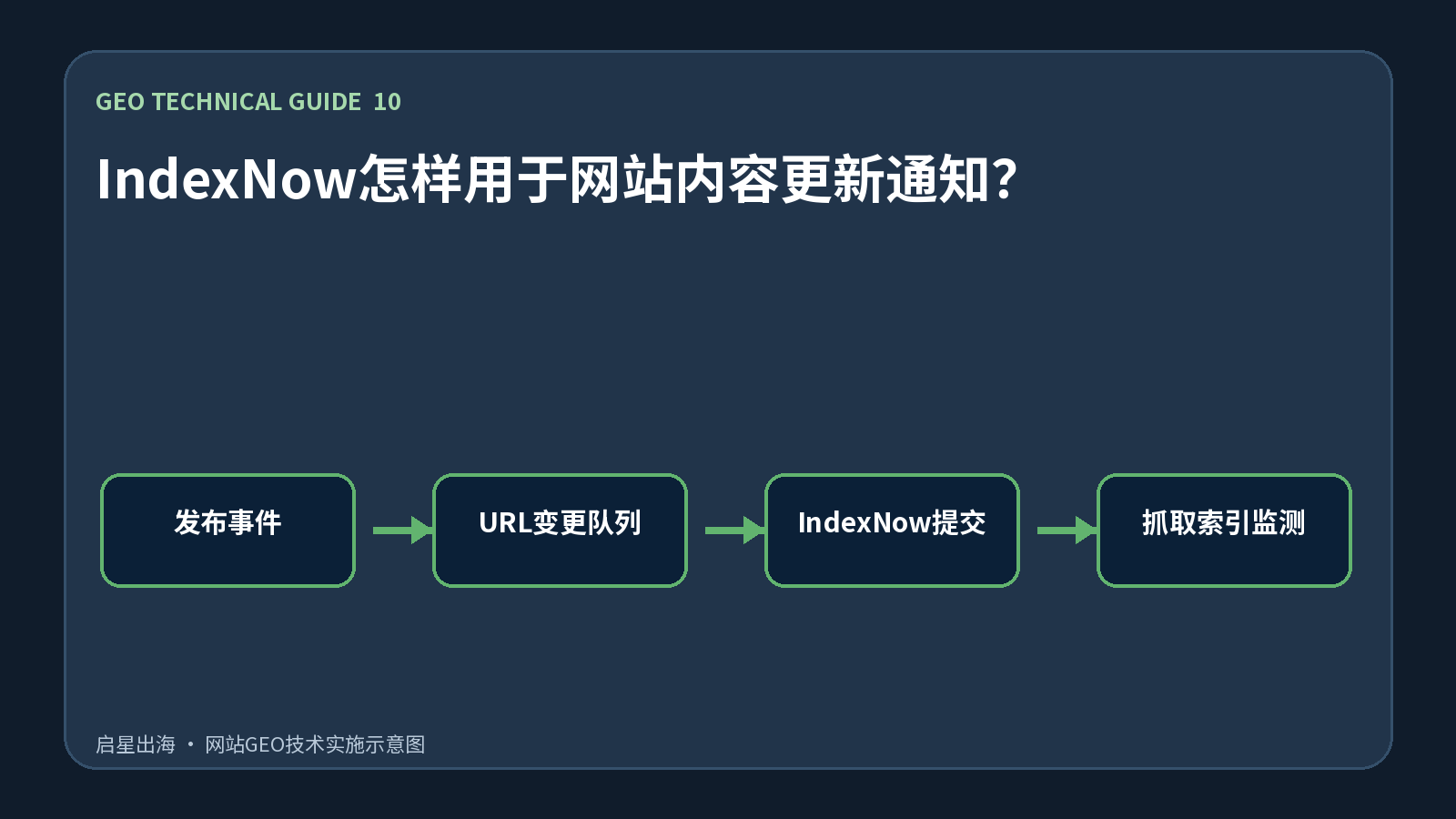
The agreement requires the website to certify control of the host by key and submit the URL that belongs to the host. Participating search engines share the information received on changes in the URL. After delivery, the systems will still decide whether to capture, index and display. Therefore, the release of the streaming line must complete the database submission, page access and Canonical generation, and then send a notice.
The implementation steps include generating and placing accessable key files that meet the requirements, creating queues in CMS publishing, updating, withdrawing and deleting events. Queue to record URLs, actions, time, number of retests, response codes and responses to the text, avoiding the failure to save the page and sending them in advance. Batchs are heavy before submission, sending only the URL of this real change. If there are multiple sub-areas at the site, the host and key are managed separately, as required by the official request, and do not mix different domain names into a request.
Monitoring indicators include the success rate, type of failure, time between submission and initial capture, index status after capture, and repetition ratio. HTTP successfully received only on behalf of the agreement and does not represent recorded.
A common error is that each time job is sent to the station, the parameters URL and the redirected URL are added to the queue, the key is leaked in the open code repository, or the "spread successful" is displayed as "search engine recorded." The backstage should clearly distinguish between the already queued, submitted, captured and indexed four states.
The publication of events, URL change queues, Indexnow submission, access index monitoring should be included in the same release checklist, specifying the content manager, technical manager and date of review. Any change must be accompanied by a check of the visible content of the page, HTML source code, structured data, internal links and site maps, so as to avoid that the front desk has been updated and the machine reading layer retains its old values. GEO is not a one-time installation plugin and does not guarantee that any platform will be quoted; it is a set of content and technical works that continuously improves the accessibility, validation, attribution and citation of information.