
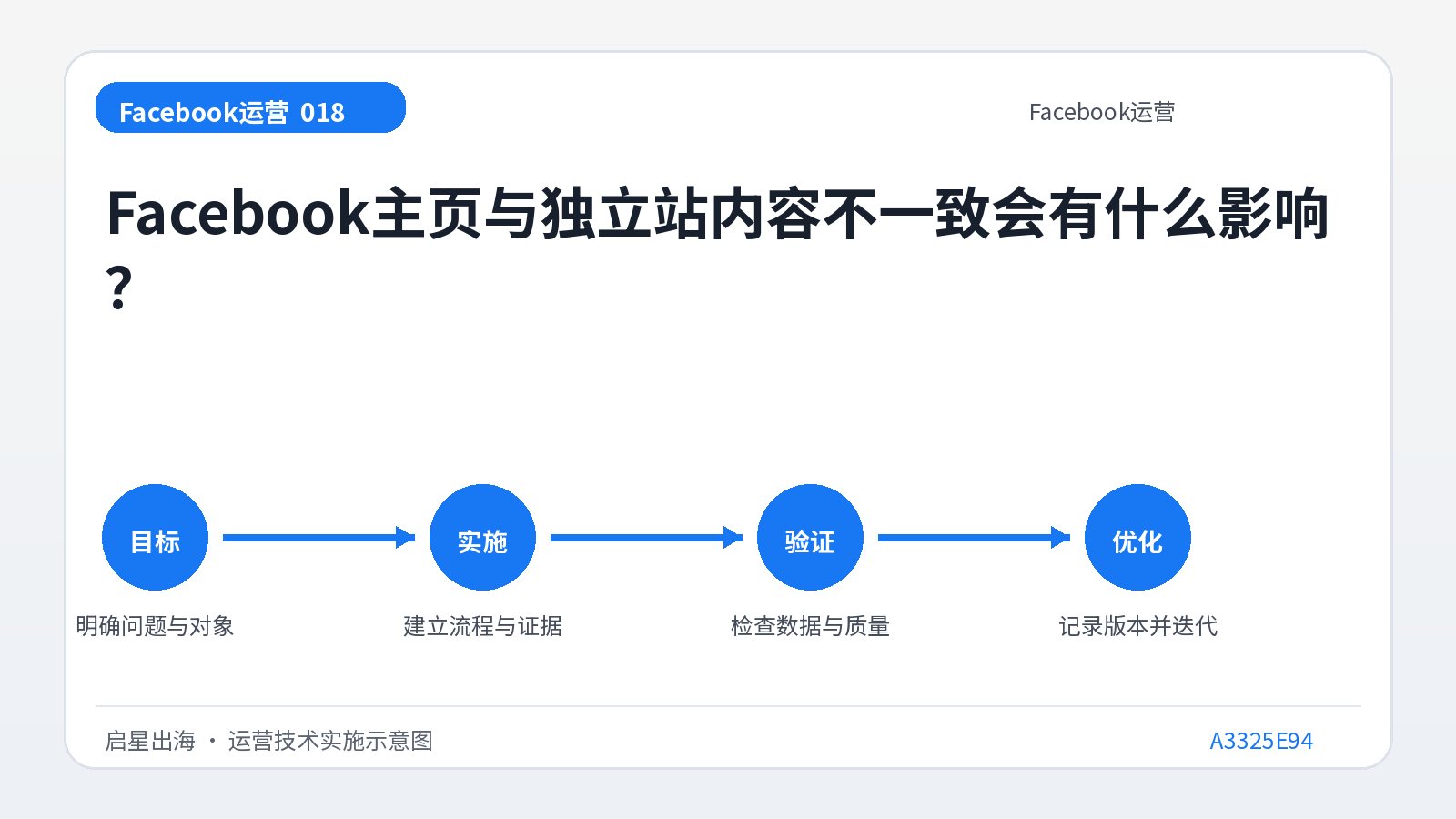
Let’s talk about the conclusion first: conflicting company names, parameters, MOQ or capability statements will make cautious buyers doubt the authenticity of the information. This is usually the core issue behind “What are the consequences of inconsistent content between Facebook homepage and independent websites?” Continuing to increase publication volume or budget will not automatically solve it, but may lead to more data in the wrong direction.
Draw the actual link first. Customers may be lost at every step from the first time they see the content to visiting the homepage or landing page, initiating a conversation, submitting information, becoming a valid lead, and entering into a quote. The Facebook homepage is the trusted landing page for customers after entering from the post. Incomplete information will cause the interest generated by high-quality content to be lost in a few seconds. Therefore, it is necessary to put the stay after home page visit, action button clicks, website clicks, WhatsApp or Messenger conversations, and data downloads in the same table, instead of just looking at the numbers that are most likely to increase.
In terms of implementation, make minimal changes first: establish a unified information table, and all platforms share the latest company introduction, product parameters, certification, contact information and inquiry caliber. Check the homepage in order of avatar and name, cover value proposition, introduction, action button, pinned content, products and cases, website and contact details. Keep the original version before adjusting, set a complete observation period, and mark the country, customer type and content or advertising version. In this way, when the results change, you can know which action has the impact.
The sales end must simultaneously verify the lead's company, role, application, specification or quantity, purchase time and next step. This question recommends conducting cross-platform consistency audits every quarter and recording corrections. If there are a lot of interactions or forms but a conversation with complete information cannot be formed, it means that the front end is still attracting the wrong people and low cost cannot be regarded as success.
During review, the conclusions are divided into four categories: retention, optimization, stop, and amplification. Only when homepage construction simultaneously reduces customer understanding costs, improves effective dialogue, and generates trackable business opportunities, is it worth copying to more countries or products.



