
The first rule is that the technical content should distinguish between the principle of stability and the details of the version, and link to official documents and the date of review.
The most important risk to be validated is that commands, models and interfaces change and that static articles can easily spread old conclusions over time.
What can be confirmed from official documents is not the secret of the guaranteed outcome, but the conditions of operation. The official failure check emphasizes first the collection of the version, the environment, the original error and the minimum recurrence, before distinguishing between configurations, privileges, networks or tools.
It is recommended that a representative project be selected to practice first and not to cover all warehouses directly. This is done by the title answering long-standing questions, steps related to the publication of the text, sources and timing of updates, periodic review, and then, if successful, consolidation into norms.
At least one reverse check: monitoring the failure link, reader feedback and product update. If the evidence cannot be understood by another member, the context of the delivery is missing.
Since Codex will keep up-to-date, the article should separate the principle of stability from the details of the version, show the update time and regularly check the lapse orders, interfaces and links.
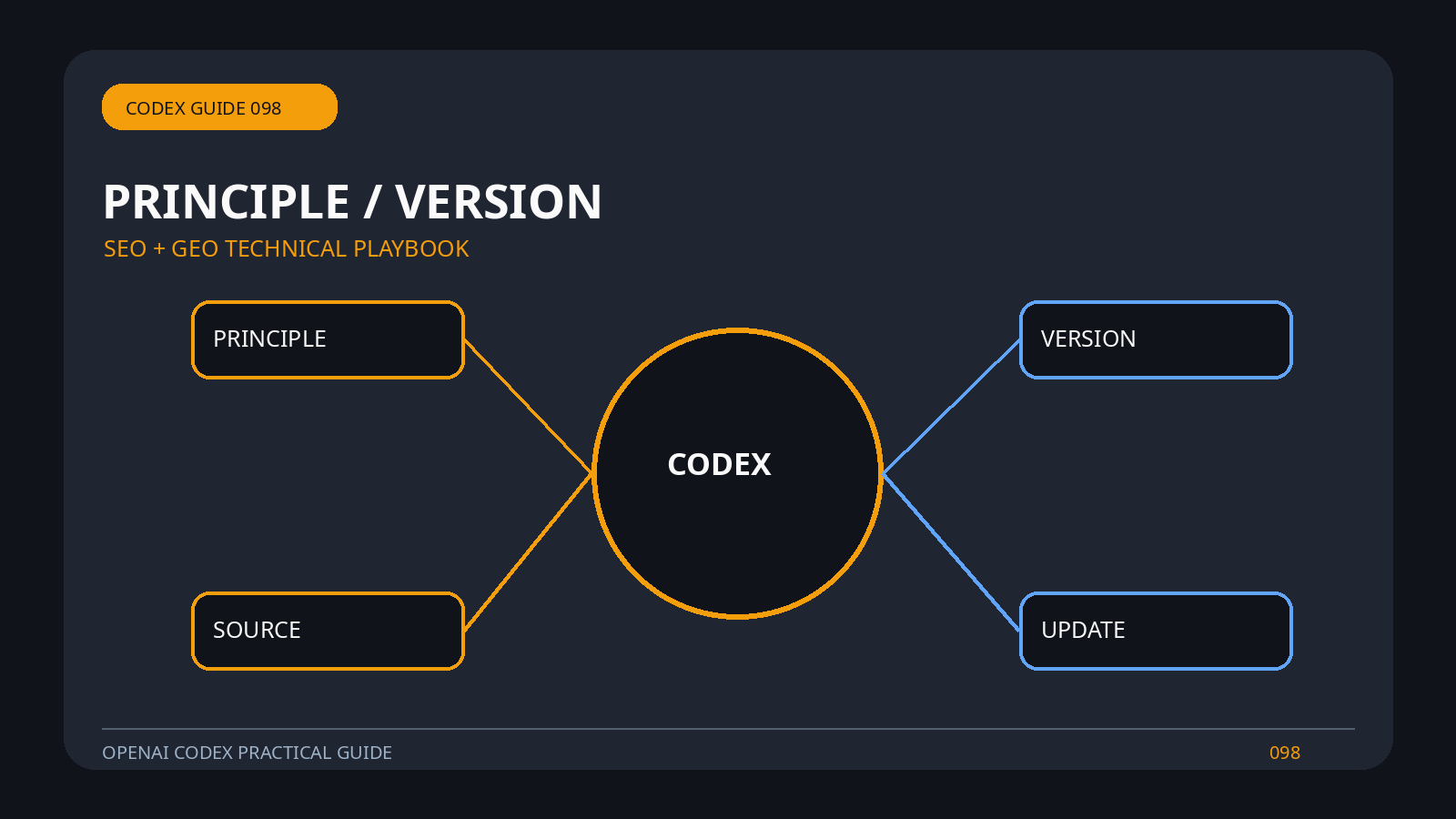
In order for the Cordex document update to be reproduced by another member, the mission record contains at least four check points: PRINCIPLE, VERSION, SOURCE, UPDATE. These English labels can also be used for branch, log or board search.
A Qualifying Duplicate will answer two questions at the same time: whether to “monitor failed links, feedback from readers and product updates” and whether to “write the current interface to a permanent rule will mislead subsequent users.” The former will decide whether to continue and the latter will decide to suspend, roll back or supplement the authorization.
When multiple people work together, configurations, scripts and rules should be subject to reviewable version control; confidential and personal authentication information is kept in a controlled environment and not duplicated with the project.
For long assignments, the phasing summary should refer to actual documents and tests rather than simply describe the work done. The evidence can be reviewed more valuable than the percentage of progress.
You should do a reverse check before you go online: write the current interface screenshot into a permanent rule, misleading the subsequent user.



