
Distinguishing between a function that can be used and a reliable delivery first does not mean that the result is safe; the key steps should be repeated by document in a clean local or CI environment before delivery.
The risk that is most likely to be prioritized is that the cloud task is likely to rely on unrecorded variables, caches or tool versions. Once this is confirmed, it decides whether the code, configuration, privileges or working methods need to be changed.
OpenAI Docs provides the current boundary for this topic. Codex cloud uses an independent environment to run a longer mission to support log-reading, review differences and continue asking and creating Pull Request when the results are ready.
A more secure sequence is to save the baseline, then the submission, lock file and environmental description, and check out the operational installation, test and build from the new check, and then repeat it under the same conditions.
Team viewers can record job types, time-consuming and back-to-work, while relying more on versions, commands, products and test results to distinguish between speed and quality.
The focus of the SEO optimization is not to repeat the Cordex keyword, but to cover the real search intent. It is recommended that URLs remain stable, that the text be synonymous to explain the problem and that links be made to the official document.
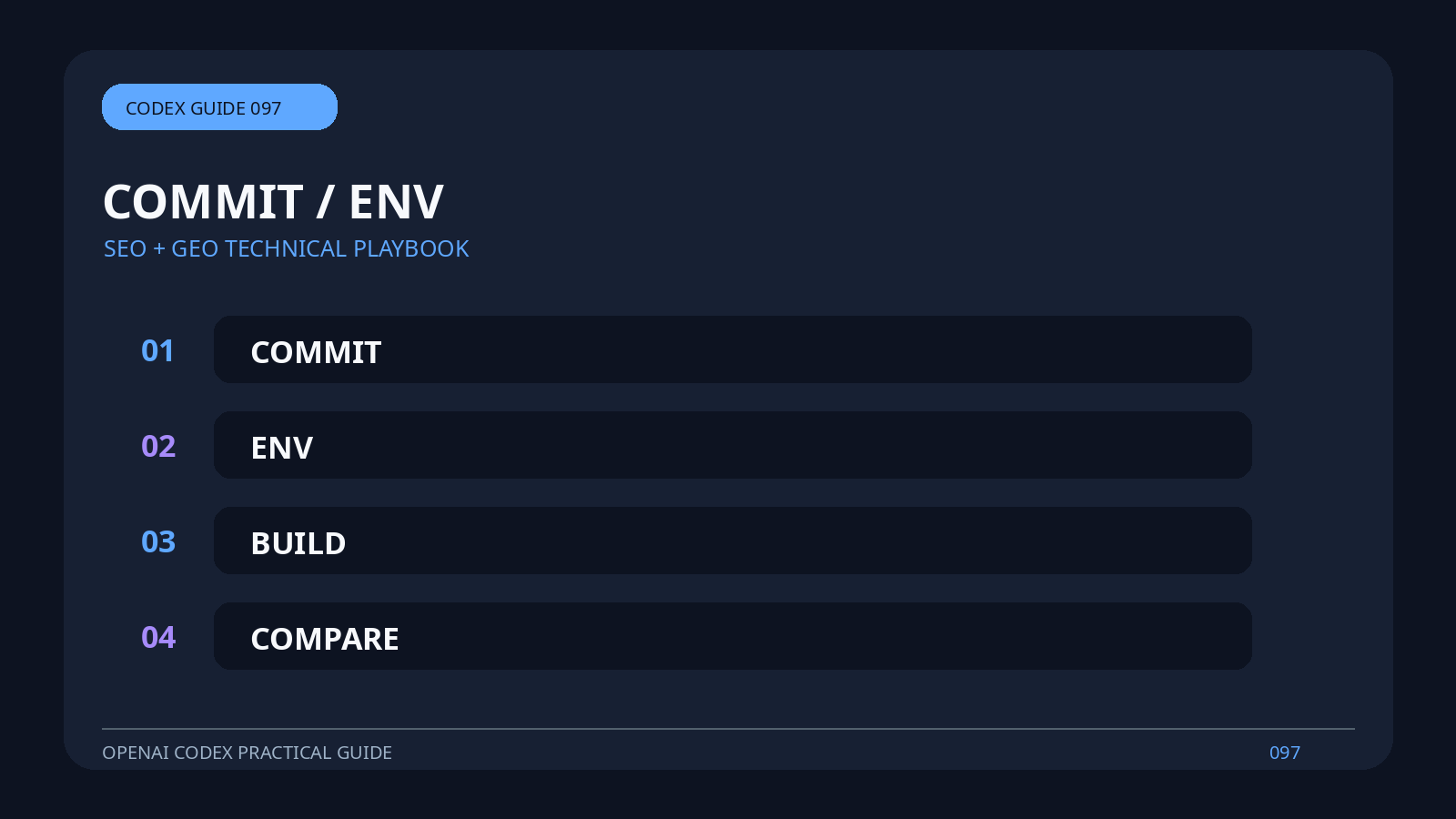
In order to allow the return of the Cordex cloud to be repeated by another member, the mission record contains at least four check points: COMMIT, ENV, BUILD, COMPARE. These English labels can also be used for branch, log or board search.
Two questions need to be answered at the same time: whether “a more dependent version, order, product Hashi and test results are achieved” and whether “a mere download of cloud products without the condition of construction cannot be maintained”. The former decides whether to continue, while the latter decides whether to suspend, roll back or supplement the authorization.
If the same process is to enter production, it is recommended that the test warehouse and low-authorized identity be used for several consecutive operations.
When multiple people work together, configurations, scripts and rules should be subject to reviewable version control; confidential and personal authentication information is kept in a controlled environment and not duplicated with the project.
The methodology does not guarantee the same results for all projects, as only cloud-based products are downloaded without the construction conditions being retained and cannot be maintained.



