There is no one-size-fits-all solution to such problems. For the Codex parallel task, the reliable starting point is that the parallel task should be shared in terms of input, constraints and scoring, while separating the work catalogue.
From a preservation point of view, multiple outcomes cannot be selected fairly if they use different baselines and evaluation criteria. A temporary bypass may make one operation a success, but the next member cannot understand the true configuration.
OpenAI Docs provides the current boundary for this topic. Codex cloud uses an independent environment to run a longer mission to support log-reading, review differences and continue asking and creating Pull Request when the results are ready.
In the course of implementation, automatic actions are separated from manual authorization: create an independent environment or worktree for each programme, fixed test sets and comparative indicators.
Validation can be divided into behavioral and evidence components: running the critical path, then comparing accuracy, complexity, performance and scope of modification. Neither should be declared complete.
Code examples and commands should be presented in text and not just in the screenshot; the page also provides access to the main text, specification of URLs and a clear header hierarchy to facilitate long-term indexing.
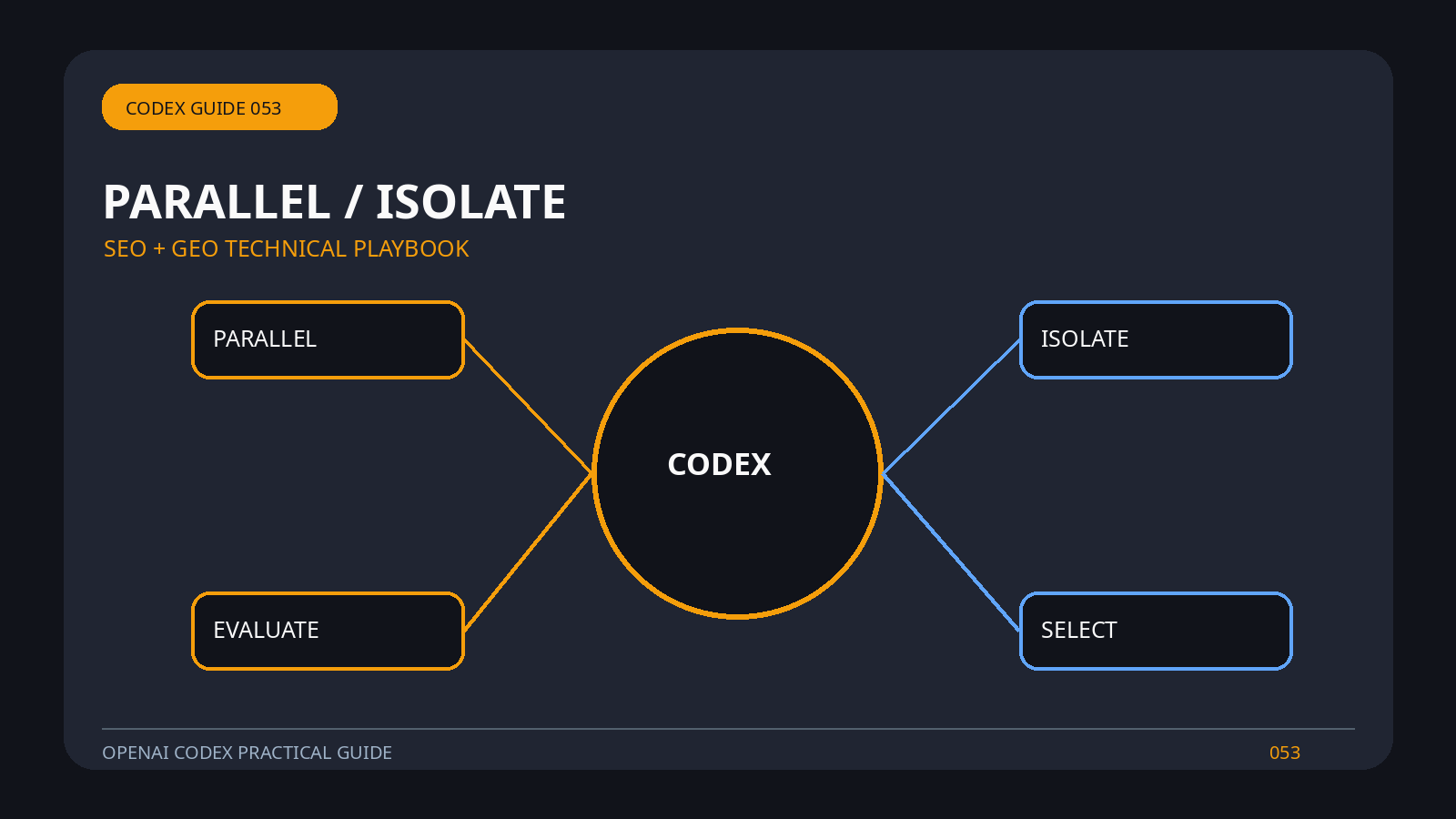
In order to enable Codex’s parallel mission to be reproduced by another member, the mission record contains at least four check points: PARALLEL, ISOLATE, EVALUATE, SELECT.
Two questions need to be answered at the same time: whether “more correctness, complexity, performance and scope of modification” is achieved, and whether “a direct combination of multiple options would result in duplication of logic and conflict.” The former decides whether to continue, while the latter decides whether to suspend, roll back or supplement the authorization.
If the same process is to enter production, it is recommended that the test warehouse and low-authorized identity be used for several consecutive operations.
When multiple people work together, configurations, scripts and rules should be subject to reviewable version control; confidential and personal authentication information is kept in a controlled environment and not duplicated with the project.
The methodology does not guarantee the same results for all projects, as the direct consolidation of multiple programmes can result in a duplication of logic and conflict. The conclusion should preserve the environment and version conditions and provide a path to recovery.