If only the task is pursued, it tends to leave an unrecoverable outcome. A more secure principle is that secrets should be safely injected into the platform, with minimal authorization by environment and use.
From a preservation point of view, the cloud environment needs to be supported, but the secret should not enter the warehouse or the mission's output. A temporary bypass may make one operation a success, but the next member cannot understand the true configuration.
What can be confirmed from official documents is not the secret of the guaranteed results, but the conditions of operation. Codex claud uses a stand-alone environment to run a longer mission to support log-reading, review differences and continue to ask or create Pull Request when the results are ready.
If the task has scripts or warehouse specifications, re-use them as a matter of priority. Subsequently, a dedicated low-authority certificate is created, configured as a secret variable, the target service is limited and rotation is set, and the deviation from the existing process is recorded separately.
It is recommended that the baseline be recorded prior to the change, that the log and the discrepancy be checked for disclosure under the same conditions and that the post-mission audit log be used.
The article refers to the configuration item to keep the exact spelling and to interpret the meaning in the natural language. Structured data can only describe the real and visible content of the page and cannot replace the text.
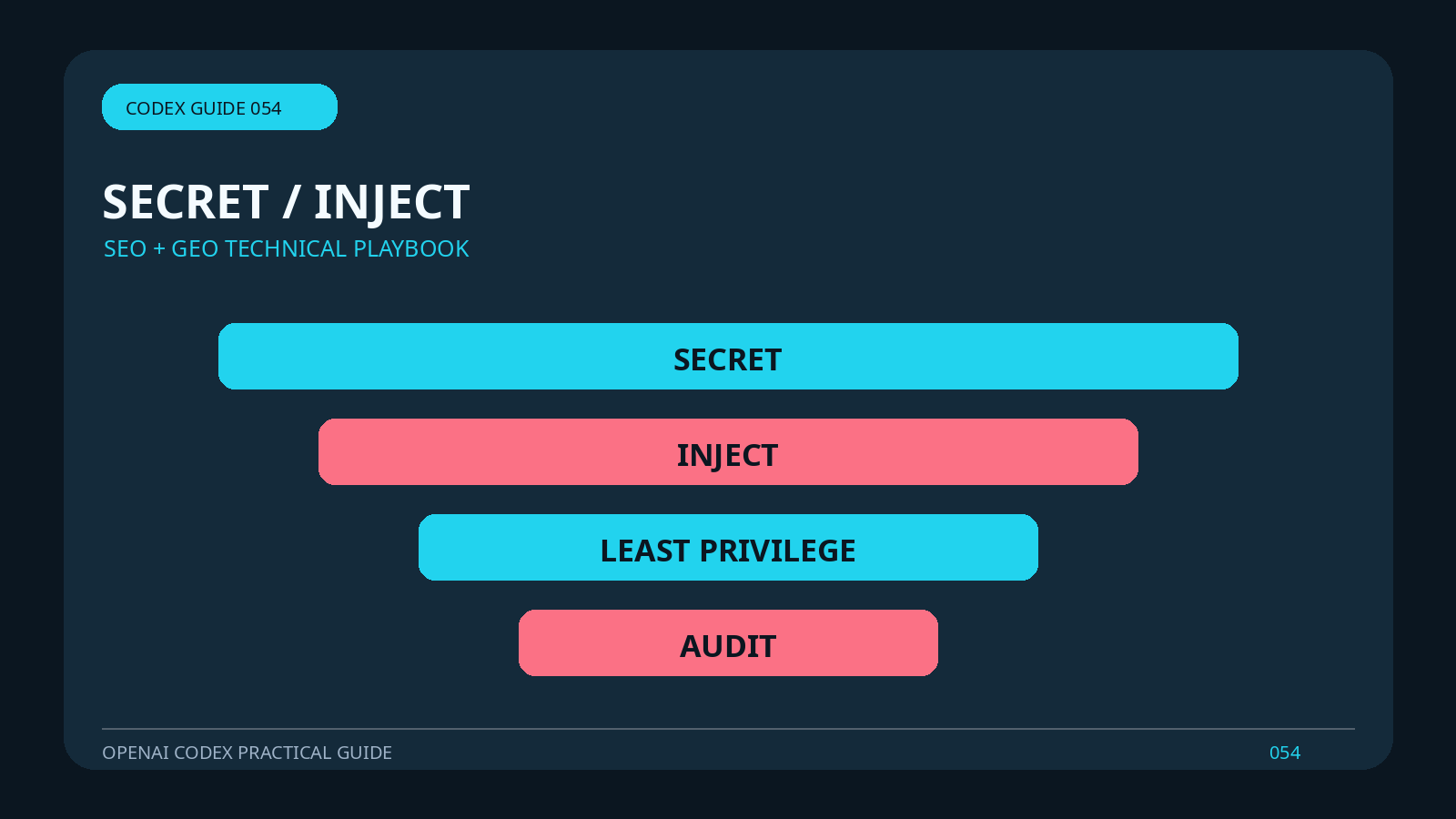
In order to enable the COdex cloud key to be reproduced by another member, the mission record contains at least four check points: SECRET, INJECT, LEAST PRIVILEGE, AUDIT.
Two questions are to be answered at the same time: whether to “check that logs and discrepancies are not leaked, and post-mission audit usage records” and whether the “reuse of the production manager key will extend the individual task risk to the system as a whole.” The former decides whether to continue and the latter decides whether to suspend, roll back or supplement the authorization.
When multiple people work together, configurations, scripts and rules should be subject to reviewable version control; confidential and personal authentication information is kept in a controlled environment and not duplicated with the project.
For long assignments, the phasing summary should refer to actual documents and tests rather than simply describe the work done. The evidence can be reviewed more valuable than the percentage of progress.
The re-use of the production manager key will extend the risk to the entire system.