
This is defined by the common criteria for subsequent orders, authority and certification.
Queries first acknowledge that too much recognition obstructs the process and that there is no possibility of a high-risk operation being released. This is not an increase in the process, but a reduction in the number of variables, invalid re-testing and large-scale modifications.
OpenAI Docs provides the current boundary for this topic. Approval is not an ordinary window, but an authorized boundary for high-impact or non-recoverable operations; organizational strategies may also prohibit some loose configurations.
It is recommended that a representative project be selected to practice first and not to cover all warehouses directly. This is done through low-risk read-and-read automatic execution, network, external writing, authority enhancement and destructive actions require confirmation and then solidified into norms.
Validation can be divided into behavioral and evidentiary components: running the critical path, then auditing the approved, rejected and bypassed operations. Neither should be declared completed without a single time.
The article refers to the configuration item to keep the exact spelling and to interpret the meaning in the natural language. Structured data can only describe the real and visible content of the page and cannot replace the text.
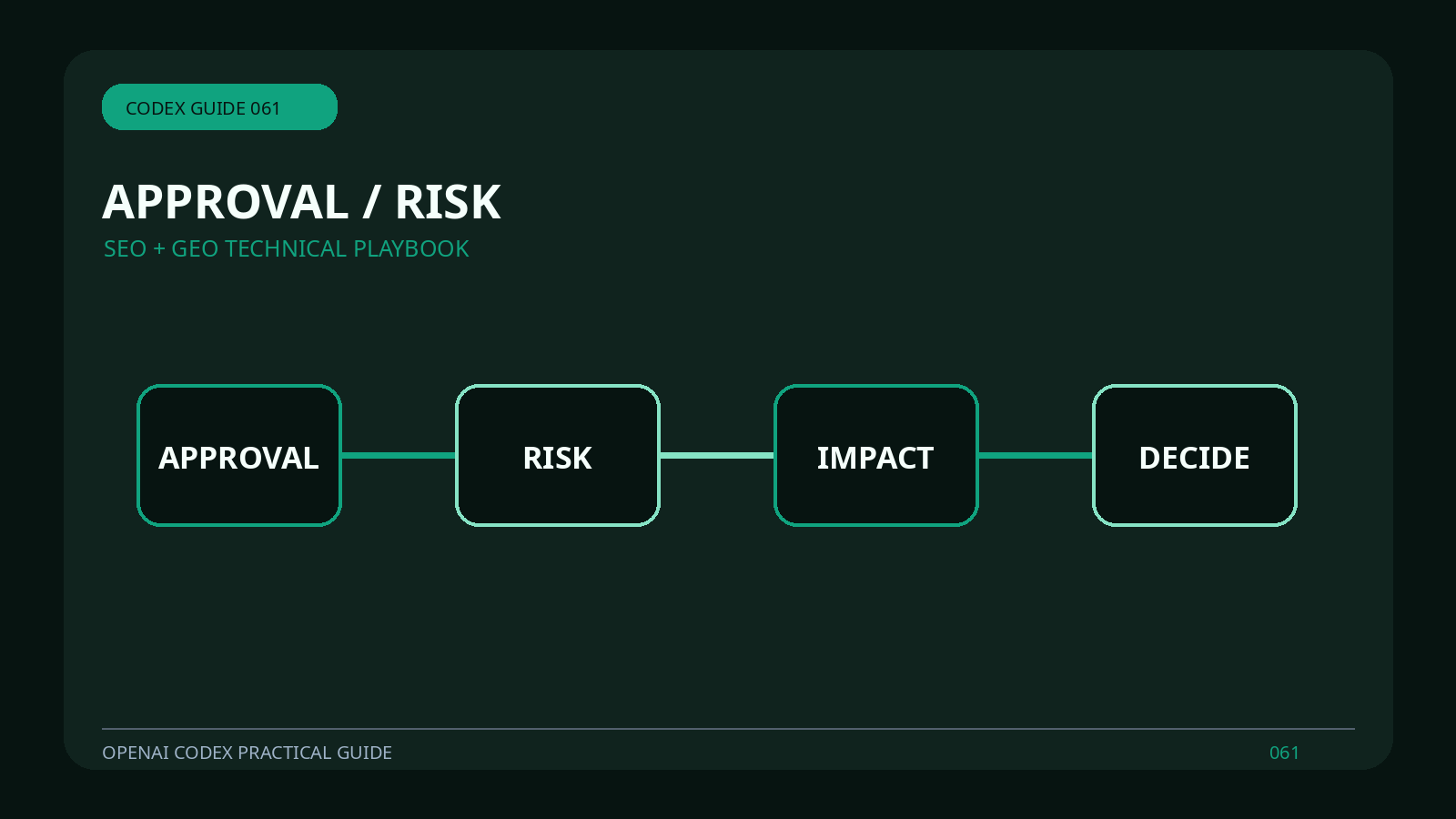
To enable Codex’s approval strategy to be reproduced by another member, the mission record contains at least four check points: APPROVAL, RISK, IMPACT, DECIDE.
Two questions are to be answered at the same time: whether an “audit is approved, rejected and bypassed” and whether there is “a form click on approval that loses its value”. The former decides whether to continue and the latter decides whether to suspend, roll back or supplement the authorization.
For non-technical users, the delivery notes should be separated from “modified” “executed inspection” “unvalidated matters” and avoid considering the technical log as the final result.
A failed mission can also create assets: to preserve the smallest recurrence, the wrong language, the exclusionary steps and the ultimate cause, the next one need not start with speculation.
Do not equate automation success with business correctness.