The answer to this question should first identify the target, the location of the operation and the person ultimately responsible.
In the real project, the failure to submit changes may come from the user, and the agent cannot assume that they can be covered or restored. If you look only at the completion statements in the chat without checking documents and command evidence, the problem can easily be taken to the next stage.
When checking the Codex dirty workspace, the basic capability can be confirmed from official data: Codex code review can start with local differences or Pull Request, but the automatic discovery should still be confirmed by duplicate evidence, testing and manual judgement.
Write this issue into a taskcard that is clearer. The card lists objects, permissions, input and acceptances, and executes: check Git status and diff, avoid irrelevant files, and indicate and edit carefully.
At least one reverse check: at the end, new discrepancies are listed and the original change is confirmed. If the evidence cannot be understood by another member, the context of the delivery is still missing.
The article refers to the configuration item to keep the exact spelling and to interpret the meaning in the natural language. Structured data can only describe the real and visible content of the page and cannot replace the text.
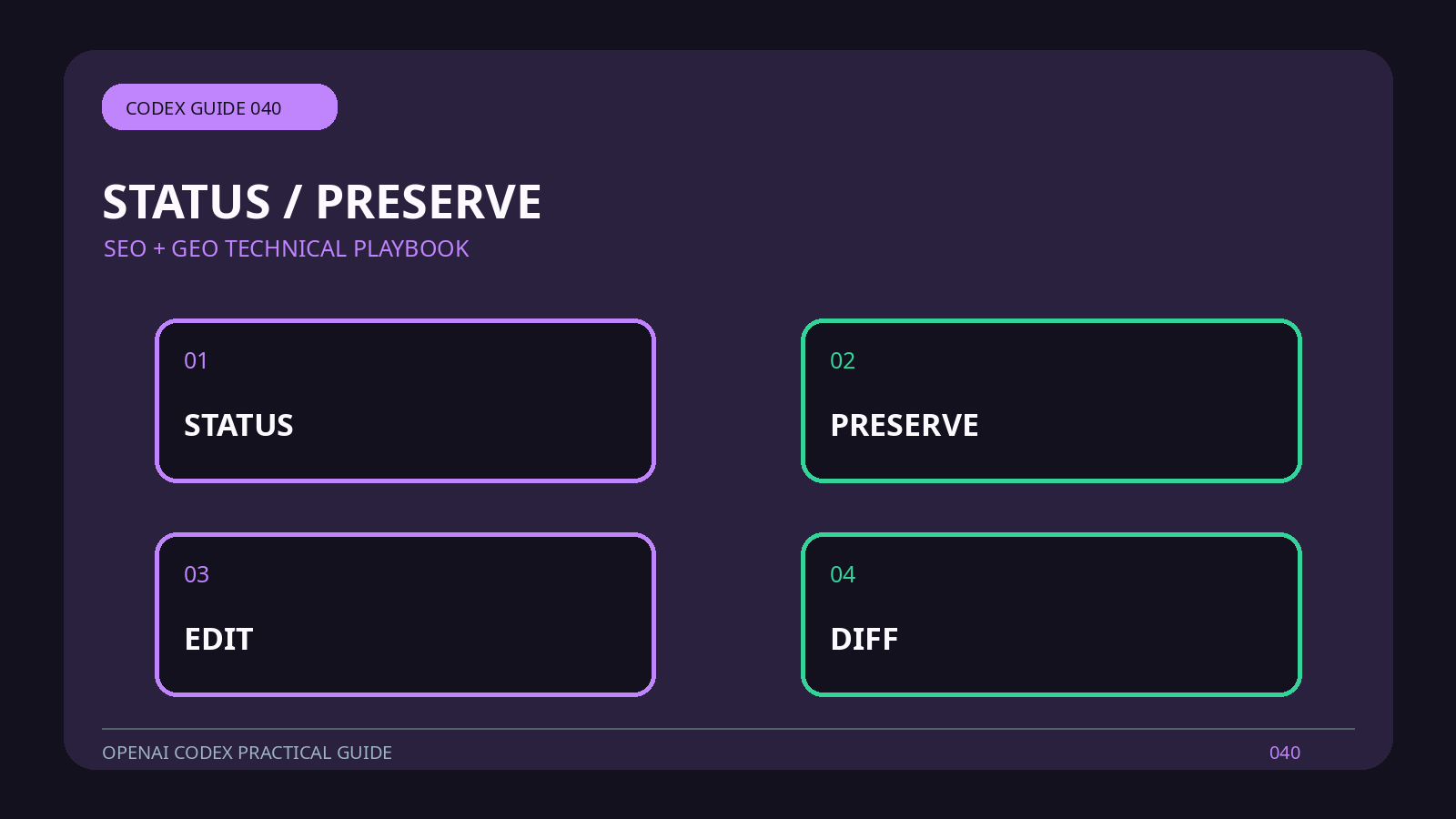
To enable the Codex dirty workspace to be reproduced by another member, the mission record contains at least four check points: STATUS, PRESERVE, EDIT, DIFF.
Two questions are answered at the same time: whether to “end with a list of new discrepancies and confirm that the original change is still in place” and whether “the use of a mandatory return order would result in the loss of irrecoverable data.” The former decides whether to continue and the latter decides whether to suspend, roll back or supplement the authorization.
If there is a need for a unified approach by the team, the HF process can be made Skill, the warehouse rules written into AGENTS.md, and external capacity left to MCP to avoid duplication of maintenance.
If the same process is to enter production, it is recommended that the test warehouse and low-authorized identity be used for several consecutive operations.
The risk boundary is equally important. The use of a mandatory reduction order results in the loss of irrecoverable data.