The real impact is usually not about the length of the hint, but rather whether the boundary is clear. Around this topic, it is important to provide time-frames, context and environmental information that can be replicated, error context, and dissensitization.
In a real project, the complete log often contains noise, secrecy and many unconnected operations. If you read only the completion statements in the chat without checking documents and command evidence, the problem can easily be taken to the next stage.
In cross-checking the Codex log analysis, basic capabilities can be identified from official information: the official failure inventory emphasizes first the collection of the version, the environment, the original text of the error and the minimum recurrence, before distinguishing between configuration, authority, network or tool issues.
If the task has scripts or warehouse specifications, they should be reused as a matter of priority. The first root log is then intercepted, the time stamp and request mark is maintained, with the order to initiate and the expected behaviour, and the deviation from the existing process is recorded separately.
It is not only to see whether Codex has returned, but also to allow Codex to distinguish between primary causes, chain errors and assumptions, and to confirm that differences, logs and products match the target.
Since Codex will keep up-to-date, the article should separate the principle of stability from the details of the version, show the update time and regularly check the lapse orders, interfaces and links.
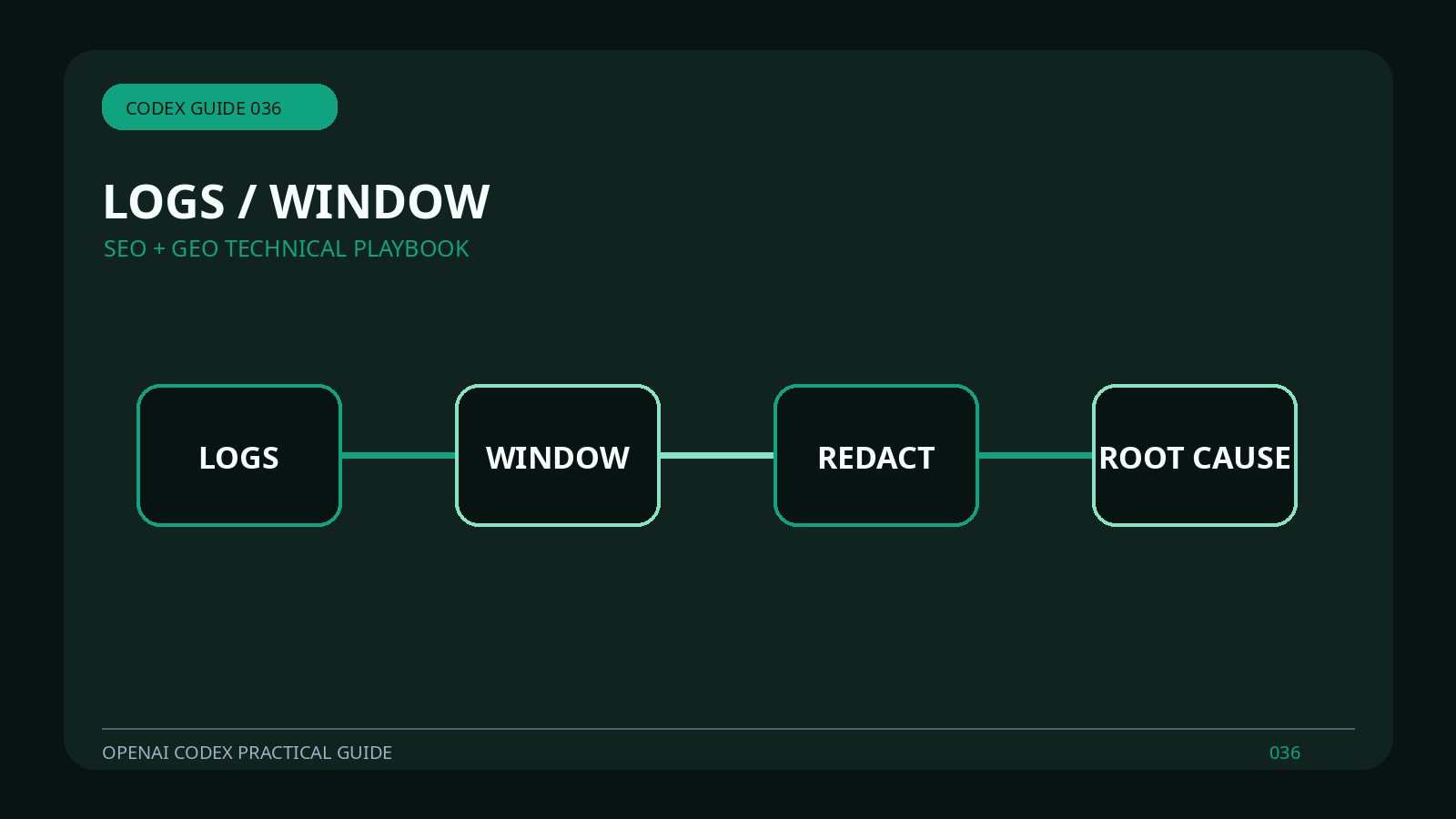
In order to allow the Codex log analysis to be reproduced by another member, the mission record contains at least four check points: LoGS, WINDOW, REDACT, ROOT CAUSE. These English labels can also be used for branch, log or board searches.
Two questions are to be answered at the same time: whether to “make Codex distinguish between primary causes, chain errors and assumptions”, and whether to “provide only the last line of error, which may miss the earlier real cause.” The former decides whether to continue, and the latter decides whether to suspend, roll back or supplement the authorization.
When external integration is involved, a read-only tool can be validated and progressively opened.
It is also necessary to open the generated file, format and quantity before the final delivery.
For non-technical users, the delivery notes should be separated from “modified” “executed inspection” “unvalidated matters” and avoid considering the technical log as the final result.
In the event that “only the last line of reporting errors may miss the earlier real cause”, the original log and differences should be maintained, with a controlled return to a controlled state before discussions continue.