
The answer to this question should be based on the identification of the subject, the location of the operation and the ultimate person responsible.
A single request for the design, development, migration, deployment and writing of a document would result in an excessively long chain of certification. Such deviations are often not immediately reported as errors, but occur at the time of the review, testing or deployment of the discrepancy, so they must be limited from the source.
When checking the division of the Codex task, the basic capabilities can be identified from official information: OpenAI Docs recommends that the objectives, context, limitations and validation be clearly stated; complex tasks also require clear phases, conditions of cessation and observable results.
This can be done at a minimum step: diagnosis and design, then core modifications, then migration of data, and then return and delivery. Every step retains the command, version and result, and any anomaly stops at the current level.
It is not only the return of Codex that is completed, but also the retention of discrepancies, tests and to-dos at each stage, confirmation before proceeding to the next stage, and confirmation that differences, logs and products are consistent with the target.
The website version should not reproduce only the records of the dialogue. Clear definitions, lists of operations, erroneous branches, official sources and related inner chains should be added, and pictures should be used to describe the actual theme using an accurate ALT.
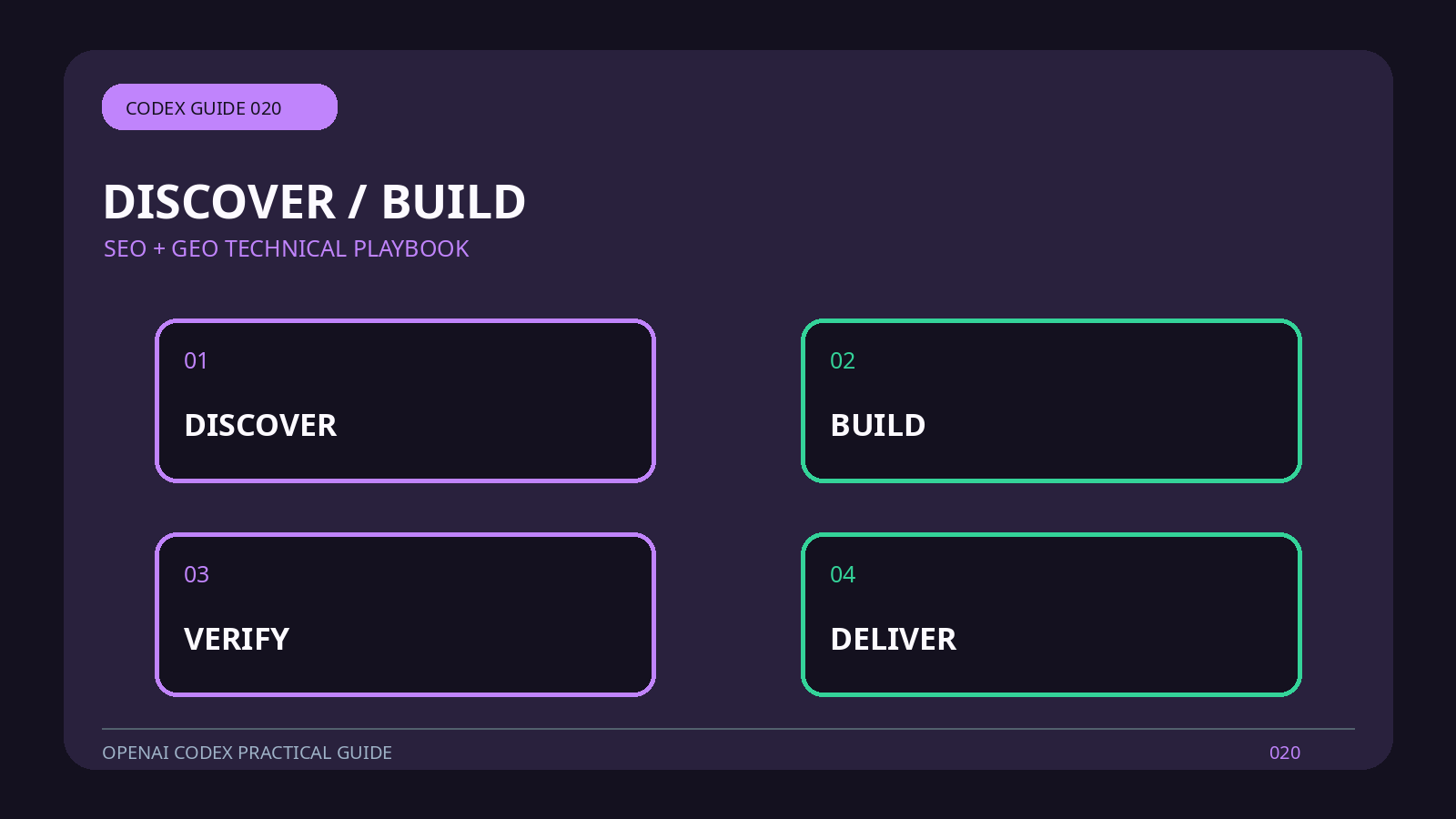
In order to enable the Codex task split to be reproduced by another member, the mission record contains at least four check points: DISCOVER, BUILD, VERIFY, DELIVIER. These are also available for branch, log or board search.
A Qualifying Duplicate answers two questions at the same time: whether “the difference, test and to-do will be preserved at each stage and confirmed before the next stage” and whether there is “too much to be done to lose the overall goal, too much to be done to fail.” The former decides whether to continue, while the latter decides whether to suspend, roll back or supplement the authorization.
When multiple people work together, configurations, scripts and rules should be subject to reviewable version control; confidential and personal authentication information is kept in a controlled environment and not duplicated with the project.
For long assignments, the phasing summary should refer to actual documents and tests rather than simply describe the work done. The evidence can be reviewed more valuable than the percentage of progress.
A reverse check should be made before you go online: too much detachment loses the overall goal, too much to locate.