
Many content and technologists are directly looking for a plugin or a fixed parameter when they encounter “how to account for” the SEO's queries, but the real starting point is to clarify the scope of the problem. B2B clients often visit and communicate over the device, and the last direct visit conceals the nature of the search.
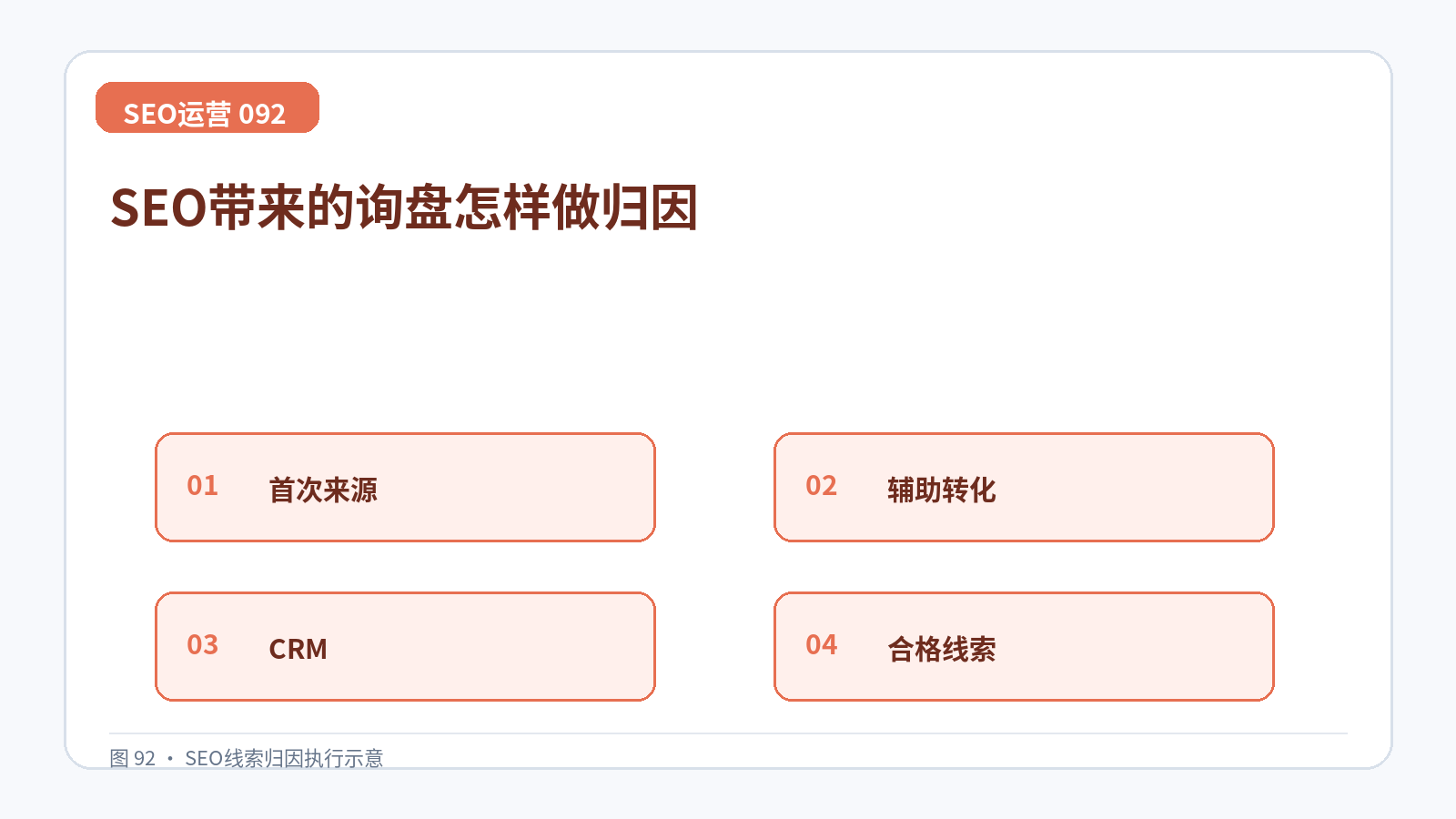
The key tenet here is the need to preserve the first source, the most recent source, the landing page and the subsequent CRM phase, while respecting privacy and consent requirements. It is therefore important to take a snapshot of the current situation, to create a change order of business page status, internal links, capture time and natural search performance, and then to implement an optimised action to avoid misperception of historical fluctuations.
It is more prudent to write the form to the permitted source fields, use the UTM to regulate external activity, fill back the telephone and mail trail to the CRM, and define the appropriate trail. If the site is large, you can first select a high-value catalogue pilot, and, in the case of small stations, give priority to the front page, core classification and content that can generate the Queries, without having to cover all business pages in form.
The change is reviewed with the same calibre: more natural lead, auxiliary transformation, sales acceptance, opportunity amount and transaction cycle. Cross-checks are also conducted to verify whether users can read, navigate and complete the forms successfully, as the technical signals are correct but the business pages are not available and do not result in sustainable SEO returns.
In particular, it is necessary to avoid forcing a single model to claim that all the credit is lost and that the same customer is double-counted without weight.
When you actually reset, you can choose a successful business page and a failed business page in parallel. The SEO trail is attributed to changes in their entry, content, capture status and transformation, making it easier to form the next clear-cut action than by looking at the average of the entire site.
If content and technical resources are limited, this method is first used to generate a Query or to take on a key navigation business page. The ancillary transformation and CRM can be stabilized and then extended to the low-flow directory to avoid cross-checking the scope too large for final performance.