
The question is whether the target URL is clear, whether reptiles and indexing systems have steady access, and whether the intended answer is available to the user. The page is usually bulk-oriented to similar queries, but directs users to the same service and lacks independent value.
Only real service differences, local experience and independent delivery information can support a stand-alone web site. It is therefore not appropriate for the audit to export only the wrong list of tools, but rather to mark the impact template, business value, repair cost and validation method for each issue, first addressing the problem of blockage.
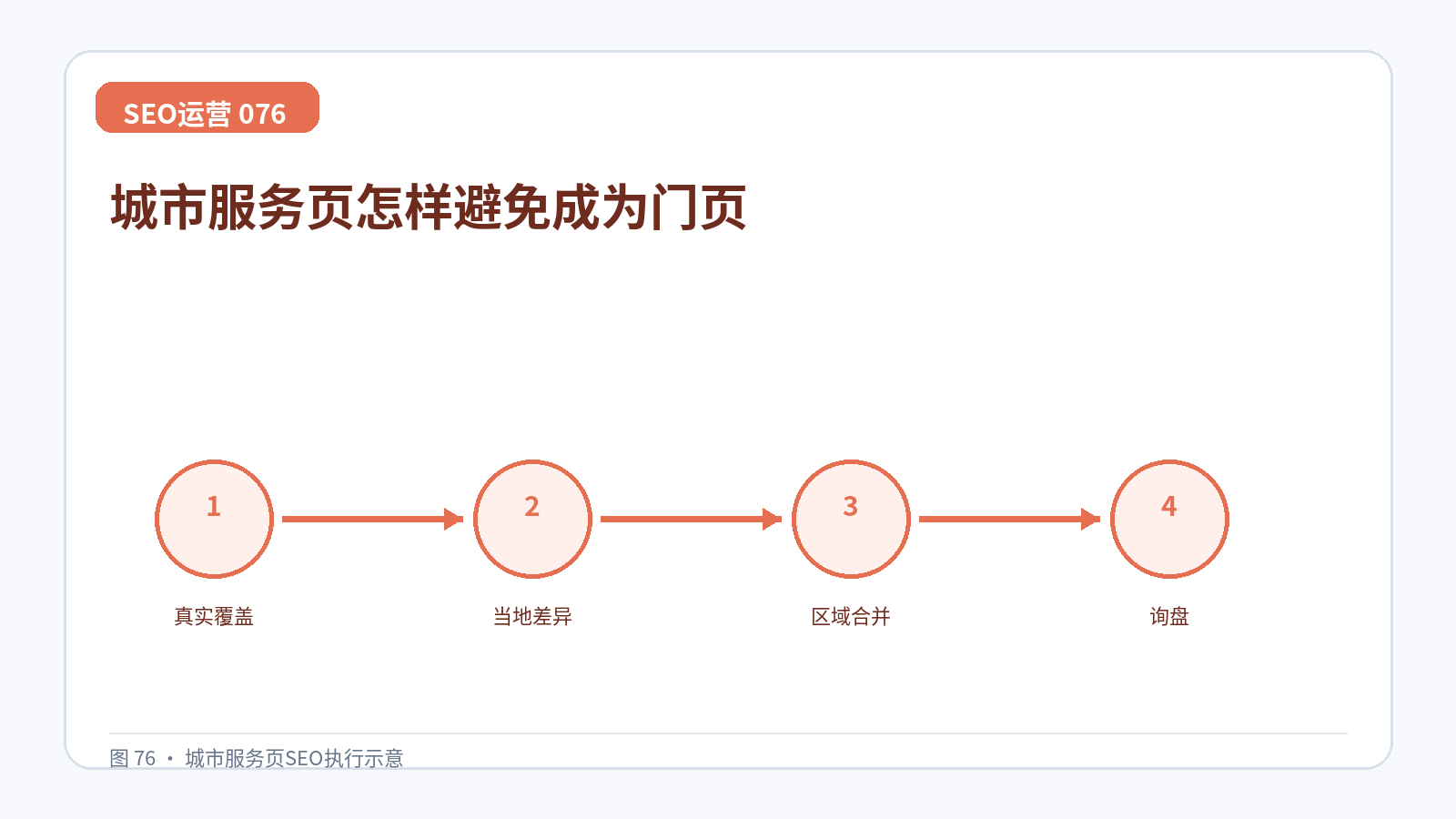
On implementation, coverage and resources are identified, followed by local regulations, time limits, cases, site maintenance staff or price implications; cities that cannot provide for differences should be consolidated into regional pages.
The results are reviewed using a sample of the same web site: an assessment of each page of valid queries, local search coverage and content differences, and the regular deletion of unserviceable sites. There are also cases where the billboards have not been improved, which tend to reveal rule exceptions or data calibre problems. The replacement of city names, weather or population data is neither helpful nor considered to be of low value in scale, so any batch operation should be validated first on the test environment and on a small amount of URLs.
In order to prevent the conclusion from remaining in the report, it is recommended that real coverage and queries be issued as acceptance items and that the anomaly be judged by whom and how long it should be repaired. This way, the new site will follow the same criteria and the old site will be discovered in a timely manner after the template changes.
When you actually repeat a disk, you can choose a successful site and a failed site in parallel. It is easier to create a clear next set of actions than to look at the average of the entire site.