
It should be placed on the home page or on a page representing the organization and consistent with the brand information in the station. Products, content, technology and sales see different parts of the same land page, and the user deviations that must be agreed to eventually be addressed.
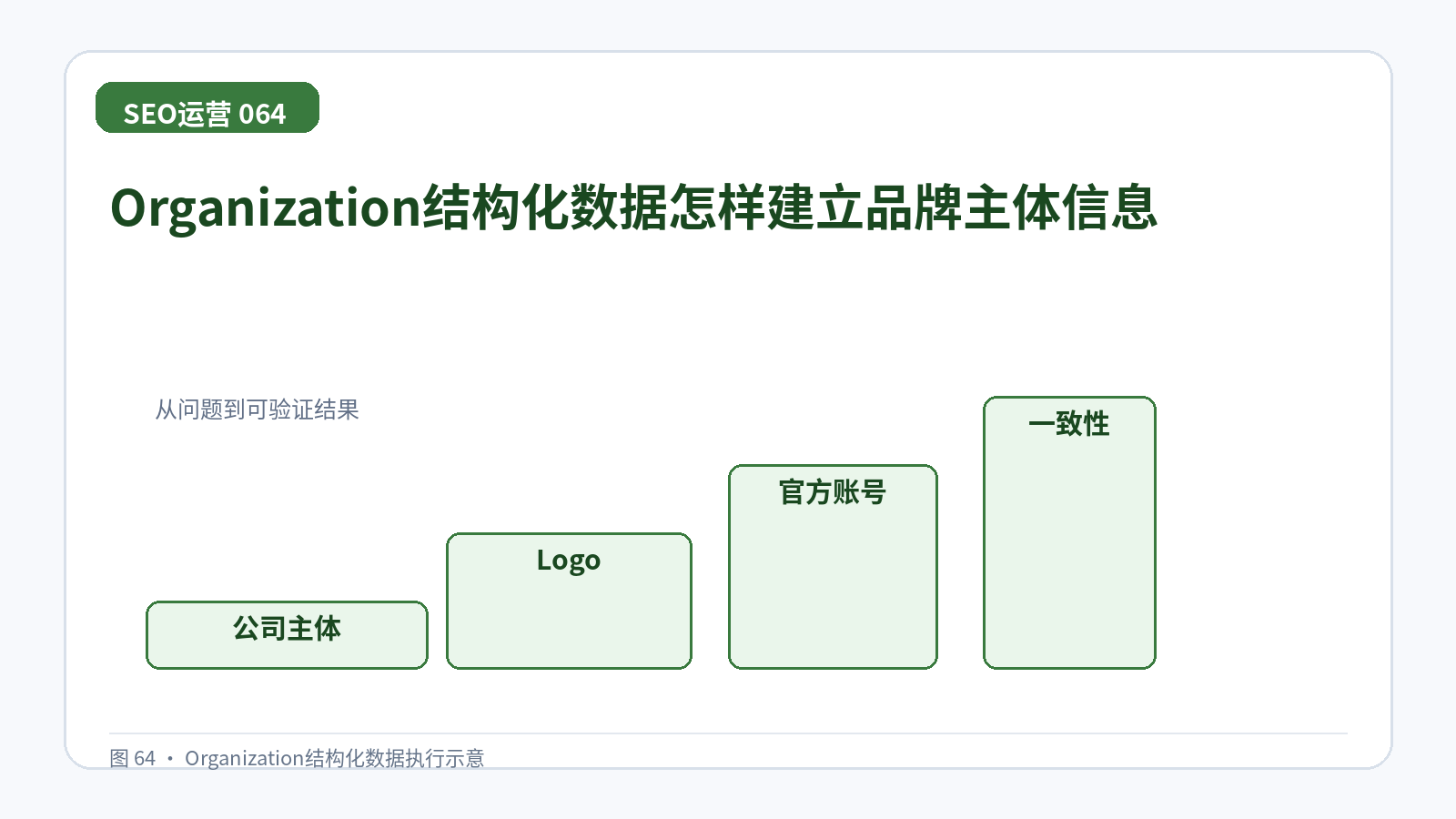
If there is a stable performance, it is not recommended to re-do it immediately for the purpose of pursuing a form; first, it is confirmed that the organizational markers are used to describe the company’s name, web site, logo and official identity. Small-wave range adjustments are usually easier to keep a valid signal and to judge which elements actually work.
This can be done by providing normative names, url, logo and real sameAs, adding contact and address where necessary, and harmonizing brand spelling and icons. The implementation list also includes unaltered entries, such as URLs, main content or transformation paths, to reduce multiple variables.
Once on line, the authentication mark can be deciphered, Logo can be cross-checked and displayed, and external information links are regularly reviewed. If core indicators deteriorate and technical item-by-line anomalies occur, expansion should be suspended according to pre-set rules; if the data are stable, then the practice will be extended to similar landing pages.
The inclusion of distributors or unrelated social media accounts in sameAs confuses the main relationship. Therefore, the final delivery should not only be a landing page, but should also include a map, test data feedback and follow-up maintainer, ensuring that three months later there is still an understanding of why this set-up exists.
User feedback is also included in the SEO judgement. Search data indicate whether the drop page was found, but do not fully explain whether the answer is clear; client bias, form content and sales labels can be added to this, bringing the structured data optimization back to real demand.
At the maintenance level, “Organisation Structured Data” can be added to the quarterly spot-check: randomly selects old and new landing pages, checking that configurations, text, links, and data are still consistent with current operations. Search rules and product information will change, and the correct landing pages will need to be clearly updated.