
The search results page on the site should be indexed to answer both questions: whether URLs are easy to understand and whether access leads to a reasonable next step. The search pages on most stations are unlimited, unstable and duplicated with the classification page, and are not suitable as search drop-out pages.
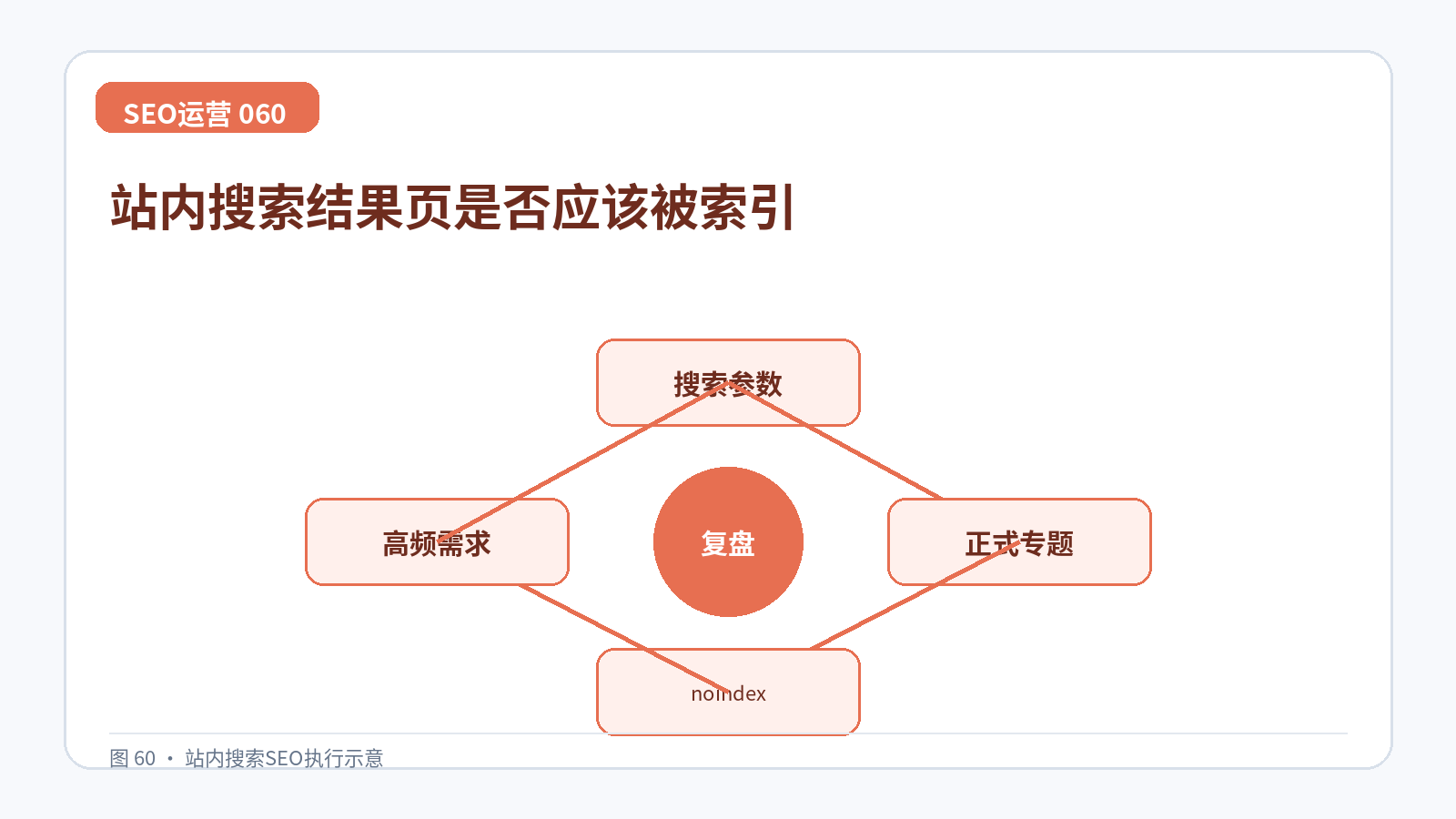
Technically, a theme with a stable need should build a formal classification or thematic page, rather than open to random URLs.
The implementable options are: setting up noindex on the search result page and reducing reptile entry and retaining user access; converting high frequency and inventory queries into fixed URLs for editorial maintenance. URLs are deployed to connect natural sources, land pages and subsequent lead stages to know which queries do not come from visitors but from suitable customers.
Monitors the size of the search parameters found, captures logs and in-site high frequency query conversions.
A complete ban on capturing does not allow access to noindex; an open full search quickly produces a low-quality index. Therefore, SEO executives, content editors and operators should double-check and decide on the next round of updates using authentic search words and client feedback, instead of simply continuing to add text as recommended by the tool.
At the maintenance level, a "station search" can be added to the quarterly spot-check: randomly selects old and new URLs, checking that configurations, text, links, and data are still consistent with current operations. Search rules and product information will change and the correct URLs will need to be clearly updated.
In order to prevent the conclusion from remaining in the report, it is recommended that the search parameters and HF requirements be translated into a deployment acceptance item and that the anomaly be judged by whom and how long it will be repaired. This way the new URL follows the same standard and the old URL can be detected in a timely manner after the template changes.