
Small websites do not need to copy complex systems of large platforms when they deal with “how to set a standard source of content without losing user value”. First, when the same article is deployed with multiple domain names, the search service selects a representative version, but cross-domain canical is a reminder that matching the most important 10 to 20 URLs is usually more effective than deploying a set of expensive tools.
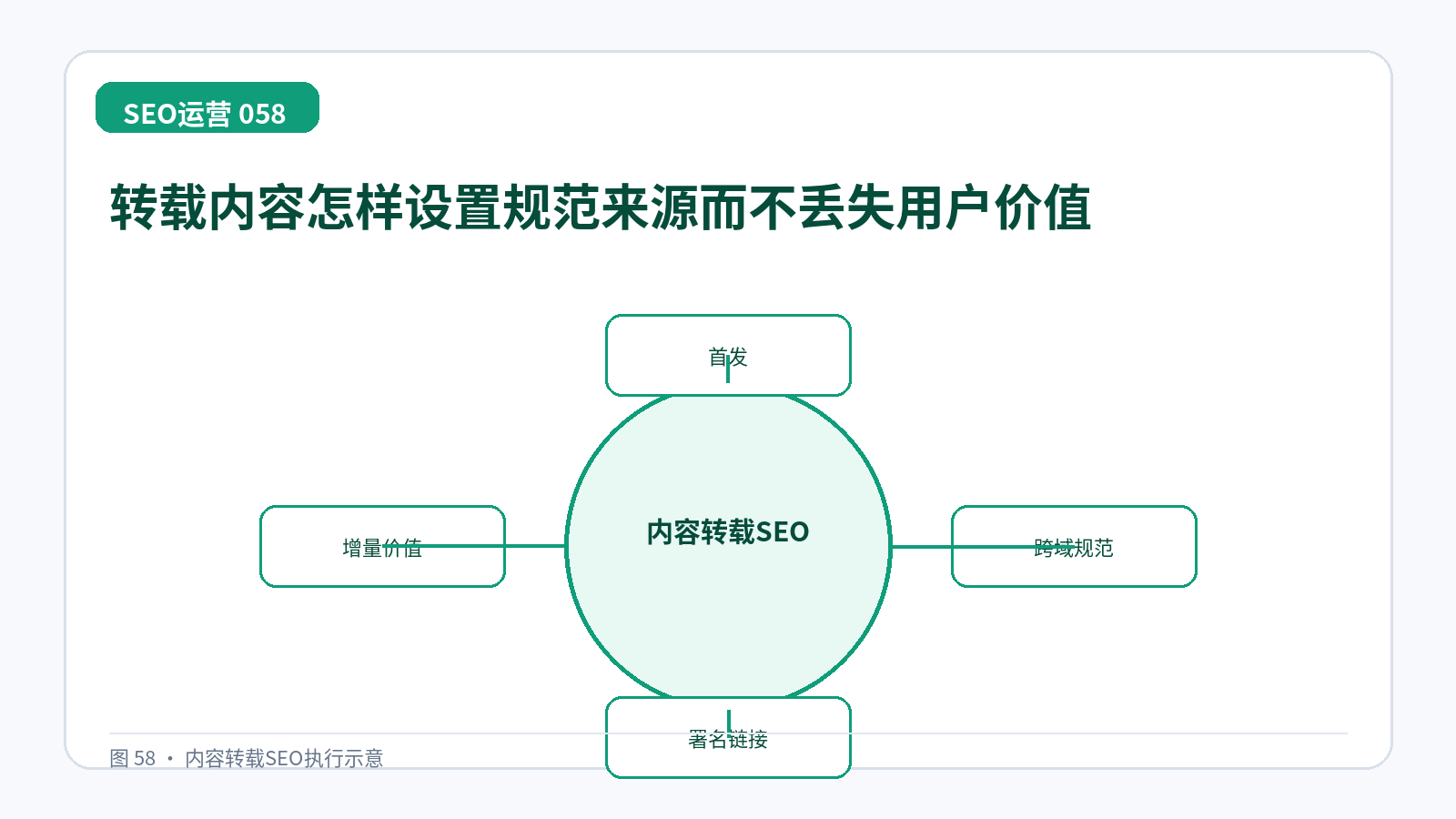
The minimum feasible criteria are derived from this rationale: deployment protocols should be clear about initial, permissible, linked and updated responsibilities. As long as URLs, content, links and status signals are consistent, automation will be added; if underlying relationships are confused, tools will only produce more errors more quickly.
This can be done manually first: if the cooperative controls the technology, it can point to the original, or at least clearly signs and links the original text, the station provides additional local views rather than a full copy. When the number of URLs increases, then repeat steps in CMS fields, template tests and time monitoring, so as to avoid each deployment relying on individual memory.
Monitors the flow of URLs, extra-chains and reprints, and finds that the wrong version leads the way and works with partners. Validation is passed and extended to the next set of URLs. Note that writing “sources” at the end of the text alone does not guarantee a normative choice, and bulk reproduction may reduce the overall uniqueness of the site.
If operational and development resources are limited, this method is applied first to URLs that can generate queries or take on important navigation. Cross-domain norms and signed links can be steadily passed, then extended to the low-flow catalogue to avoid over-receiving and unprocessed results.
User feedback is also included in the SEO judgement. The search data indicates whether the URL is found, but does not fully explain whether the answer is clear; this can be supplemented by client questions, form content and sales logs, which allow replicating the SEO to optimize back to real needs.
At the maintenance level, SEOs can be selected on a quarterly basis: randomly select new and old URLs, checking that configurations, text, links, and data are still consistent with current operations. Search rules and product information will change, and the correct URLs will need to be clearly updated.