
“URL parameters should be kept, regularized or uncapitulated” do not have a single answer for all websites. The parameters may change the content, track the source, sort or simply control the display, and different roles require different strategies. First, the priority is judged by whether it stops the grab or index, then by whether it affects the user's task, and lastly, by the pointer level of the tool.
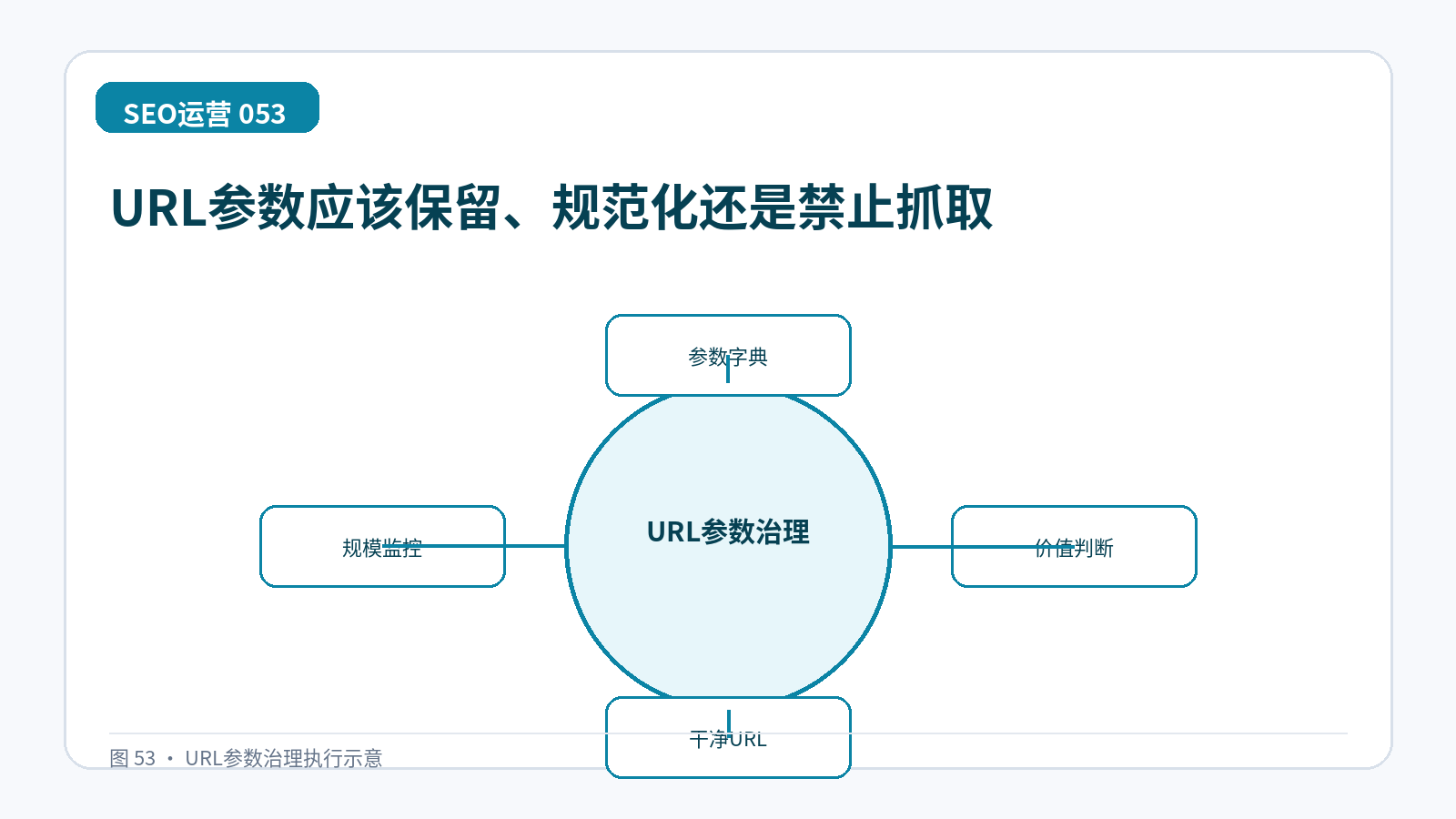
In terms of the search work mechanism, a numeric dictionary is created to determine whether or not independent values and stable content are generated, and then the indexing and capture method. This means that URL content, HTML signals, internal links and server responses need to express the same conclusion; any one of these layers is contradictory and increases the cost of miscalculating system selection and operation and development.
This sequence is used when you land: tracking parameters are removed from the internal link and are standardized to clean URLs; a validly needed filter page has a fixed readable address; and an unlimited combination reduces the discovery entry. A sample check of real URLs is made every step of completion, and it is not until the whole batch is deployed that the template variable, cache or language version is not synchronized.
Monitors the number of URLs, capture frequency, standard selection and natural flow of parameters. When the results are not improved, redisclose by the type of parameter. If the results are not improved, the sample and time window are sufficient, then the assumption is judged to be incomplete or incomplete. What needs to be avoided is a one-size-fits-all ban on all question mark URLs that may block valuable break pages or product variants. The SEO does not exit the full-point configuration of the scene, and clear trade-offs are more important than stacking settings.
If operational and development resources are limited, this method is applied first to URLs that can generate queries or take on important navigation. Value judgements and clean URLs can be passed steadily, then extended to the low-flow catalogue to avoid over-receiving and unprocessed results.
User feedback is also included in the SEO judgement. Search data indicate whether or not the URL is found, but do not fully explain whether the answer is clear; client questions, form contents and sales logs complement this and allow the URL parameter to optimize back to real needs.