
Deciding that “why can't latched pictures not cover the screen master map” does the right thing by asking if there are three failures: if the target URL is clear, if access to the capture and indexing system is stable, and if the user has the expected answer. Lattting is suitable for the bottom of the view, and requests for a first-screen LPCP map are expected to increase directly if they are delayed. None of these three failures is established, and there is no urgency to scale up.
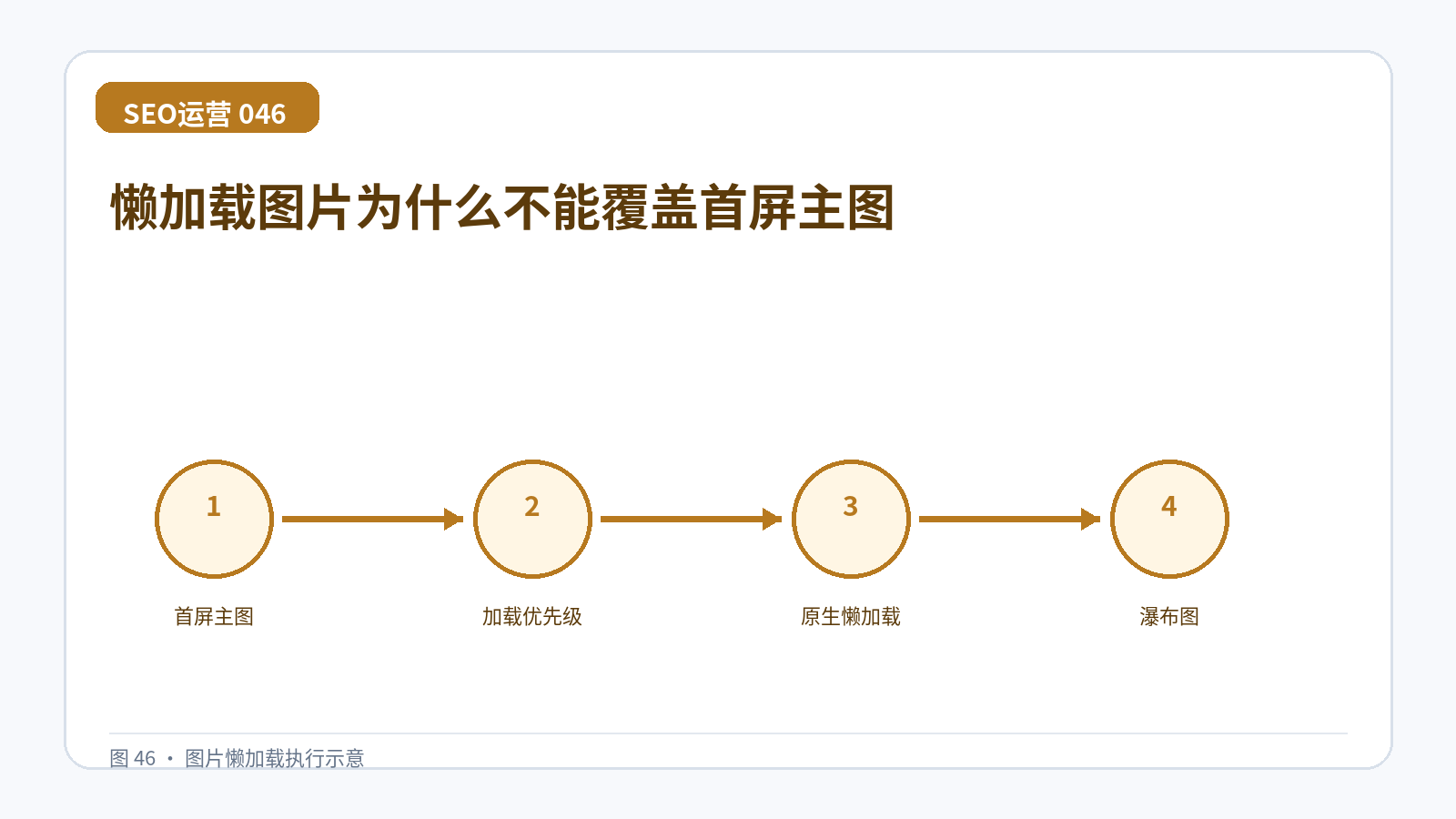
The loading strategy should be based on the location of the picture and the importance of the operation. It is therefore not appropriate for the audit to export only a list of errors in the tool, but rather to mark the impact template, business value, repair cost and validation method for each failure, first to deal with the disruption.
On implementation, the master chart of the front screen is properly loaded and set high priority, and the following image uses the original loating properties, while retaining sizes and accessible img elements. For old systems that cannot be modified immediately, the risk can be controlled with the least feasible option, while placing the underlying restoration in the development plan.
The feedback review uses the same post-site sample: confirm that the master map was launched early in the netfalls, rolling to test the follow-up picture and viewing the LPCP and photo index. It also involves filing unimproved cases, which often reveal rule exceptions or data calibration failures. Using JavaScript to place a photo address in non-standard properties, which may make reptiles and non-script environments difficult to detect, so any batch operation should be validated first on the test environment and on a small amount of production URL.
In order to prevent the conclusion from remaining in the report, it is recommended that the front screen master and waterfall charts be published as acceptance items and that the anomaly be determined by whom and how long. This way, the same standard is applied to the page in the new station and the page in the old site can be discovered in time after the template changes.
When you actually repeat a disk, you may choose a page within a successful station and a page within a failed station to compare. The entry, content difference, capture status and conversion feedback around the picture are lazyly loaded.