
The "HTML site map is now necessary" will ultimately answer both the search and the operation anomalies: whether the content page is easily understood and whether access is a reasonable next step. The main service user and accessibility of the HTML site map can also provide additional detection pathways for important fields.
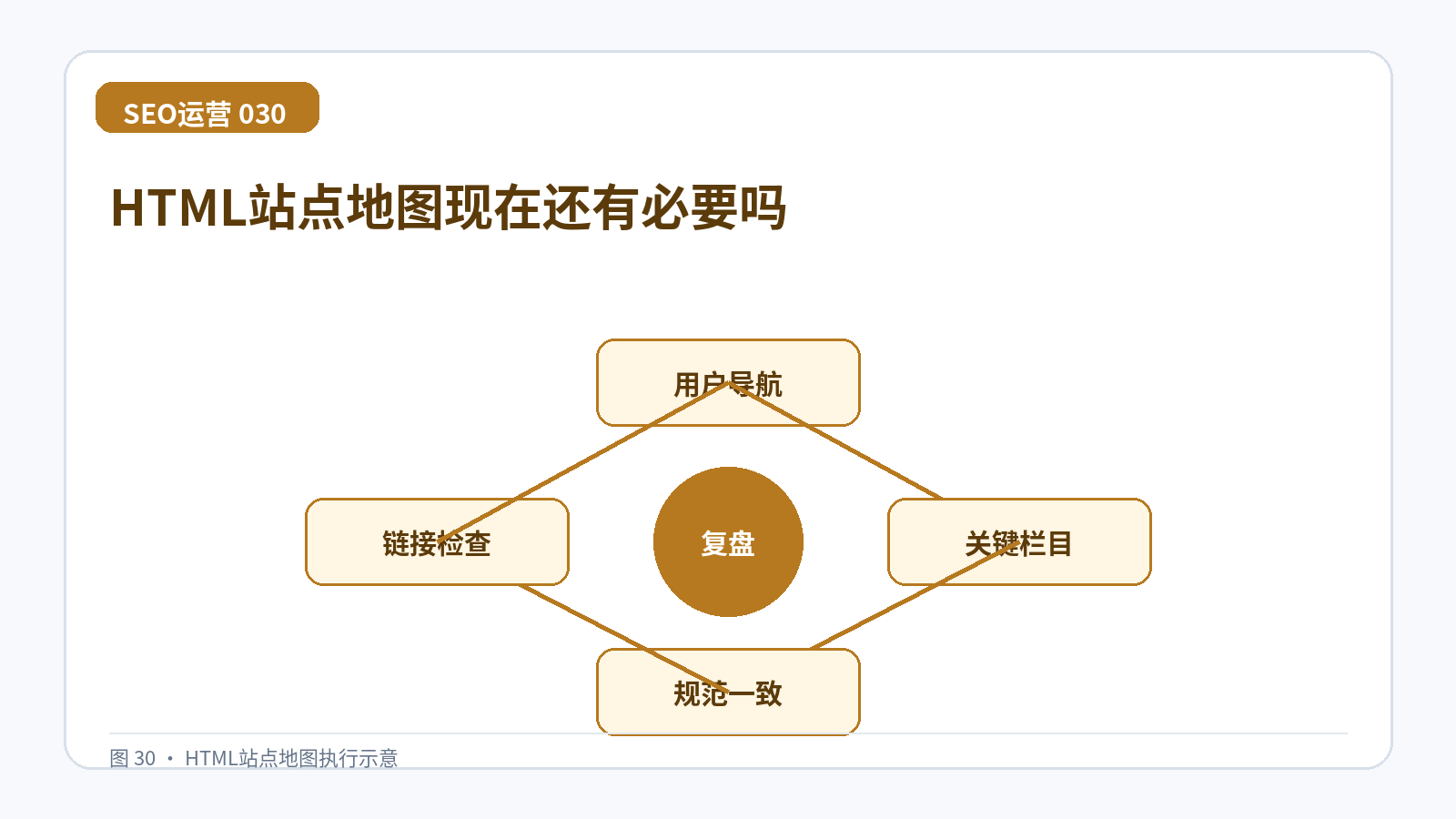
Technically, it should not be a large link page for all parameters, but a stable, understandable structure. The content should clearly describe the subject, conditions, evidence and limitations of application, so that the search summary and user judgement are derived from the same set of true information.
The implementation options are: list key columns and resources by business theme, control the number of single-page links and align with the standard URL of the main navigation and XML map.
Check if the user is actually using the link, whether the link is valid and whether it helps to isolate important content pages.
The use of HTML maps as keyword-linked farms reduces usability and may expose a large number of low-value addresses. Thus, SEO executives, content editors and business people should take a joint drive to decide on the next round of updates using real search terms and client feedback, rather than simply continuing to add text as recommended by the tool.
At the maintenance level, “HTML site maps” can be added to the quarterly spot-check: randomly selecting old and new content pages, checking that configurations, text, links, and data are still consistent with current operations. Search rules and product information change, and the correct content pages need to be clearly updated.
In order to prevent the conclusion from remaining in the report, it is recommended that the user navigation and link be validated as a release acceptance item, and that the anomaly be judged by whom and how long it will be repaired. This way the new content page follows the same standard, and the old content page can be detected in time after the template changes.