
The difference should not be just a text or a label on the content page. What really changes around " how the relevant article module avoids a random link " , is whether the search system and the information available to the user is clearer. The recommendations can continue the user ' s task and connect the subject, but the random or all-stop hot list has limited relevance.
This is because the basis of the recommendation should be the physical relationship in the subject, user phase, product connection or content. When the same conclusion appears in both content pages, HTML and in-site paths, the system is more stable and users do not need to guess the next step.
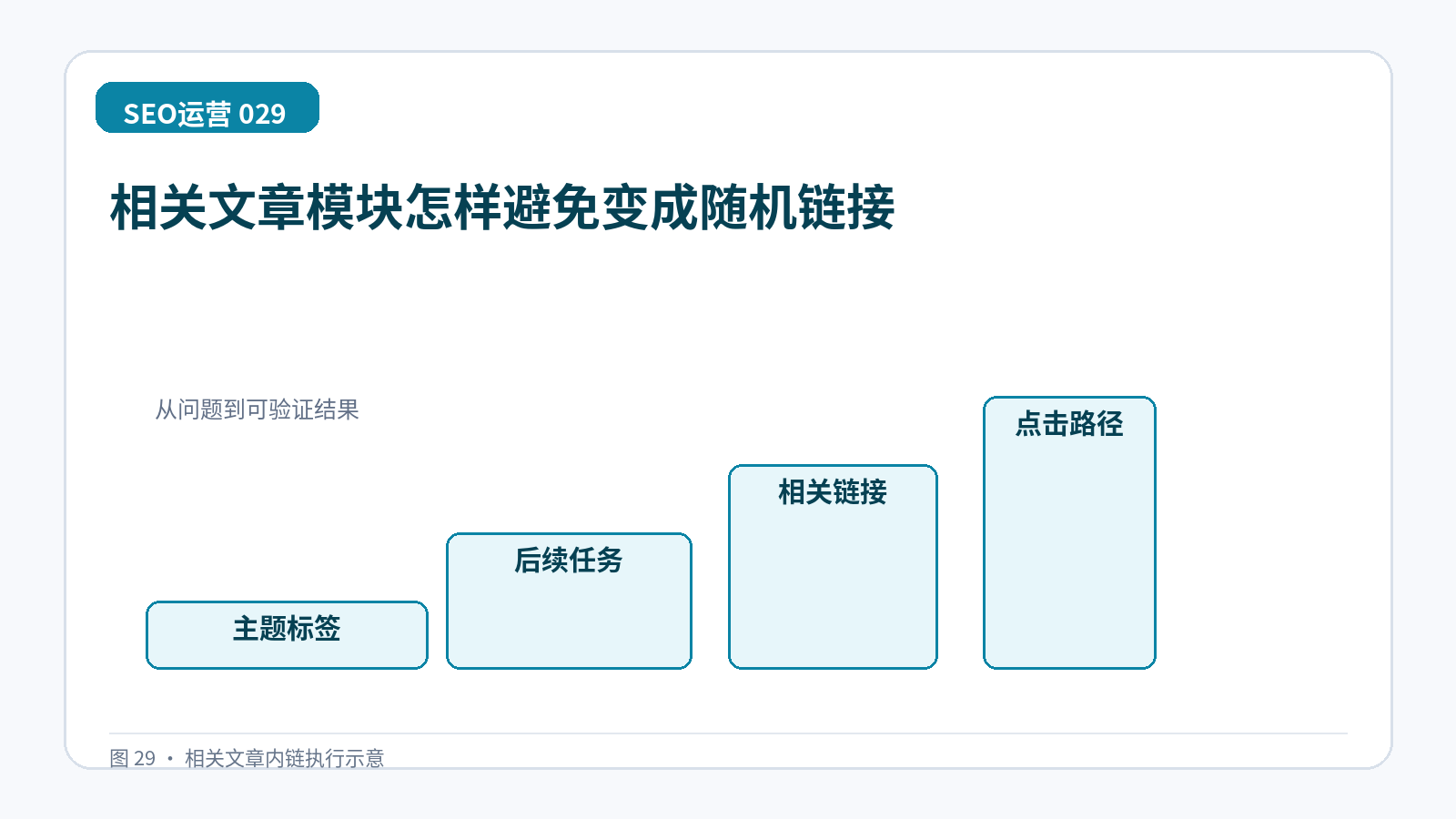
The landing process is to set the theme label for each content and the next task, give priority to three to six pages that answer subsequent anomalies, and regularly clean up invalid links.
When assessing the impact of the observation module, clicks, follow-up reading, target page grabs, and transformation paths go beyond the number of displays. If the visibility increases but the quality of the query is reduced, the content page may attract a wrong intention and need to be re-corrected back to the title, the beginning and the action entrance.
In particular, it is important to avoid automatic recommendation at the time of publication that would allow different topics to interlink and create a noise network over time.
User feedback is also included in the SEO judgement. The search data indicates whether the content page is found, but does not fully explain whether the answer is clear; it can be supplemented by an anomaly in the customer's service, form content and sales register, which allows the inner chain of the article to optimize back to real demand.
At the maintenance level, “the inner chain of relevant articles” can be checked on a quarterly basis: randomly selecting old and new content pages, checking that configurations, text, links, and data are still consistent with current operations. Search rules and product information will change, and the correct content pages will need to be clearly updated.