
The difference between optimization and optimization should not be just a text or a label on the web page. The way around “JavaScript” is how to make content indexable. What really changes is whether the search engine and the information that the user gets is clearer. The search engine can handle JavaScript, but the rendering of queues, resource disruptions and client error delays or loses content.
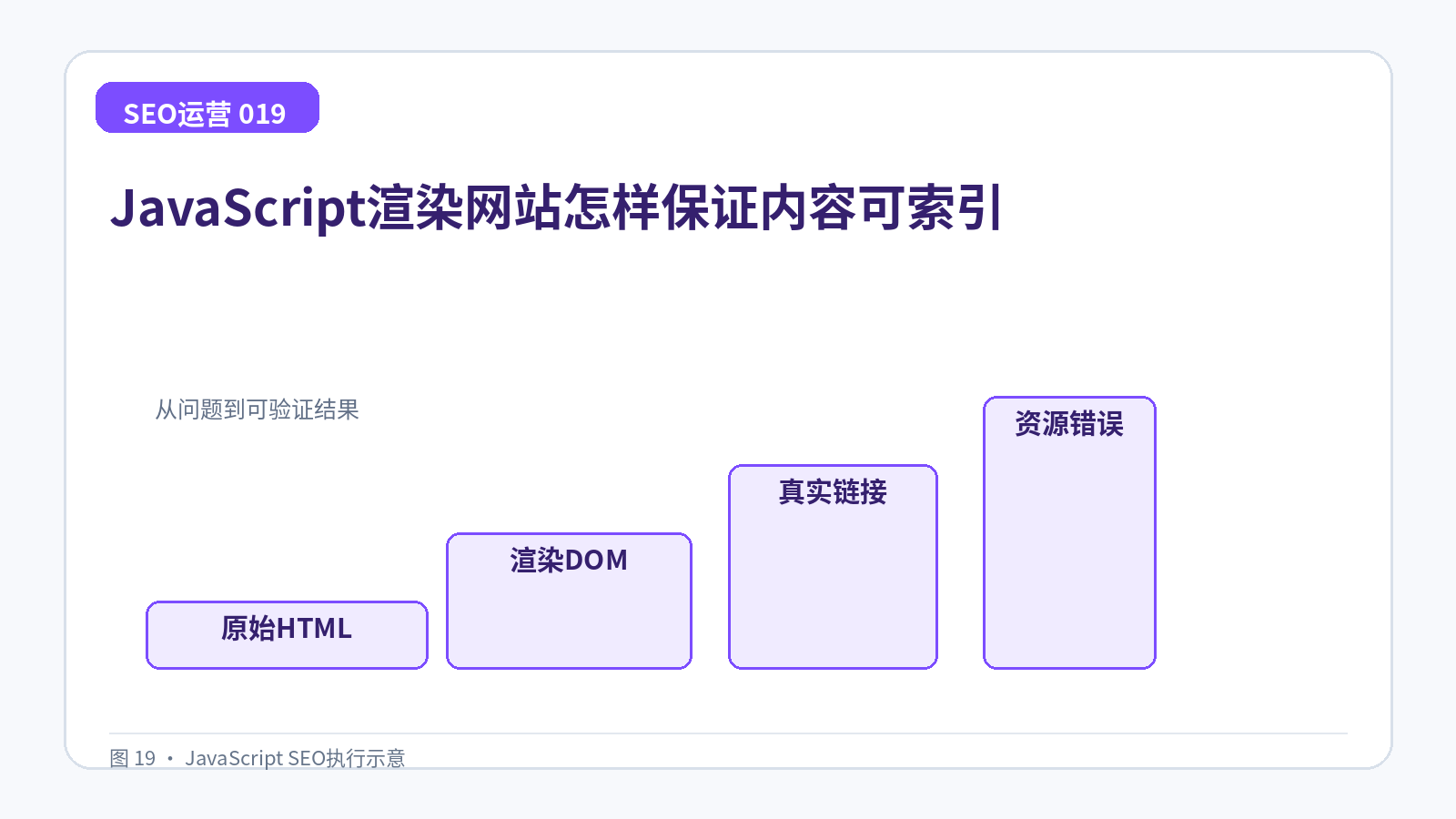
This is because key text, links, and metadata should appear in a stable HTML and keep each URL directly accessible. When the same conclusion appears at the same time in web content, HTML and in-site paths, the system is more stable and users do not need to guess the next step.
The implementation process is as follows: priority service rendering or static generation, ensuring that links use reala labels and href to test the base content after a script has been disabled and post-referral DOM. Checks with real URLs on the line, not just previews in the back, and then cleans up the cache and confirms that the moving side is not missing from different language versions.
When assessing, URLs are used to compare the original HTML with the rendering of HTML, to monitor resource errors, blank templates and initial capture delays. If the visibility increases, but the quality of the query drops, this indicates that the web page may attract a false intention and needs to be re-corrected back to the title, the header and the action entrance.
In particular, it is important to avoid reducing the reliability of detection and rendering by simply jumping from a click event, carrying content with a snivelled address or relying on login to API. Turning an optimization into a template rule and maintenance system will not re-emerge the same problem at the next reversion or batch import.
User feedback is also included in the SEO judgement. Search data indicate whether the web page is found, but do not fully explain whether the answer is clear; client questions, form content and sales retention can complement this and allow JavaScript SEO to optimize back to real needs.
At the maintenance level, “JavaScript SEO” can be selected on a quarterly basis: randomly select new and old pages, checking that configurations, text, links, and data are still consistent with current operations. Search rules and product information will change, and the correct web page will need to be clearly updated.