
A common SEO accident is that the team is “optimal” and the page can be opened, but the search performance has deteriorated. Turning to the question of whether to merge or separate pages when a keyword appears on the site, the common root is that the rotation of the two pages is not necessarily internal, and that the real problem is that they have the same intention and are not able to perform in a stable way.
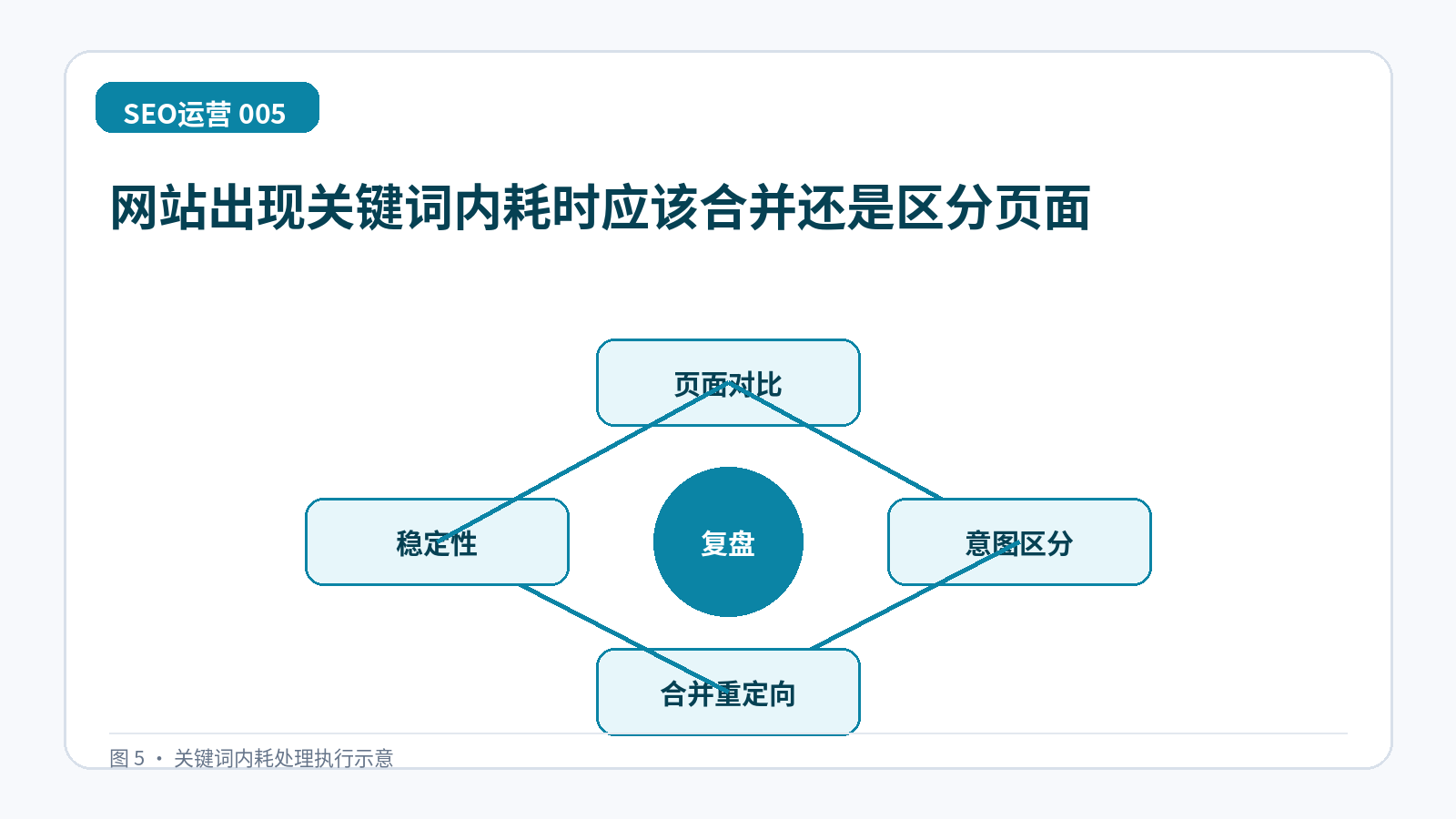
Retrieves back to the principle: first judge whether a page object can be distinguished and then decide whether to merge, rewrite, regularize or retain. Compares the page that the browser sees, the HTML that is captured, the server status and the links inside the site, usually for reasons that are more quickly than repeated changes to the keyword.
The fixes are: comparing queries, conversion purposes, re-coupling of content and external chains, moving valid paragraphs of weak pages to the main page and making 301; rewrite the title and internal link if the intention is different. Prioritize the restoration of high flow, high transformation and important extra-chain URLs, and then process long end pages; each batch maintains a change record and a roll-back version.
See if a standard page is stable and conversions are maintained within four to eight weeks. If change is seen only on a single day, do not rush to declare success because retakes, index updates and needs fluctuations take different time.
The follow-up disk must be clear about the possibility of loss of long tail flow, extra-chain and historical transformation data by simply deleting weaker-ranked pages.
At the maintenance level, “keyword in-service” can be added to the quarterly spot-check: randomly select new and old pages, checking that configurations, text, links, and data are still consistent with current operations. Search rules and product information will change, and the correct page will need to be clearly updated.
In order to prevent the conclusions from remaining in the report, it is recommended that the page comparison and stability be published as acceptance items and that the anomaly be judged by whom and how often it will be repaired. This way, the new page will follow the same standard and the old page will be discovered in time after the template changes.