
First, the conclusion is that the intent is based on the type of result page, the query qualifier and the user's task, rather than on the search volume only. This is also the most important judgement in dealing with “how the search intentions matrix guides the SEO selection on the website.” The same keyword may blur the page's target after learning, comparing, purchasing or selling. If the target page and the user's task are not clear, even if the tool gives a good score, the subsequent action is likely to deviate from the results.
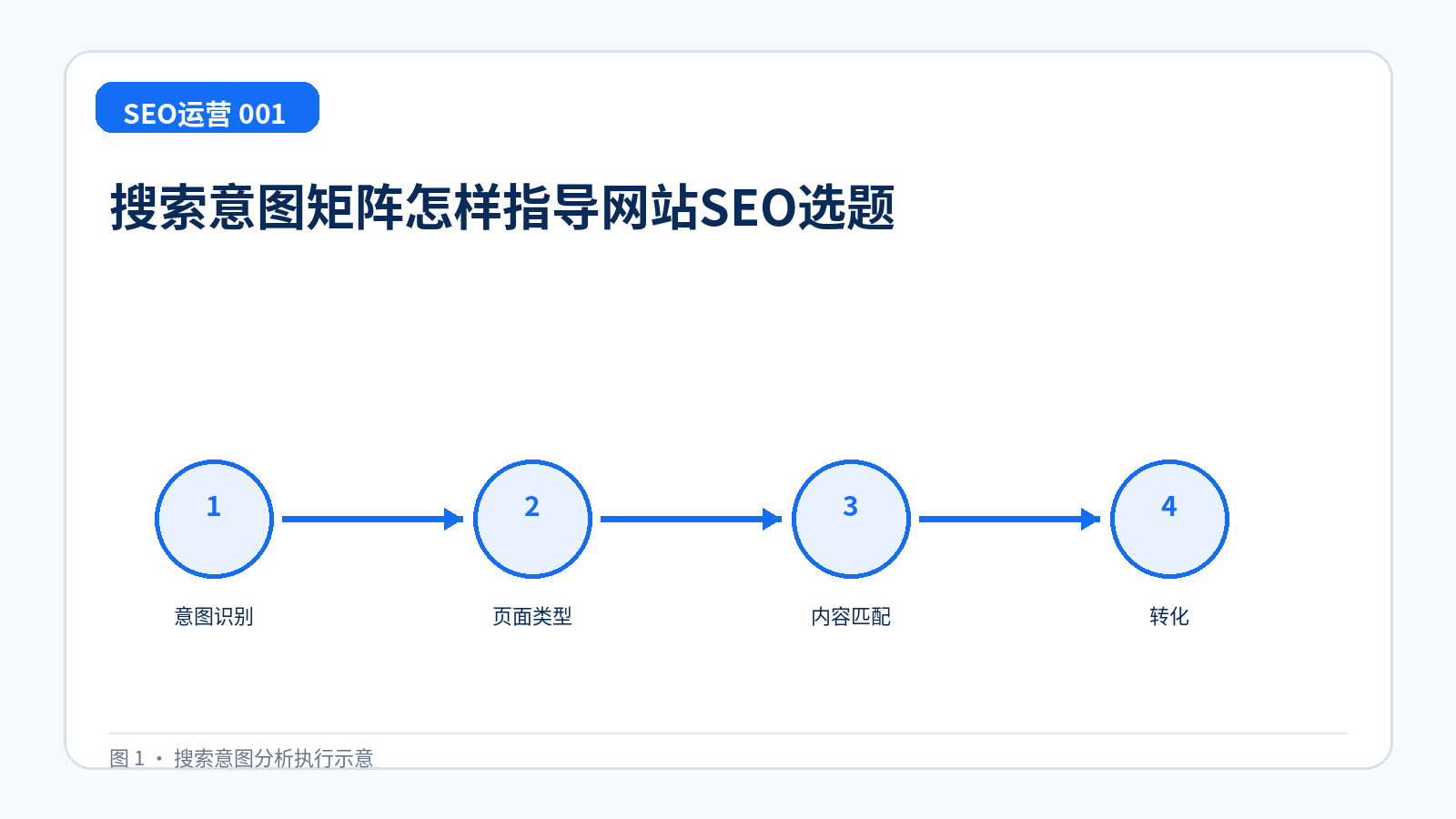
The actual execution can start with a small sample. The search can be divided into an information, business survey, trade and navigation type, with each category assigned to articles, matching pages, product pages or help pages. First, the raw data and page versions are kept, then the range of changes is kept within the same template or the same type of URL, so that the team can know where the improvements came from.
The receipt and inspection cannot remain on the page. See if the display of the target query, the click, the drop-in query, and the ranking page type are in line with the intent. The quantitative and qualitative indicators are also recorded: the former indicates the coverage, the latter indicates whether these visits solve the problem and whether they bring about an effective next step.
The most easy pits to step on are: all high search volume words are placed on the front page, which results in competing pages and unclear conversion paths. Therefore, conditions of application, responsible persons and rules of cessation should be stated before publication; in case of an anomaly, stability should be restored and judgement continued on the basis of logs, capture results and operational data.
This process does not require a full-fledged site. Selecting a representative set of pages for trial, observing a full capture and transformation cycle, and then consolidating validated rules into CMS, checklists and monthly discs, the long-term effects are usually more reliable than ad hoc raids.
In order to prevent the conclusion from remaining in the report, it is recommended that intent be identified and converted into a release acceptance item, and that the anomaly be judged by who and how long it will be repaired. This way the new page follows the same standard and the old page can be detected in a timely manner after the template changes.
Text length: 547 Chinese characters