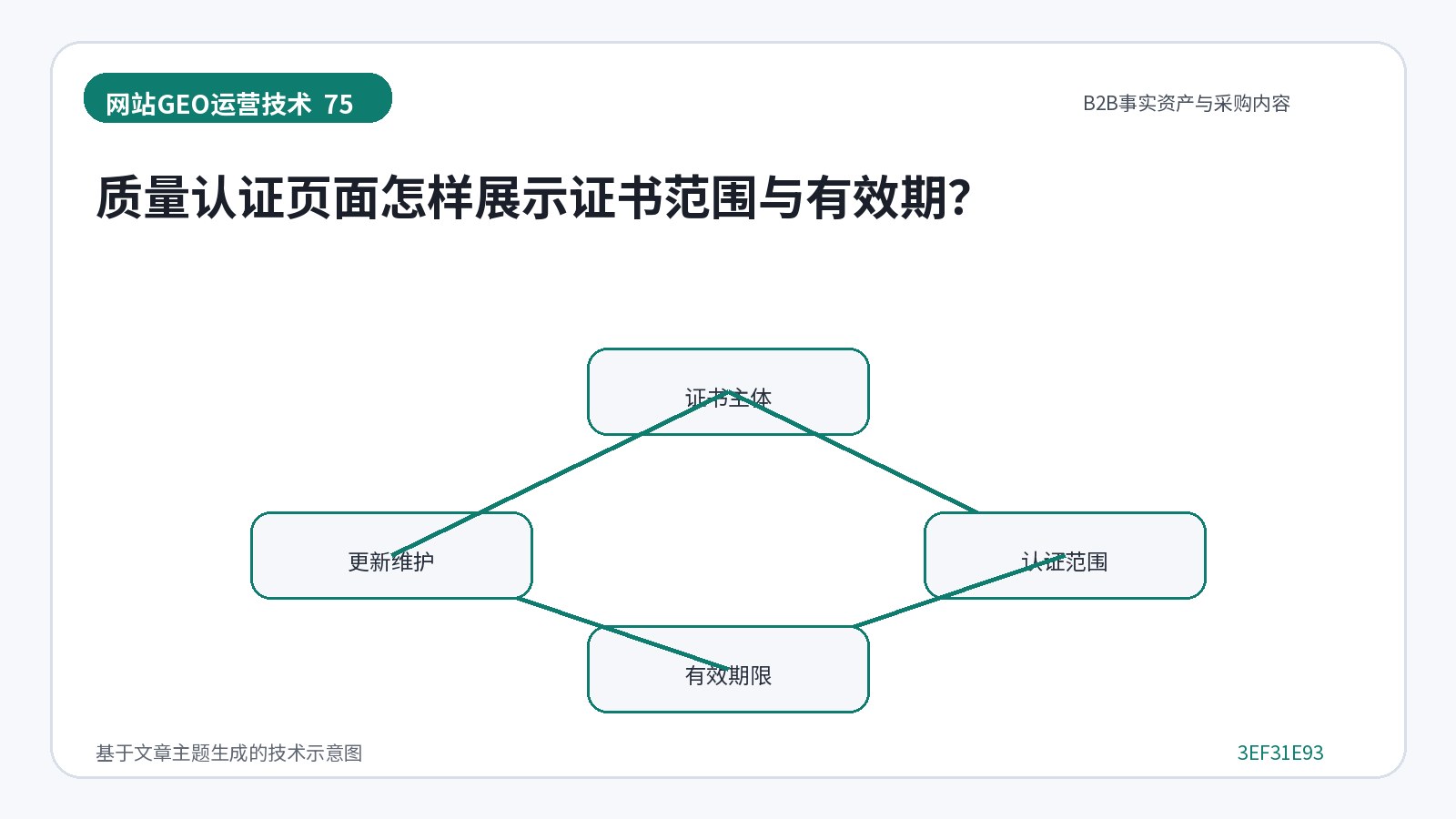
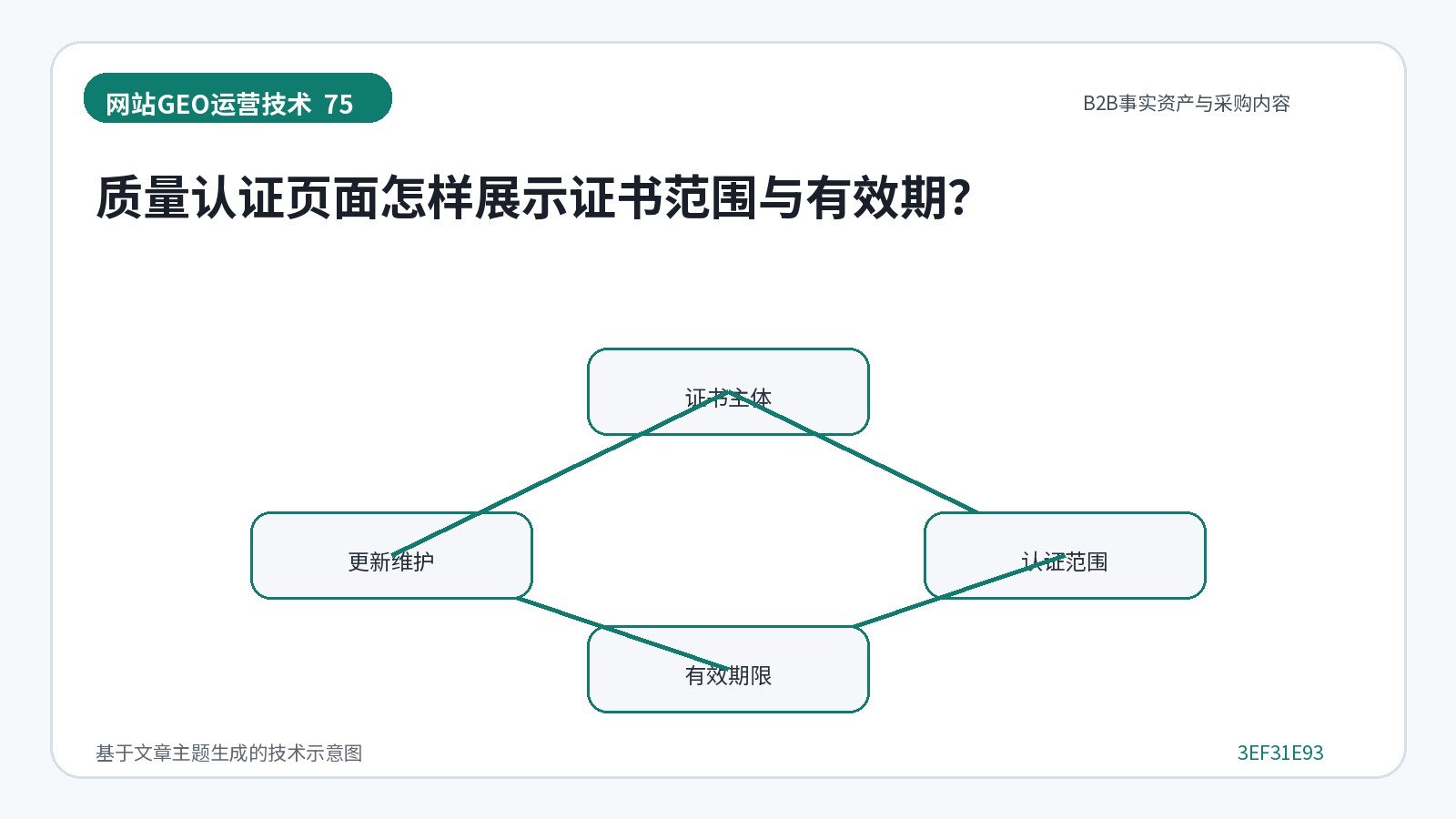
For the B2B site, the real and valuable result is not more than one brand reference, but rather to give the buyer the right conditions and access to a traceable query or decision-making path. Around “Quality certification page, how do you show the scope and validity of the certificate?” The first step is to judge the quality certification page by showing the scope and validity of the certificate back in the full process of “B2B de facto assets and procurement content”. The authentication page should show the name of the certificate, the holder of the certificate, the scope of certification, the number of the certificate, the issuing authority and the validity period. The certificate covers the factory system.
B2B pages assume the role of a source of procurement facts. Specifications, accuracy, MOQ, capacity, delivery, certification, testing and case studies must identify the object, condition, date and evidence to avoid the marketing slogan being systematically treated as an unconditional fact. When resources are limited, priority should be given to addressing those aspects that block capture, cause factual conflict or mislead procurement.
When you land, the action is written into the CMS and the business process, and not only in the minutes of the meeting. Check the original certificate, then use the accessible page to indicate the scope, and then arrange for an update or withdrawal before the expiry date and set the next review date.
The certificate’s status, name of the subject and page reference must be fixed.
The common return is not an error in tool setting, but a loss of credibility by tailoring key information on certificates or continuing to display expired certificates. The solution is to embed critical judgement into the release of a checklist and to have the reviewers sign to confirm it. Any unproven conclusion should be a conditional recommendation, and no speculation should be written as a fact for marketing purposes.