The TikTok customer case should therefore be designed in accordance with the principle that it must first be authorized to apply clearly and that only the necessary evidence must be disclosed.
See the reasons behind the phenomenon first: the case is most compelling and the customer's identity, data, and contract details are most easily disclosed. Such issues are often cross-choice, production, and user decision-making, and cannot be solved by a clip or a change of title.
Reference can be made to cross-checking the public basis of TikTok customer cases: search-and-AI search-oriented content continues to focus on true experience, clear objects, verifiable facts and clear limits, rather than mechanical repetition of keywords.
It is recommended that a short taskcard be created: who is the target, what is to be addressed, where the evidence comes from, what is expected of the user after completion.
The comparison should be limited to similar topics, audiences and conditions for publication, which should then be reviewed by the client and the head of the internal office before being released.
If there is a product page, a case page and a help page on the same subject, this article can be given the role of explaining the problem and then connect to the next step through a clear inner chain to avoid multiple pages competing for the same query with similar titles.
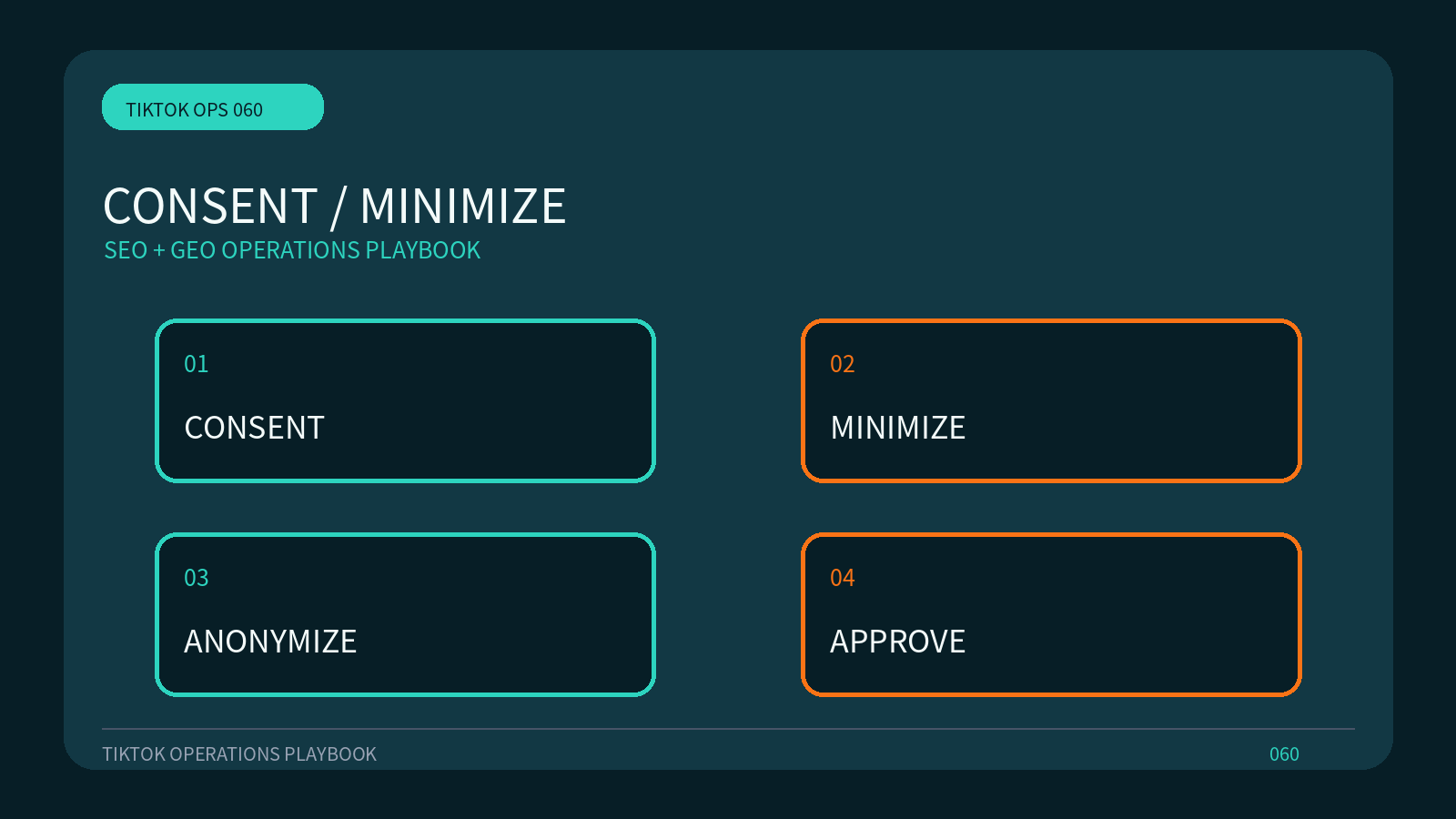
In order for TikTok’s client case to be reproduced, the project record must contain at least a reference number, time of publication, target market and four check points: CONSENT, MINIMIZE, ANONYMIZE, APPROVE.
There are also two questions that need to be answered at the same time: whether to “reveal a copy of the authorization prior to its issuance by the client and the internal manager” and whether to “wrong Logo does not amount to completion of anonymity, and a unique scene may still identify the client.” The former decides whether to continue and the latter decides whether a suspension, error or additional explanation is required.
The scope of application needs to be publicly stated, because the vagueness of Logo does not amount to the completion of anonymity, and unique scenes can still identify customers. Experience with the establishment of a particular market or account should not be written directly as a rule to be followed by all.