The B2B procurement questions often revolve around material, size, accuracy, authentication, start-up, cut-off, cut-off and application conditions. If the information is scattered in pictures, PDF or sales slogans, search and answer systems are difficult to extract accurately, and customers cannot quickly compare.
Parameters need to be visible, decipherable and speechable at the same time. The HTML table is suitable for displaying duplicate fields. The text explains the impact of the parameters on the use of the scene, and downloads the file to provide complete technical information. Product structured data can describe names, brands, models and pictures, but should not create prices, inventories or evaluations. The unit, scope and tolerance of the parameters must be consistent with drawings, quotations and sales calibres.
A product data dictionary is first created, specifying the name of the field, the unit, the allowed value, whether it must be filled in, and the data owner. The top of the page gives the use of the product and the client to which it applies, and then displays the core parameter table, material selection, process capability, quality validation, custom process and restriction. The picture is accompanied by an ALT and description, the specification PDF uses searchable text and provides a version number. The models should have a separate URL or a clear transformation relationship, avoiding a page mixing conflicting data.
Monitors the default rate of the numeric section, PDF downloads, model comparisons, repeats questions in the query and page update times. If a client is still asking frequently about the parameters written on the page, the field name may not be in the client's language or location.
The technical specifications must be reviewed by the project or product manager, and the content team cannot write with experience.
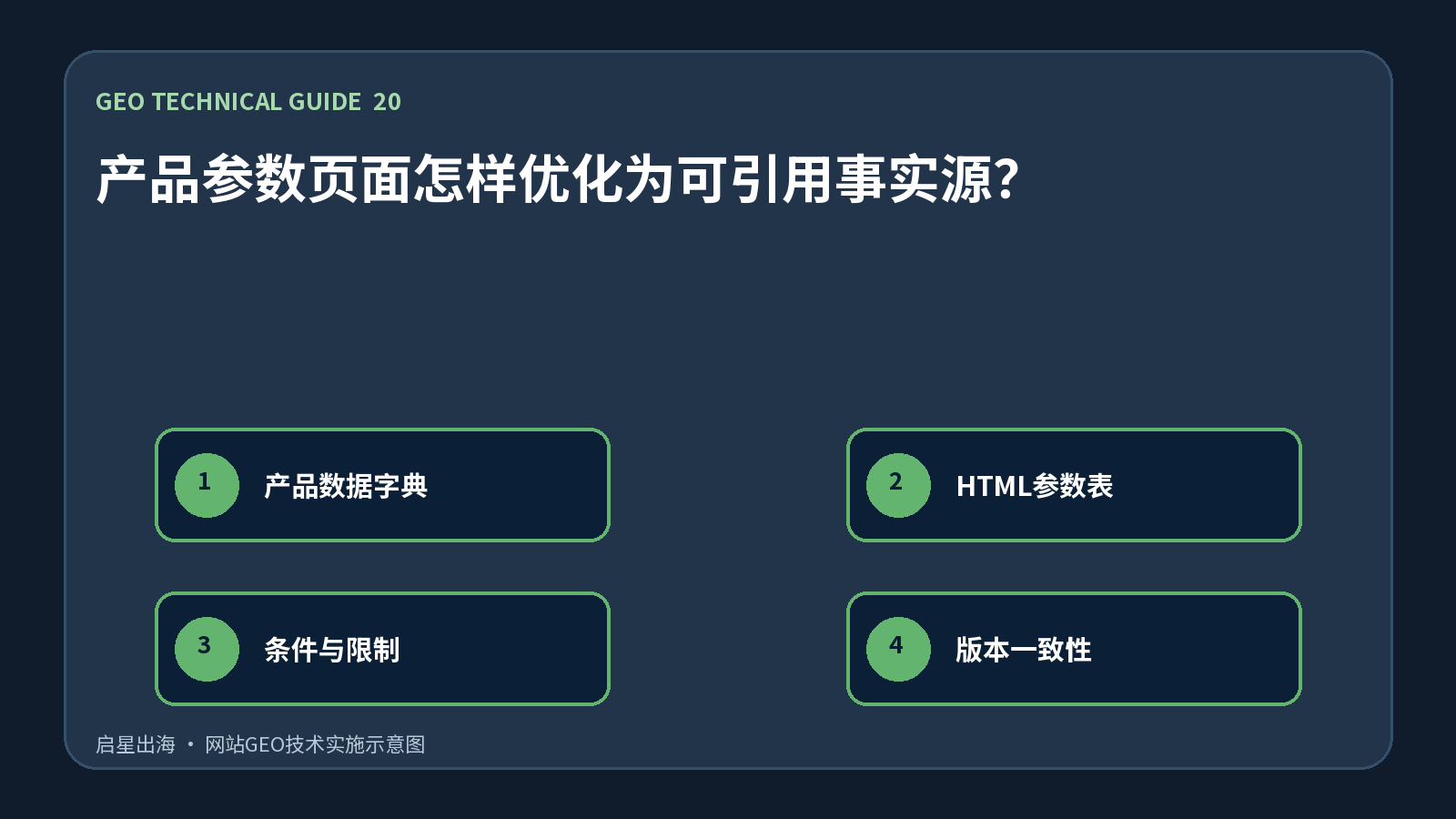
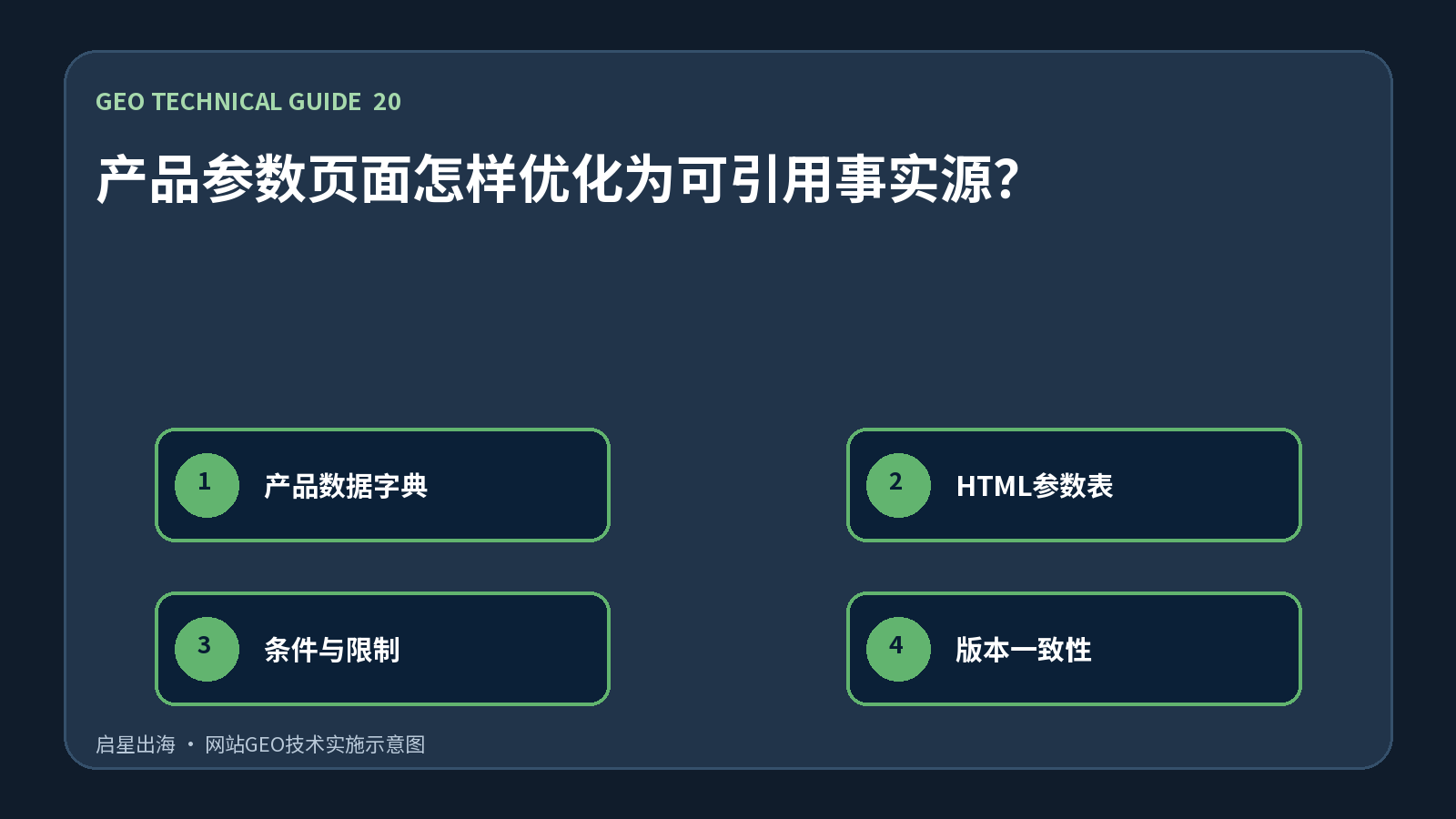
The product data dictionary, HTML parameter table, conditions and limitations, and consistency of version should be included in the same release checklist, specifying who is responsible for the content, who is responsible for the technology, and the date of review. Any change must be accompanied by a review of the visible content of the page, HTML source code, structured data, internal links and site maps, so that the front desk is not updated and machine reading layers remain old values. GEO is not a one-time plugin, and does not guarantee that any platform will be quoted; it is a set of content and technical projects that continuously improve the accessibility, validation, attribution and citation of information.