
Let’s talk about the conclusion first: the homepage and the website each provide a set of information, and the links do not have source tags, making it difficult for customers to continue after jumping. This is usually the core issue behind "How does the LinkedIn company homepage form a closed loop of customer acquisition with independent websites?"Continuing to increase publication volume or budget will not automatically solve it, but may lead to more data in the wrong direction.
Draw the actual link first.Customers may be lost at every step from the first time they see the content to visiting the homepage or landing page, initiating a conversation, submitting information, becoming a valid lead, and entering into a quote.The personal account is responsible for relationships and professional expression, while the company homepage is responsible for depositing brand facts, content assets and advertising undertakings. The division of labor between the two is more stable than operating either end alone.Therefore, it is necessary to put homepage visits, target follower growth, contacts brought by employees, website clicks, content interaction quality and lead sources in the same table, rather than just looking at the number that is easiest to increase.
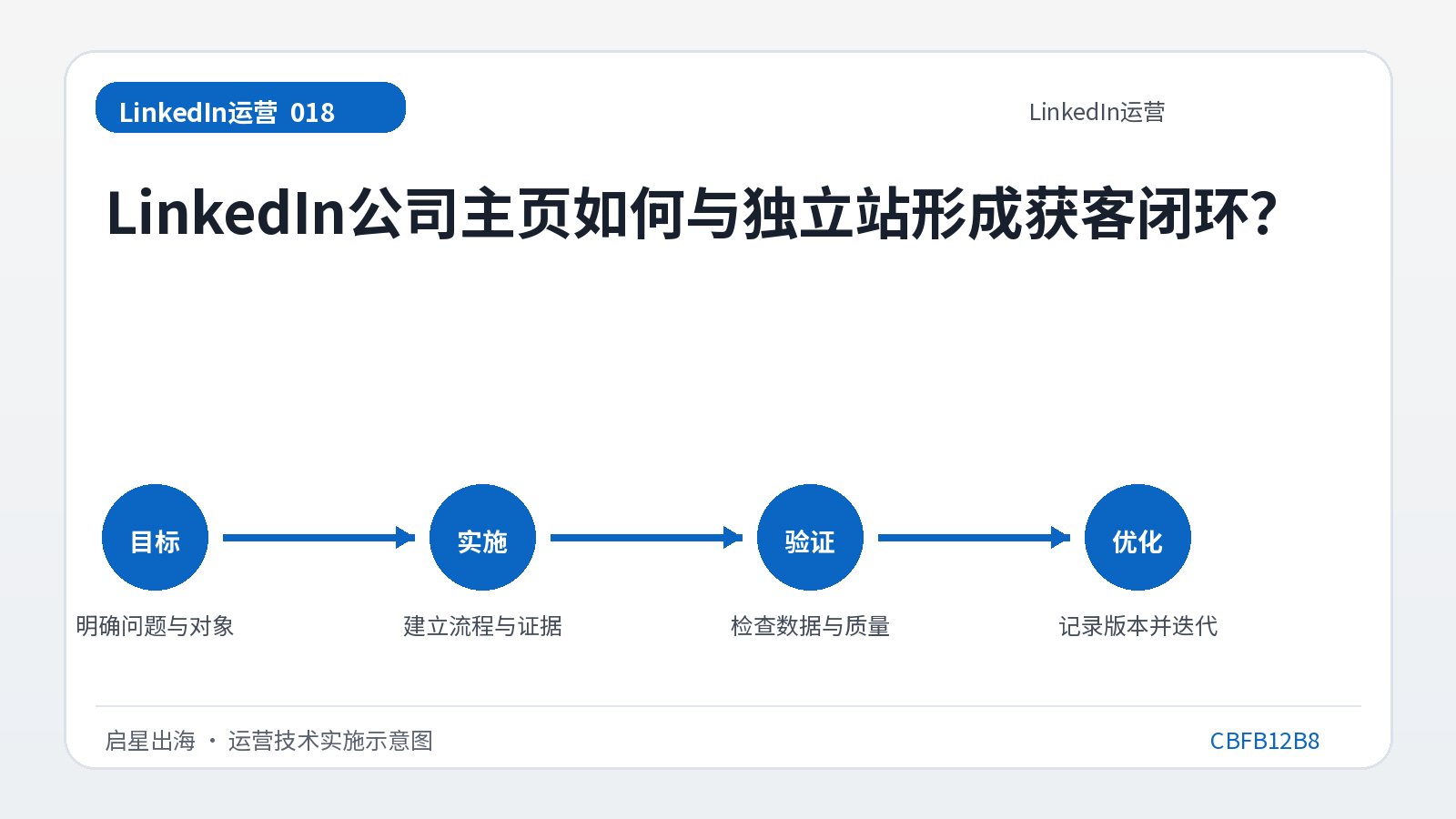
In terms of execution, make minimal changes first: configure corresponding landing pages and UTMs for different content, and unify value propositions, cases, form fields, and sales follow-up methods.Establish the basic information of the company's homepage, content columns, employee identity association, top of the homepage and website entrance, and then stipulate the personal account forwarding, comment and clue attribution methods.Keep the original version before adjusting, set a complete observation period, and mark the country, customer type and content or advertising version.In this way, when the results change, you can know which action has the impact.
The sales end must simultaneously verify the lead's company, role, application, specification or quantity, purchase time and next step.For this question, it is recommended to check the homepage to the site, effective forms and subsequent business opportunity attribution.If there are a lot of interactions or forms but a conversation with complete information cannot be formed, it means that the front end is still attracting the wrong people and low cost cannot be regarded as success.
During review, the conclusions are divided into four categories: retention, optimization, stop, and amplification.Only if a company's homepage simultaneously reduces customer understanding costs, increases effective dialogue, and generates trackable business opportunities, is it worth copying to more countries or products.
When implementing this question, you can first use a small group of real target accounts to verify: configure corresponding landing pages and UTMs for different content, and unify value propositions, cases, form fields, and sales and import methods.After execution, don’t just judge based on your feelings, but check the arrival of the homepage, effective forms, and subsequent business opportunity attribution; at the same time, save the customer identity, version, date, and subsequent sales results to avoid mistaking accidental replies for replicable methods.



