
This problem is easy to be misjudged, because the platform data only shows the behavior and will not directly tell you the purchasing intention behind the behavior.The common root cause is that it only checks whether the material looks good, leaving out permissions, links, forms, tracking, privacy and sales acceptance, which needs to be verified with real customer information.
It is recommended to extract the latest 20 to 30 interactors, visitors or leads, check the country, company, position, industry and demand, and classify them into three categories: target, possibly relevant, and obviously invalid.LinkedIn advertising must first clarify funnel goals, data sources and sales definitions; if tracking and undertaking are incomplete, the platform cost will not be able to prove the business value no matter how beautiful it is.The sampling results can help determine whether the content, audience, or acceptance should be changed.
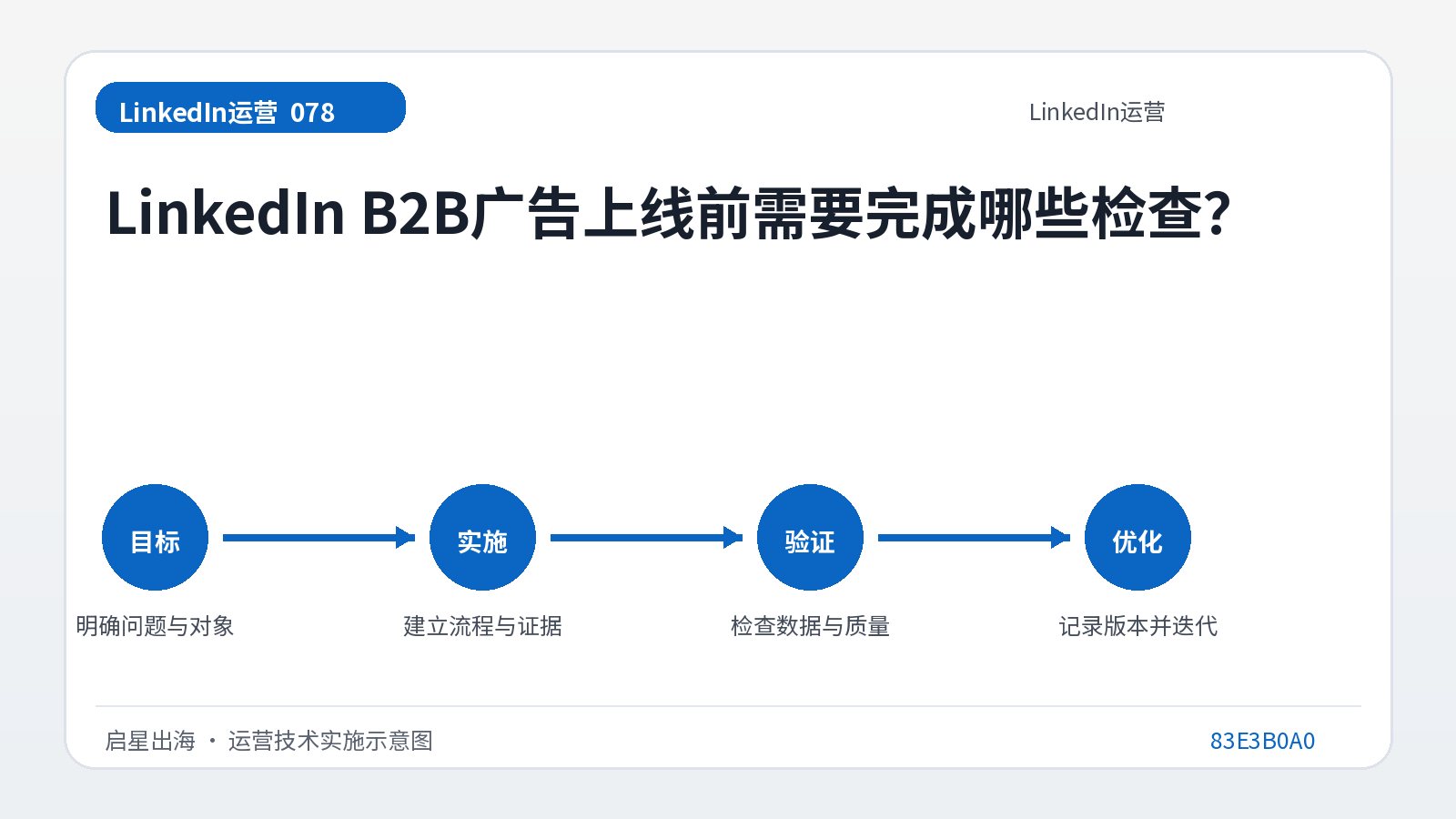
The next step is to use the checklist to test the account, goal, audience, exclusion, copy, link, form, Tag, CRM and responder, and confirm the ad account and homepage permissions, Campaign Group and naming, marketing goals, conversion events, Insight Tag, UTM, landing page or form, CRM and sales response in order.Complete the full link check.Every time you make a change, you must clearly state what kind of invalid people you want to reduce and what kind of target customers you want to increase. You can't just write unverifiable goals like "improving results."
The platform layer looks at delivery status, clicks, landing page behavior, form completion, effective lead rate, sales acceptance rate, opportunity cost and attribution completeness, while the business layer looks at online error rate, test lead storage and first response verification.At the same time, record the first response time and next step results, because no matter how accurate the clue is, if no one follows up in time, it will be misjudged as a poor channel quality.
It is recommended to look at trends every week, make decisions every month, and review strategies every quarter.Only when continuous data and sales feedback support both, can we expand investment in paid promotion; if the two conflict, unify the effective lead standards first, and then discuss the quality of the channel.
When implementing this question, you can first use a small group of real target accounts to verify: use a list to test accounts, targets, audiences, exclusions, copywriting, links, forms, tags, CRM and responders.After execution, don’t just judge based on your feelings, but use the online error rate, test lead storage and first response verification; at the same time, save the customer identity, version, date and subsequent sales results to avoid mistaking accidental replies for replicable methods.



