
The answer lies in the customer’s perspective.The customer will not automatically inquire because the company continues to publish or pay. He will only act when the content is relevant to the current task, the evidence is credible, and the next step is clear.The current friction is mostly due to the reasonable differences caused by different attribution windows, devices, browser privacy, time zones and deduplication rules.
First check whether the customer can answer within ten seconds: who do you serve, what problem do you solve, why do you believe it, and what can you get after contacting you.LinkedIn advertising must first clarify funnel goals, data sources and sales definitions; if tracking and undertaking are incomplete, the platform cost will not be able to prove the business value no matter how beautiful it is.If these answers are scattered or contradictory, any traffic will be lost in the acceptance phase.
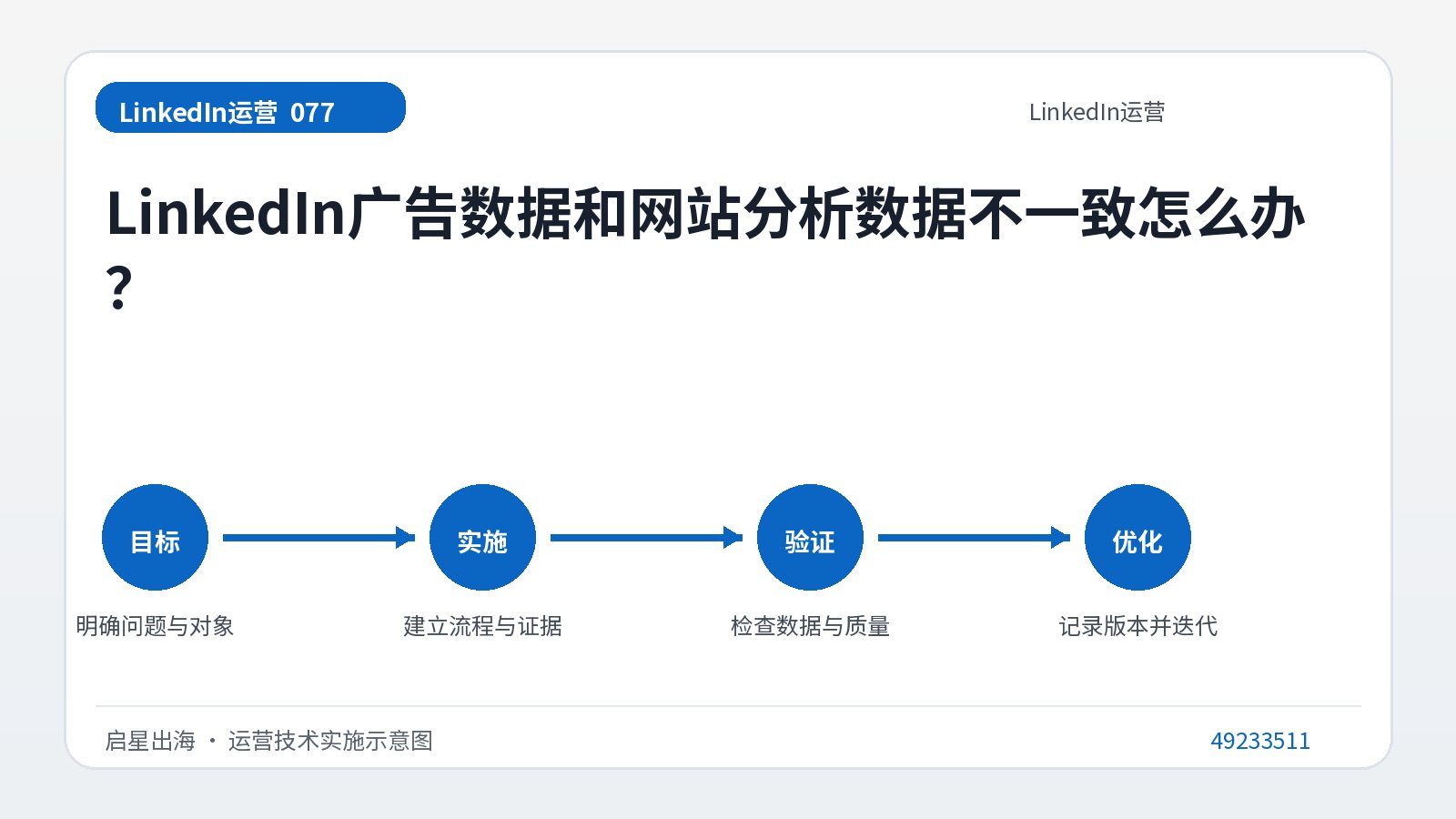
The implementation suggestion is to unify date, time zone, event definition and UTM first, and then use test clues to verify the complete path.Then use it to confirm the ad account and homepage permissions, Campaign Group and naming, marketing goals, conversion events, Insight Tag, UTM, landing page or form, CRM and sales response.Connect content, homepage or landing page, form and sales response.Set a unique source tag for each entry to prevent customers from being able to know which content comes from after entering the private message.
When evaluating, focus on trends and explainable differences rather than insisting on exact equality, and simultaneously observe delivery status, clicks, landing page behavior, form completion, effective lead rate, sales acceptance rate, opportunity cost, and attribution completeness.If the number of customers is small but the questions are specific, the information is complete, and the company matches, it should be regarded as a positive signal; if the number is large but only the lowest price is asked or there is no business identity, pre-screening should continue to be strengthened.
Don’t pursue optimization all at once.Solve the biggest loss points first, and then deal with the next layer after stabilization.Judging the basis of advertising based on customer understanding of costs, sales follow-up efficiency and final business opportunities is more in line with the real cycle of foreign trade B2B.
When this question is implemented, you can first use a small group of real target accounts to verify: first unify the date, time zone, event definition and UTM, and then use test clues to check the complete path.After execution, don’t just judge based on your feelings, but focus on trends and explainable differences rather than insisting on exact equality; at the same time, save the customer identity, version, date and subsequent sales results to avoid mistaking accidental replies for replicable methods.



