Even if the content of a single article is complete, it is difficult to be part of the website's thematic system if it is not linked to services, products, cases and other knowledge pages. Internal links help users to continue their decision-making, and help reptiles to discover pages and understanding relationships.
The thematic clusters usually consist of one pillar page and several sub-theme pages. The support page explains the scope of the area and provides navigation, the sub-page provides in-depth answers to specific questions, and the case and product pages provide business and evidence links. The anchor text should describe the target page content and avoid all links writing " click here " . The link position and context are more meaningful than stacking of footers. Isolated pages, re-direction of cycles and a large number of unrelated links reduce structural clarity.
The main page is selected for each subject, the article is duplicated, and a two-way link is designed. The main text of the article is linked to the relevant page when there is a genuine need for additional explanation, the column page presents the selected sub-theme, the service page link case and the technical article. The CMS may be recommended by classification, but manual correction should be allowed to avoid the algorithm producing unrelated links by label.
Monitors the depth of hits, isolated pages, the number of links, the distribution of moored text and the user's cross-page path. When a page has a large number of internal links that are not visible, you should check the quality of content and index status, rather than continue to add links. The bottom line identifies which pages point to it and updates the links to the most appropriate new resource. Every time a new article is published, at least the upstream entry and downstream transformation page should be identified.
Errors include a batch that automatically links each keyword, repeats dozens of foot-links on all pages, points to different themes with the same anchor text, or creates a large number of long pages that have no independent value. The goal of the theme cluster is to create a clear knowledge relationship, not a number of pages.
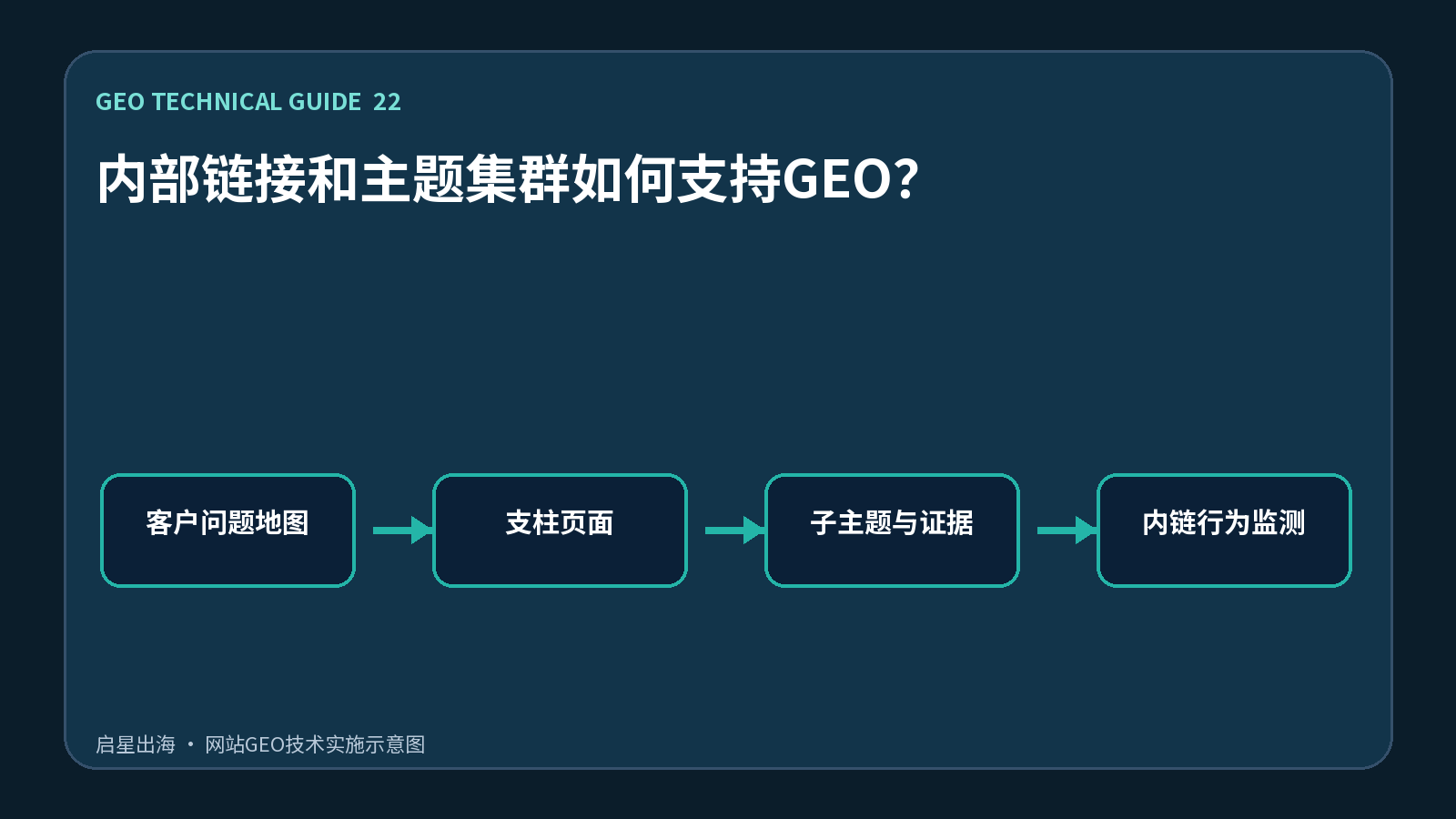
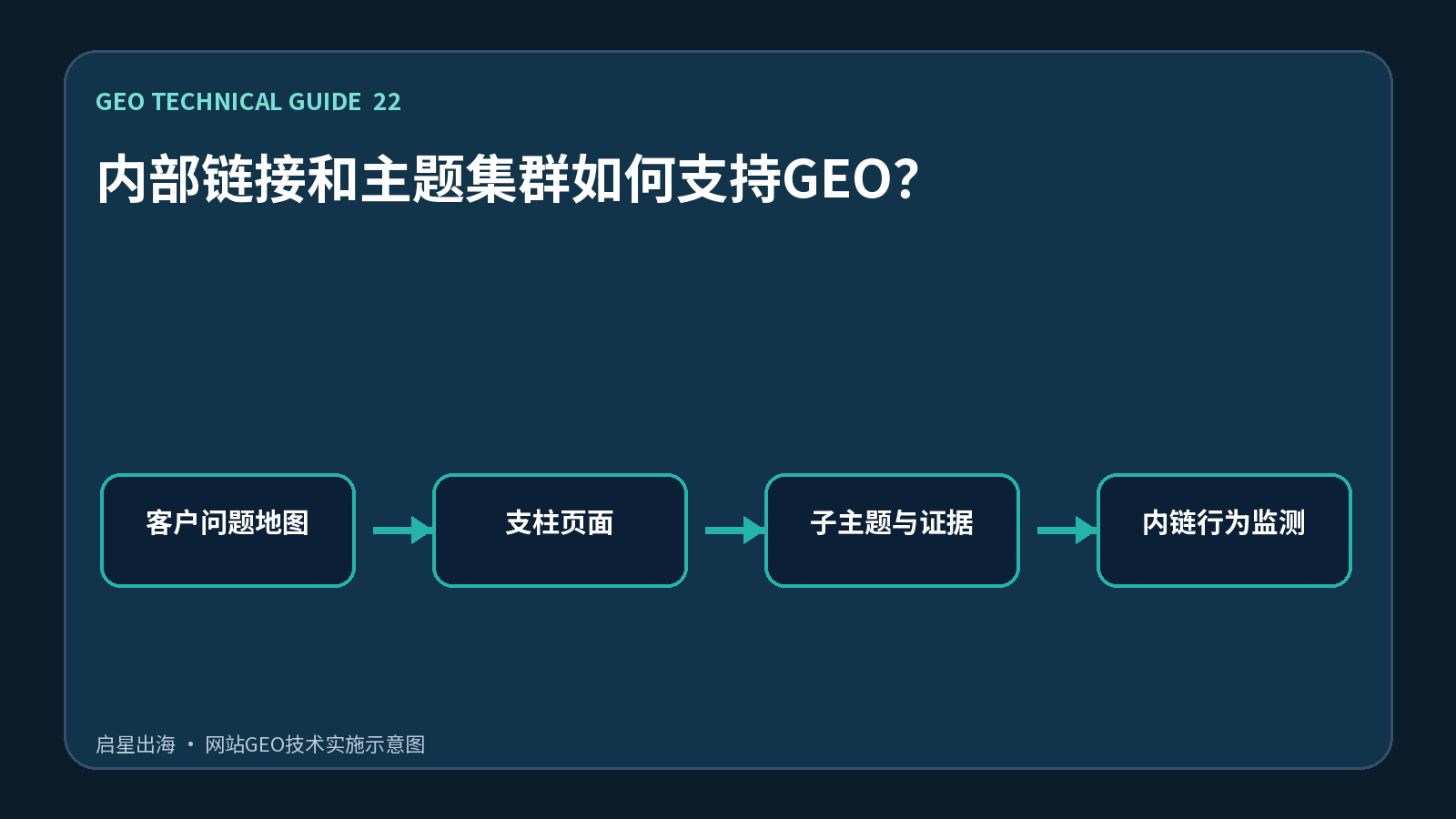
On landing, “Customs question maps, support pages, sub-themes and evidence, and internal chain behaviour monitoring” should be included in the same release checklist, specifying who is responsible for the content, who is responsible for the technology, and the date of review. Any change must be accompanied by a check of the visible content of the page, HTML source code, structured data, internal links and site maps to avoid that the front desk has been updated and machine reading layers remain old values. GEO is not a one-time plugin and does not guarantee that any platform will be quoted; it is a set of content and technical works that continuously improve the accessibility, validation, attribution and citation of information.