
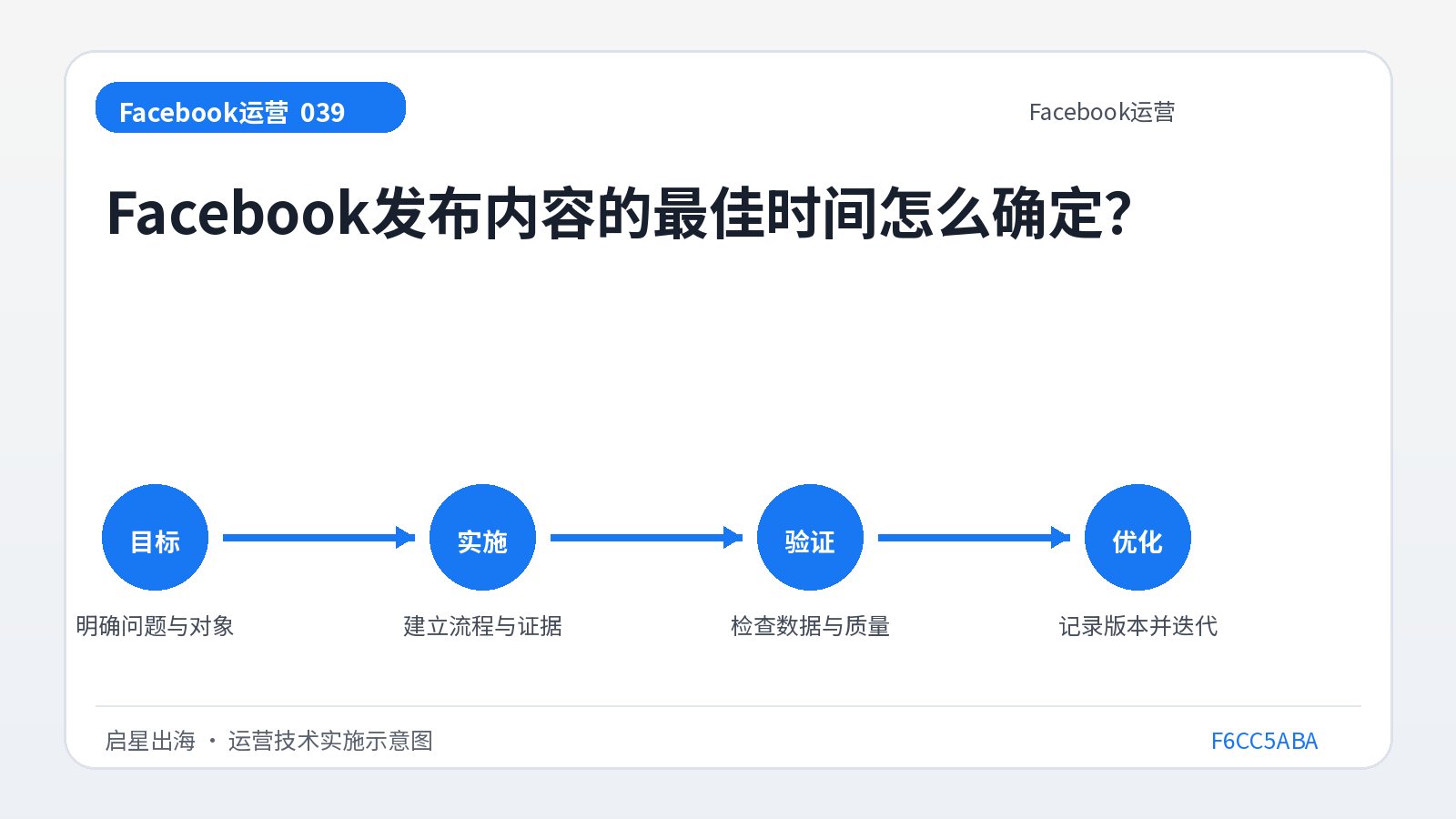
How to determine the best time to post content on Facebook?
POST

How to determine the best time to post content on Facebook?

Qixing Global analyzes the common reasons, troubleshooting sequence, execution methods and core indicators of how to determine the best time to publish content on Facebook, helping individual SOHOs, internal to external factories and foreign trade teams to improve Facebook's natural customer acquisition and effective inquiry quality.The main problem is often that the universal best time cannot replace your own customer time zone and historical data, and multinational B2B cannot copy local schedules.

How to determine the best time to post content on Facebook?

The answer lies in the customer’s perspective.The customer will not automatically inquire because the company continues to publish or pay. He will only act when the content is relevant to the current task, the evidence is credible, and the next step is clear.The current resistance is mostly that the universal best time cannot replace its own customer time zone and historical data, and multinational B2B cannot copy local schedules.

First check whether the customer can answer within ten seconds: who do you serve, what problem do you solve, why do you believe it, and what can you get after contacting you.Natural distribution relies on content relevance, relationships and real interactions. B2B accounts need to proactively enter discussions in the industry where customers are located, rather than waiting after publishing.If these answers are scattered or contradictory, any traffic will be lost in the acceptance phase.

An implementation recommendation is to set up two to three test windows based on priority country time zones, keep other variables similar for four consecutive weeks, and then compare target interactions and conversations.Then use it to determine the target group and interaction entrance before publishing. After publishing, promptly respond to comments, participate in groups, contact high-intention interactors, and transform valuable discussions into follow-up content.Connect content, homepage or landing page, form and sales response.Set a unique source tag for each entry to prevent customers from being able to know which content comes from after entering the private message.

When evaluating, it is necessary to judge the effective interaction and response speed of the target country, and simultaneously observe the proportion of target customer interactions, comment quality, group contributions, homepage visits, private message conversations, and the number of repeated interactions.If the number of customers is small but the questions are specific, the information is complete, and the company matches, it should be regarded as a positive signal; if the number is large but only the lowest price is asked or there is no business identity, pre-screening should continue to be strengthened.

Don’t pursue optimization all at once.Solve the biggest loss points first, and then deal with the next layer after stabilization.Interactive distribution based on customer understanding of costs, sales follow-up efficiency and final business opportunity judgment is more in line with the real cycle of foreign trade B2B.


Related content

The organic reach of Facebook posts is getting lower and lower. How should I check?

Qixing Global analyzes the common reasons why the natural reach of Facebook posts is getting lower and lower, how to troubleshoot, the troubleshooting order, implementation methods and core indicators, helping individual SOHOs, internal to external factories and foreign trade teams to improve Facebook's natural customer acquisition and effective inquiry quality.The main problem is often that the decline in reach may come from topic selection fatigue, audience mismatch, weak material, insufficient interaction or changes in publishing rhythm. It cannot just be.

Read more →

Facebook posts have likes but no target customers, what’s the problem?

Qixing Global analyzes Facebook posts that have likes but no target customers, the common causes of the problem, the troubleshooting sequence, implementation methods and core indicators, helping individual SOHOs, internal to external factories and foreign trade teams to improve Facebook's natural customer acquisition and effective inquiry quality.The main problem is often that interactions may come from peers, employees, low-interest areas, or general interest groups, and quantity does not represent business value.

Read more →

After posting a Facebook post, should company employees focus on likes and comments?

Qixing Global analyzes the common reasons why corporate employees should like and comment after publishing a Facebook post, as well as the order of investigation, implementation methods and core indicators, and helps individual SOHOs, internal to external factories and foreign trade teams improve the quality of natural Facebook customer acquisition and effective inquiries.The main issue is often that real employee engagement provides early interaction, but copying the same comments or mechanically focused operations can appear unnatural.

Read more →

