
The organic reach of Facebook posts is getting lower and lower. How should I check?
POST

The organic reach of Facebook posts is getting lower and lower. How should I check?

Qixing Global analyzes the common reasons why the natural reach of Facebook posts is getting lower and lower, how to troubleshoot, the troubleshooting order, implementation methods and core indicators, helping individual SOHOs, internal to external factories and foreign trade teams to improve Facebook's natural customer acquisition and effective inquiry quality.The main problem is often that the decline in reach may come from topic selection fatigue, audience mismatch, weak material, insufficient interaction or changes in publishing rhythm. It cannot just be.

The organic reach of Facebook posts is getting lower and lower. How should I check?

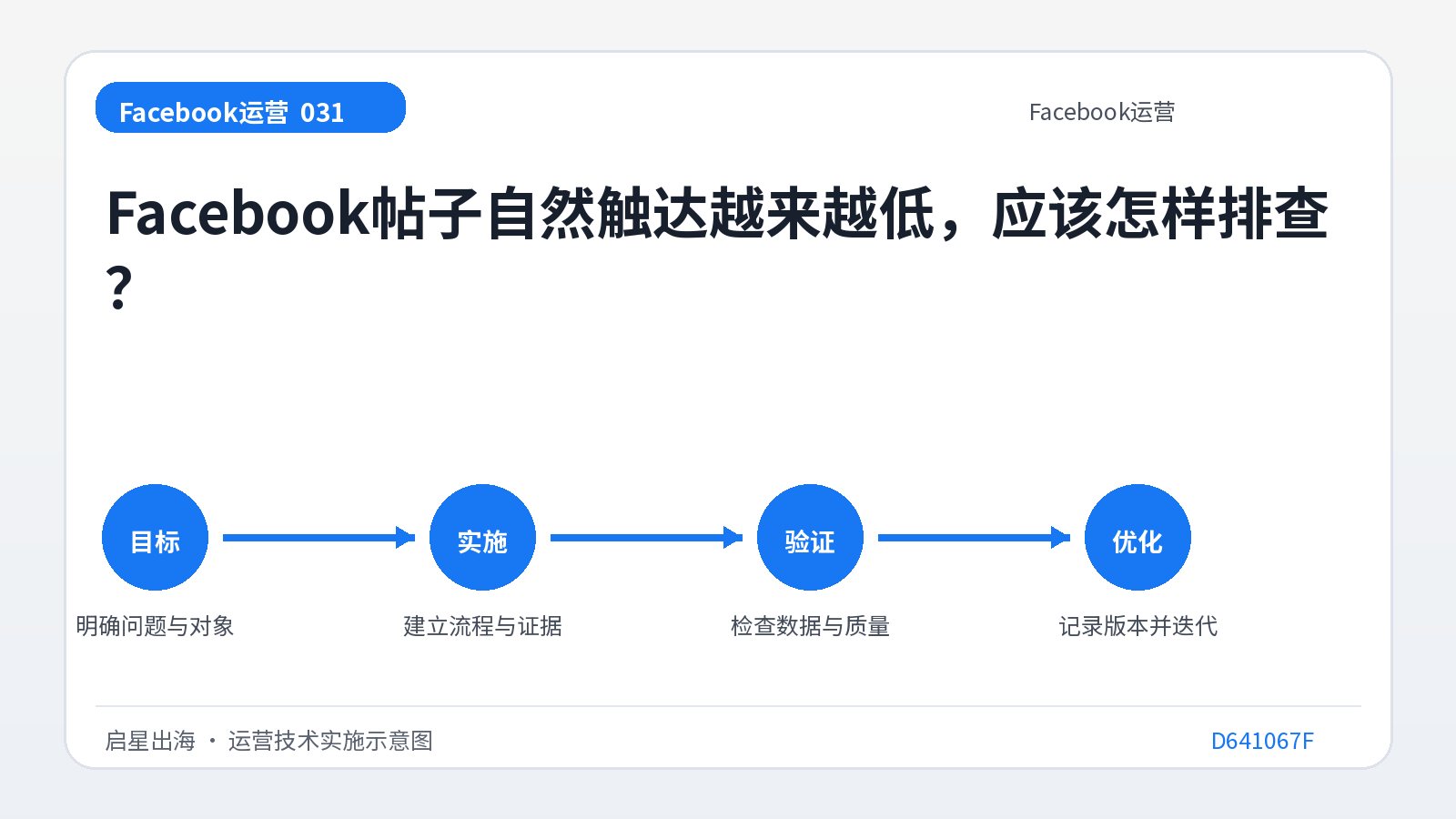
To solve this problem, the four-step method of "cause-action-indicator-decision" can be adopted.The current reason is that the decline in reach may come from topic selection fatigue, audience mismatch, weak material, insufficient interaction, or changes in publishing rhythm. It cannot be attributed solely to the algorithm. It will cause at least one of customer relevance, trust, or subsequent conversions to decline.

In terms of action, first compare the high and low performance content in the past 90 days, find differences in theme, format, beginning, release time and interactive crowd, and then test in small steps.At the same time, determine the target group and interaction entrance before publishing, promptly respond to comments, participate in groups, contact high-intention interactors, and transform valuable discussions into follow-up content after publishing., ensuring that customers use consistent positioning, parameters, cooperation conditions and action instructions at every step from seeing the information to entering the sales process.

When it comes to metrics, don’t just look at a single cost or engagement volume.The operation side needs to observe the target customer interaction proportion, comment quality, group contributions, homepage visits, private message conversations and the number of repeated interactions; the sales side needs to verify the company, role, application, number of specifications, time and follow-up stages.This question especially depends on whether target reach, stay, and homepage visits are restored simultaneously.

In terms of decision-making, samples, observation periods and quality bottom lines are pre-set for each test.Don’t rush to draw conclusions when you haven’t reached the basic amount of data; don’t waste it for a long time just to “continue learning” when it obviously attracts the wrong crowd.Natural distribution relies on content relevance, relationships and real interactions. B2B accounts need to proactively enter discussions in the industry where customers are located, rather than waiting after publishing.

Finally, write the results into the SOP: which conditions should be retained, which situations need to be changed, and which signals can be amplified.Interactive distribution is not a one-time setup, but a continuous collaborative process of marketing, content, data and sales.Solutions that increase the chances of effective conversations and quotes are truly replicable.


Related content

Facebook posts have likes but no target customers, what’s the problem?

Qixing Global analyzes Facebook posts that have likes but no target customers, the common causes of the problem, the troubleshooting sequence, implementation methods and core indicators, helping individual SOHOs, internal to external factories and foreign trade teams to improve Facebook's natural customer acquisition and effective inquiry quality.The main problem is often that interactions may come from peers, employees, low-interest areas, or general interest groups, and quantity does not represent business value.

Read more →

After posting a Facebook post, should company employees focus on likes and comments?

Qixing Global analyzes the common reasons why corporate employees should like and comment after publishing a Facebook post, as well as the order of investigation, implementation methods and core indicators, and helps individual SOHOs, internal to external factories and foreign trade teams improve the quality of natural Facebook customer acquisition and effective inquiries.The main issue is often that real employee engagement provides early interaction, but copying the same comments or mechanically focused operations can appear unnatural.

Read more →

Someone in the Facebook comment section only asks about the price. How should I reply?

Qixing Global analyzes the common reasons why someone in the Facebook comment area only asks about price, how to respond, the troubleshooting sequence, implementation methods and core indicators, helping individual SOHOs, internal to external factories and foreign trade teams to improve Facebook's natural customer acquisition and effective inquiry quality.The main problem is often that publicly directly quoting a single price may ignore specifications, quantities, trade terms and destinations, and can also cause the conversation to stop at a comparison prematurely.

Read more →

