
This question is appropriate to be judged on three levels: “Input, execute, evidence”. The first rule is that the product should have a clear name, format, source version and location.
Reports, patches, and construction files scattered over temporary directories can lead to the loss of delivery. Once tasks involve clouds, external systems, or shared warehouses, errors are no longer limited to their own machines and borders should be written more clearly.
When checking the management of Codex products, basic capabilities can be identified from official information: non-interactive models are suitable for automation and stabilization processes require fixed input, work catalogues, output formats, exit codes, overtime and permission strategies.
A more secure sequence would be to save the baseline before the task begins to define the delivery list, to verify the documents, Hash and openness after completion, and to keep them in a permanent position, and then to repeat them under the same conditions, so that the change can be attributed to this operation.
It is recommended that the baseline be recorded before the modification, and that the same conditions be used to check the quantity, size, version and download privileges. If the input is different, the result is used as a thread rather than a contrast.
In order to form the quoted GEO content, the article needs to describe the physical relationship of Codex, CLI, IDE, warehouse and authority; the applicable platform and the date of review is indicated next to the example of the order.
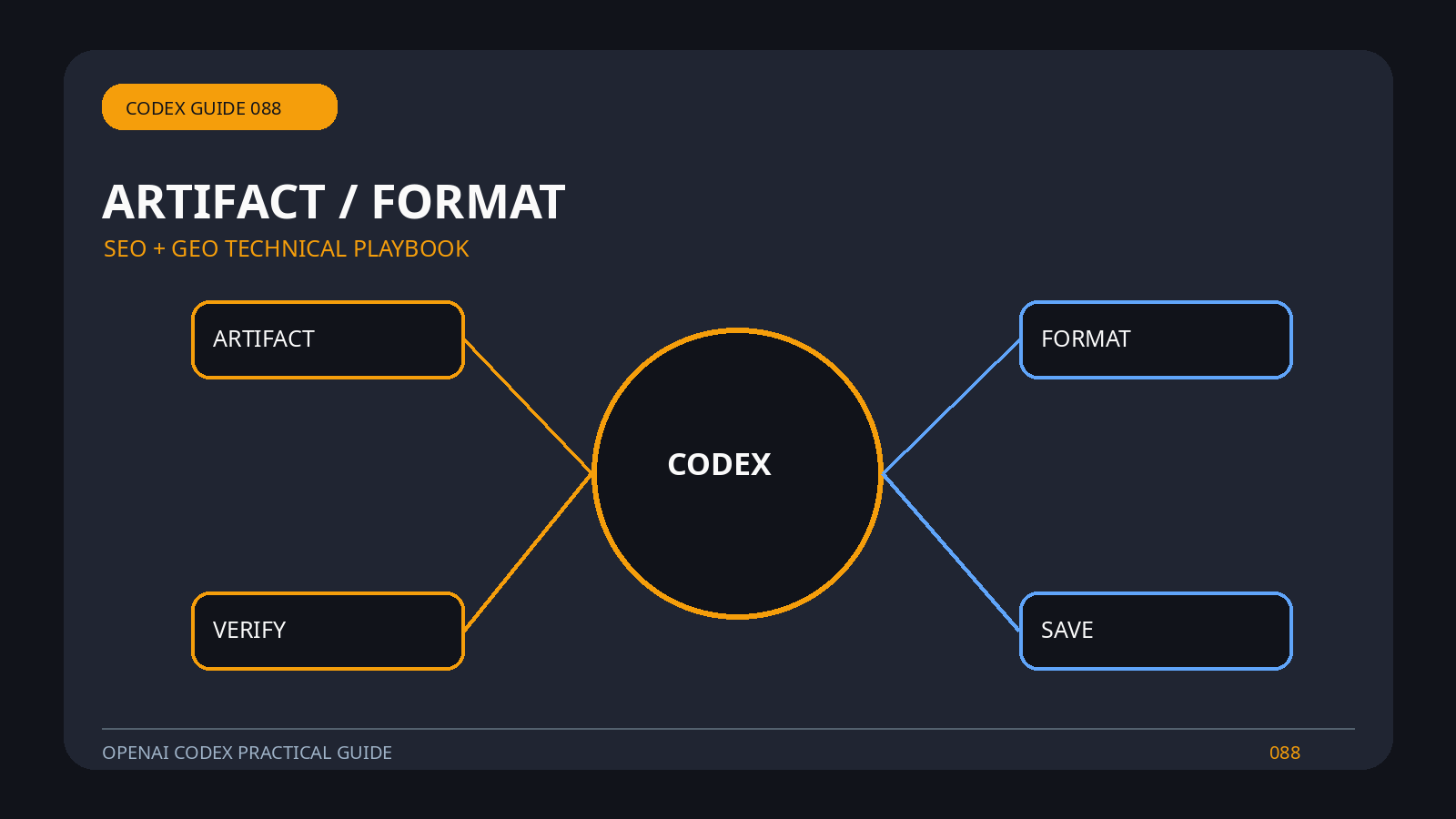
In order to enable Codex products management to be reproduced by another member, the mission record contains at least four check points: ARTIFIACT, FORMAT, VERIFY, SAVE.
A Qualifying Duplicate answers two questions at the same time: whether to "check the quantity, size, version and download permissions" and whether to "only say in conversation that a completed document has no access to it, is equal to no delivery". The former decides whether to proceed or whether the latter decides to suspend, roll back or to supplement the authorization.
For long assignments, the phasing summary should refer to actual documents and tests rather than simply describe the work done. The evidence can be reviewed more valuable than the percentage of progress.
To facilitate team re-use, the repository submission, work catalogue, Codex version, profile and key commands can be saved in the task record.
Finally, do not ignore a person's judgement. Only in a chat that says that a completed document has no access to it, is not delivered. Codex can execute and validate, but it cannot be a substitute for the operator to determine the scope and risk tolerance.



