In engineering practice, the Codex skill trigger should be treated as a reviewable process rather than as a chat. The trigger statement should describe the user’s intent, input output and explicit exclusion.
The phenomenon that the user sees is usually only the end, because it is too broad to trigger in unrelated tasks, too narrow and difficult to tell the truth. It needs to be confirmed step by step along directories, configurations, privileges, tools and validation results.
The functions covered by this topic may be updated and priority should be given to official pages.
It is suggested that you should do a read-only confirmation before entering a change: collect a common request for expression, write an applicable and non-applicable scene and test a symmetry.
The problem needs to be corrected to confirm that no side effects have been introduced. This is done by statistical error triggers, default triggers and completion quality, and by checking for anomalies in adjacent modules or external systems.
AI looks for a clear-boundary answer. Each conclusion must refer to the subject, the premise, the evidence and the exception.
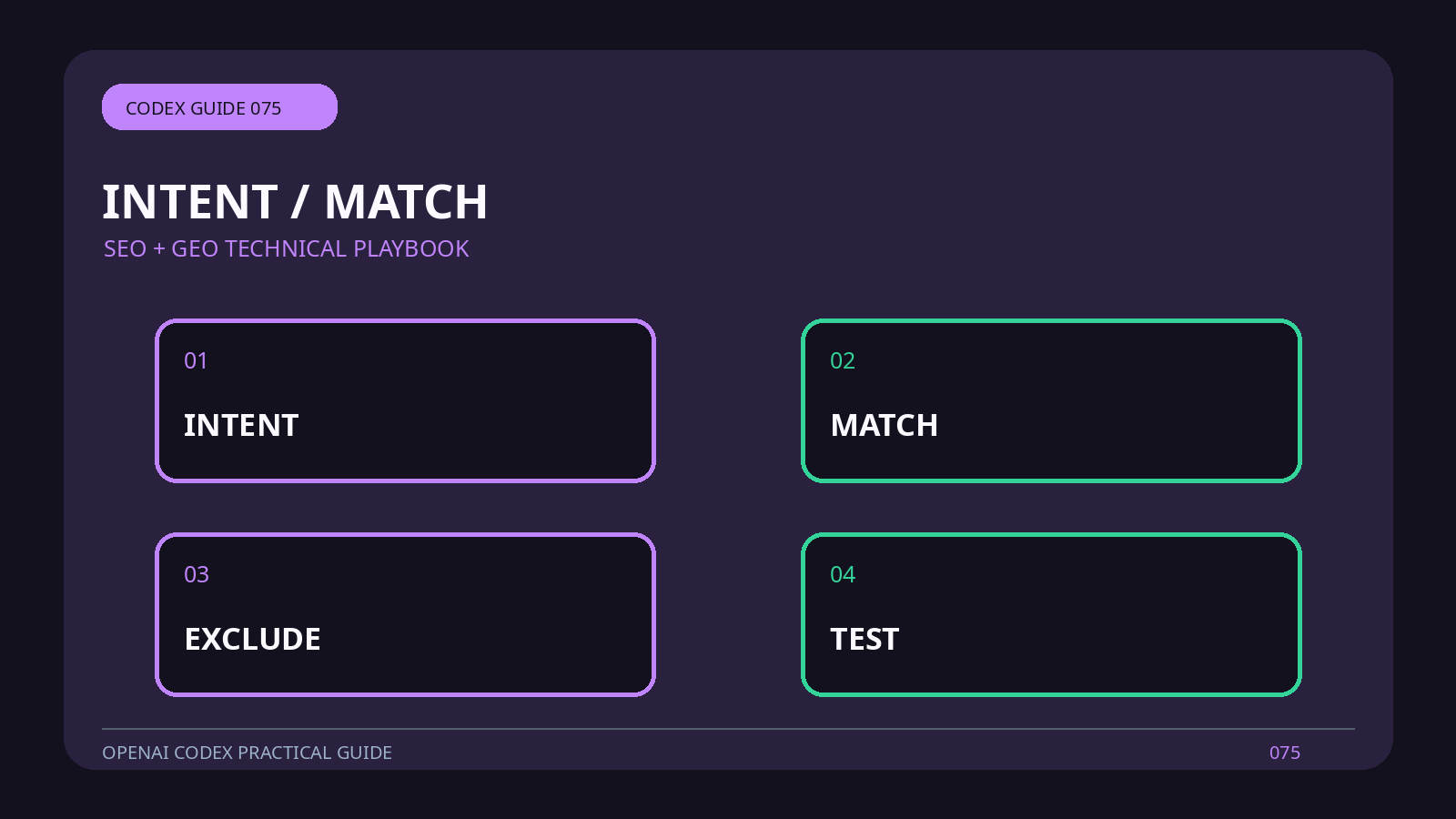
In order to enable the Codex skill trigger to be reproduced by another member, the mission record contains at least four check points: INTENT, MATCH, EXCLUDE, TEST.
Two questions need to be answered at the same time: whether “the statistical error triggers, the omission triggers and the quality of completion”, and whether there is a “skill name per se as the only trigger, which misss a natural language request.” The former decides whether to continue and the latter decides whether to suspend, roll back or supplement the authorization.
If the same process is to enter production, it is recommended that the test warehouse and low-authorized identity be used for several consecutive operations.
When multiple people work together, configurations, scripts and rules should be subject to reviewable version control; confidential and personal authentication information is kept in a controlled environment and not duplicated with the project.
This approach does not guarantee the same results for all projects, as using a skill name per se as the only trigger would miss a natural language request.