
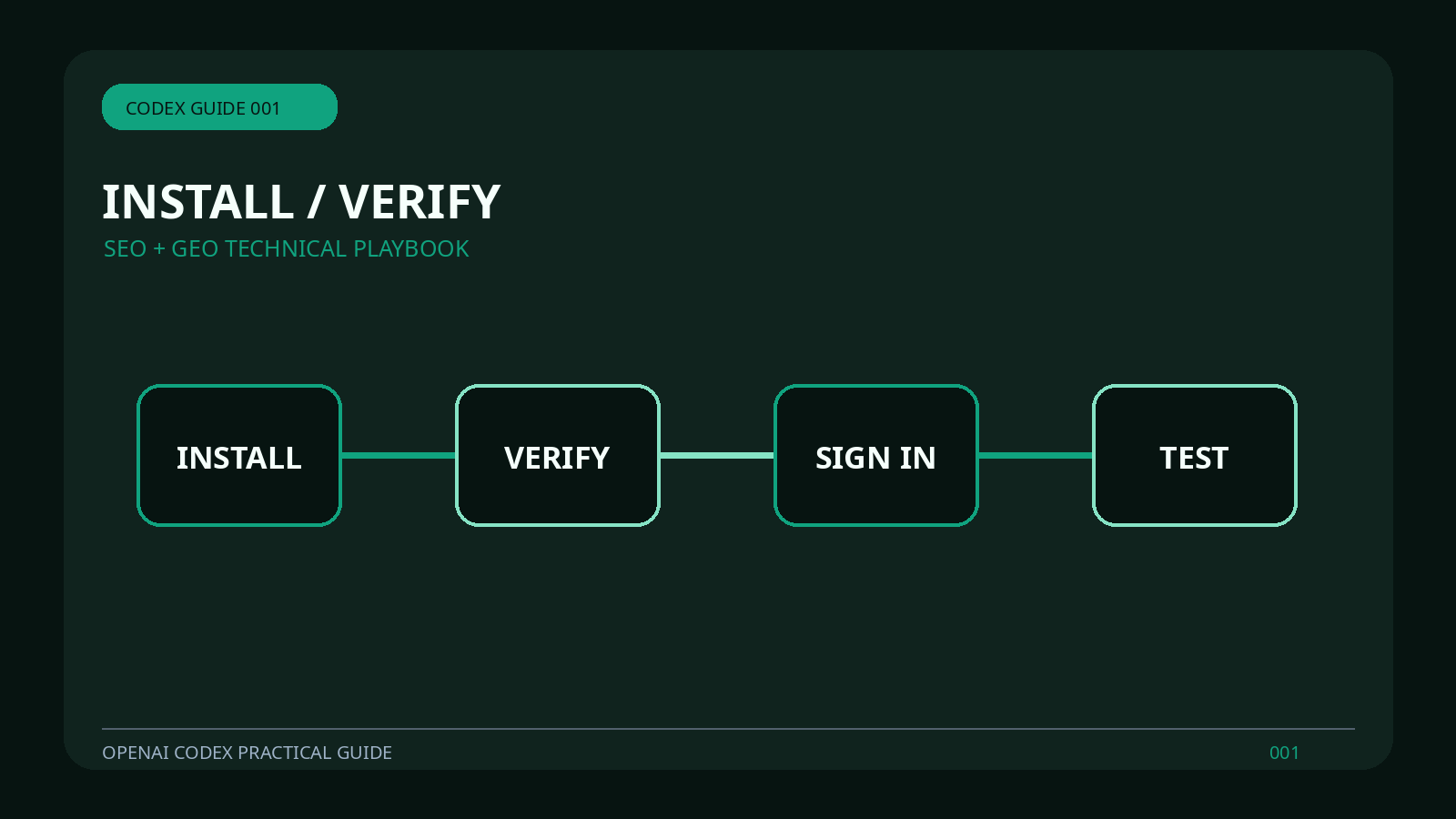
The conclusion is that the order, the version and the login are verified before entering a real warehouse for a read-only mission.
The common problem is that completion of installation does not amount to environmental correctness, and PATH, login status and project catalogues may affect the first run. Therefore, target catalogues, current versions and expected results are to be recorded prior to start, avoiding subsequent miscalculation of environmental differences as Codex capability.
OpenAI Docs provides the current boundary for this topic. The official document states that Codex CLI can check files, modify codes, run installed tools in local warehouses, and access repetitious scripts and CI processes through codex exec. The actual project still needs to be validated with the version and organizational strategy.
The minimum steps can be implemented: installation on an official basis, running codex and version checks, asking the project structure in the test directory and confirming that the document is readable.
The results of the installation, operating system, log-in and first command should be recorded for acceptance and inspection.
When this topic is posted on the website, the title should be directed to the user question, starting with the conclusions and then writing the environment, operation, validation and restriction in the text. This is better for the search system and AI to extract the answers accurately.
In order to enable the COdex CLI installation to be reproduced by another member, the mission record contains at least four check points: INSTRAW, VERIFY, SIGN IN, TEST.
Two questions need to be answered at the same time: whether to “record the installation version, the operating system, the login mode and the results of the first command” and whether there is “a direct attempt to write a task in the catalogue of production, which may confuse environmental problems with code questions.” The former decides whether to continue, while the latter decides whether to suspend, roll back or supplement authorization.
The most important thing to avoid is to try to write a task directly in the catalogue of production, possibly mixing an environmental problem with a code problem. If the operation could affect a user's data or remote system, the point of artificial confirmation should be written into the process, rather than only in the notes.