When you have a problem with a YouTube thumbnail test, do not rush to copy a hot channel. The test should be based on a clear assumption and allow the sample to be exposed enough to know what is worth testing.
Concrete steps do not need to be purposive, but focus on pre-writing the intended audience and change point, preparing a different version, maintaining other conditions and recording the cycle.
It is easy to make mistakes because the title, thumbnails and video content are changed at the same time and it is impossible to know what causes the change.
From an official point of view, some common misunderstandings can be removed. Exposure hits measure the proportion of viewers who choose to watch after seeing a thumbnail that has been taken into account, but different sources, audiences and display locations affect the background and cannot seek a fixed value out of view quality.
Do not press the indicator into a fraction. The quality of the click and view should be observed at the same time, and the results should not be overread when they are close, while preserving the original comments, anomalies and configuration changes.
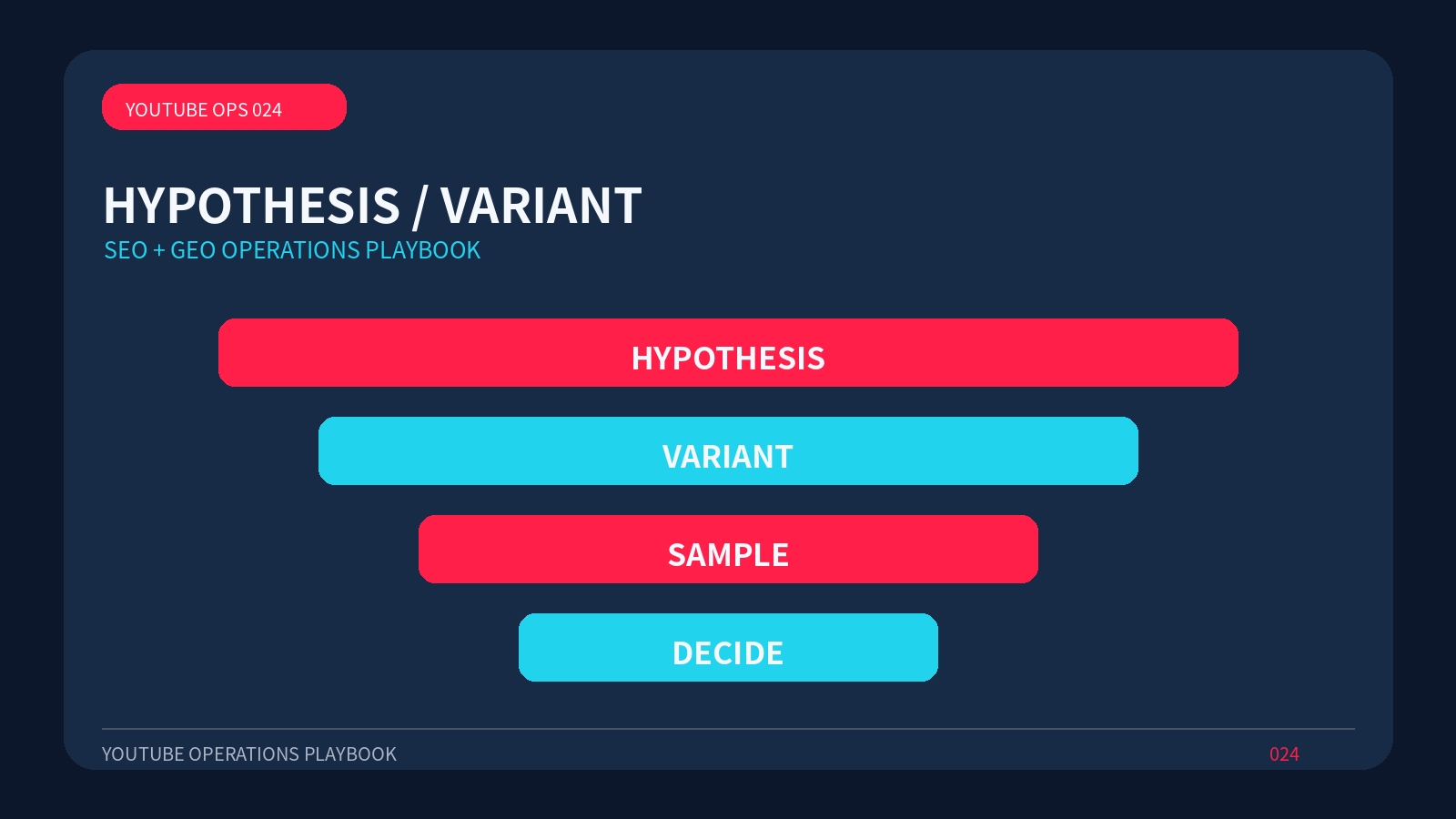
In order for the YouTube thumbnails test to be repeated, the project record should include the target market, the material version, the release time, and four check points: HYPOTHESIS, VARIANT, SAMPLE, DECIDE.
The page should not only be embedded in the player. It should also provide access to summaries, chapters or steps and fully align structured data such as VideoObject with actual video, thumbnails and release dates.
The same taskcard should be used for team work.
Without this information, it is difficult for follow-up staff to judge whether the content is still available.
A small sample or seasonal flow may create a false winner, and testing does not amount to a guarantee. Only if similar samples, stable calibres and real feedback are supported, the conclusions are worth expanding.