This issue is often seen as an interface technique, and the criteria for judging are business and audience.
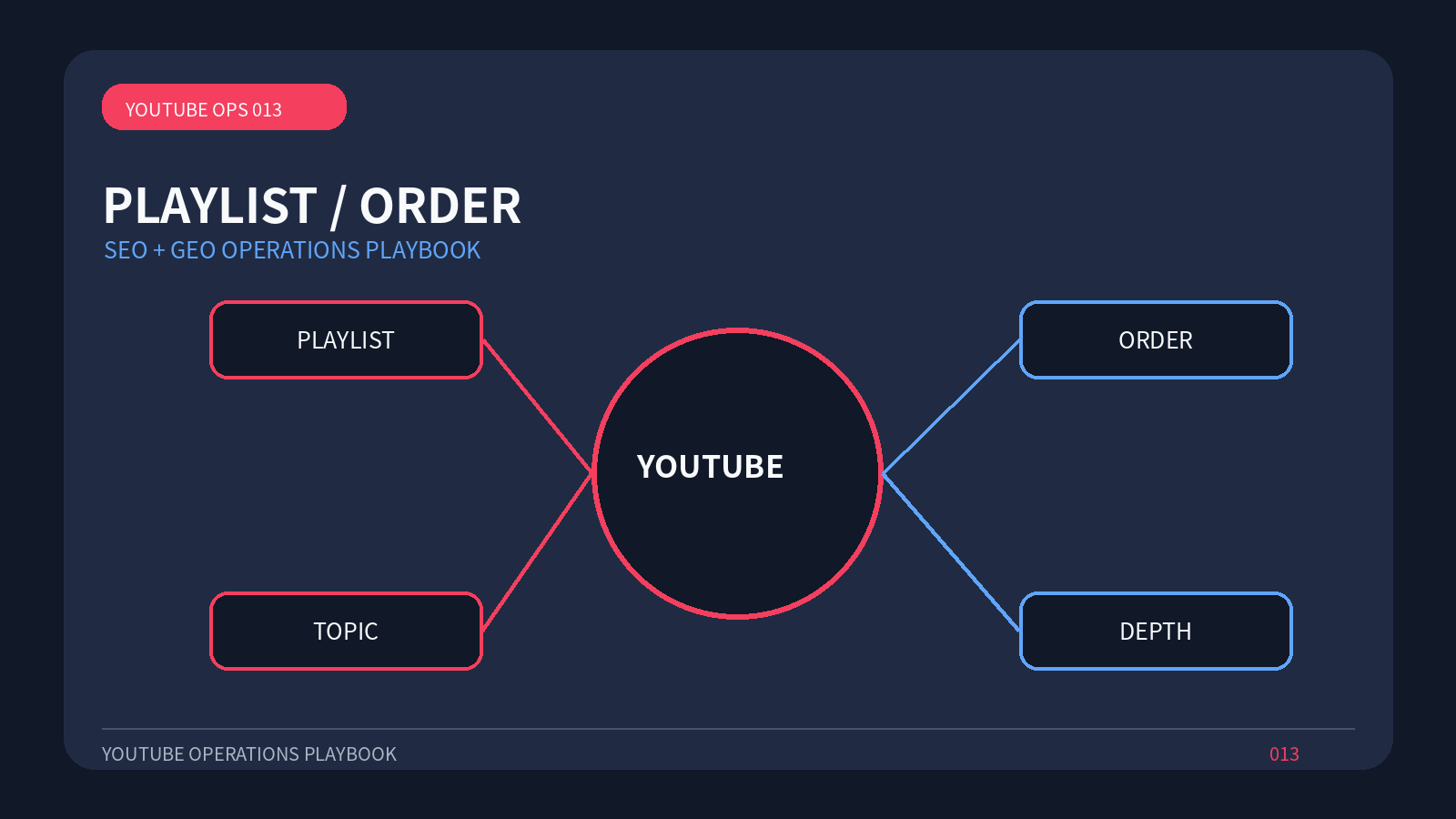
Playlists do not indicate the theme and the order of viewing if they are only internal. When the sample is small, the deviation is magnified by occasional fluctuations in a single video.
The public description of the search and discovery by YouTube highlights the system’s desire to find for the audience what they are willing to see and satisfied with; search matching, viewing behaviour and personalization need to be understood together and cannot be reduced to a mysterious weight.
Write an action as a tickable checker: Name it with a user question, sequence it from base to depth, and remove irrelevant or duplicate video. Each completed entry should correspond to the file, image, text or background record.
Videos, subtitles and web pages should have a consistent entity name, but do not need to be copied word for word.
If the flow is contrary to the direction of the business signal, priority should be given to matching the audience.
The disc ultimately answers two specific questions: whether to “start, watch, exit and search for access to the watch list” and whether to “plug all videos into multiple approximation lists, which may cause confusion.” The former decides whether to continue with the input, while the latter decides whether to suspend or correct.
The same taskcard should be used for team work.
Without this information, it is difficult for follow-up staff to judge whether the content is still available.
The scope of application must be made public, as it can cause confusion in maintaining all videos in several approximation lists.