
The annual plan should be based on operational objectives and website constraints, not on the number of 100 keywords and texts. It should be pursued only at one end, often with a ranking without question or a transformation page without natural exposure.
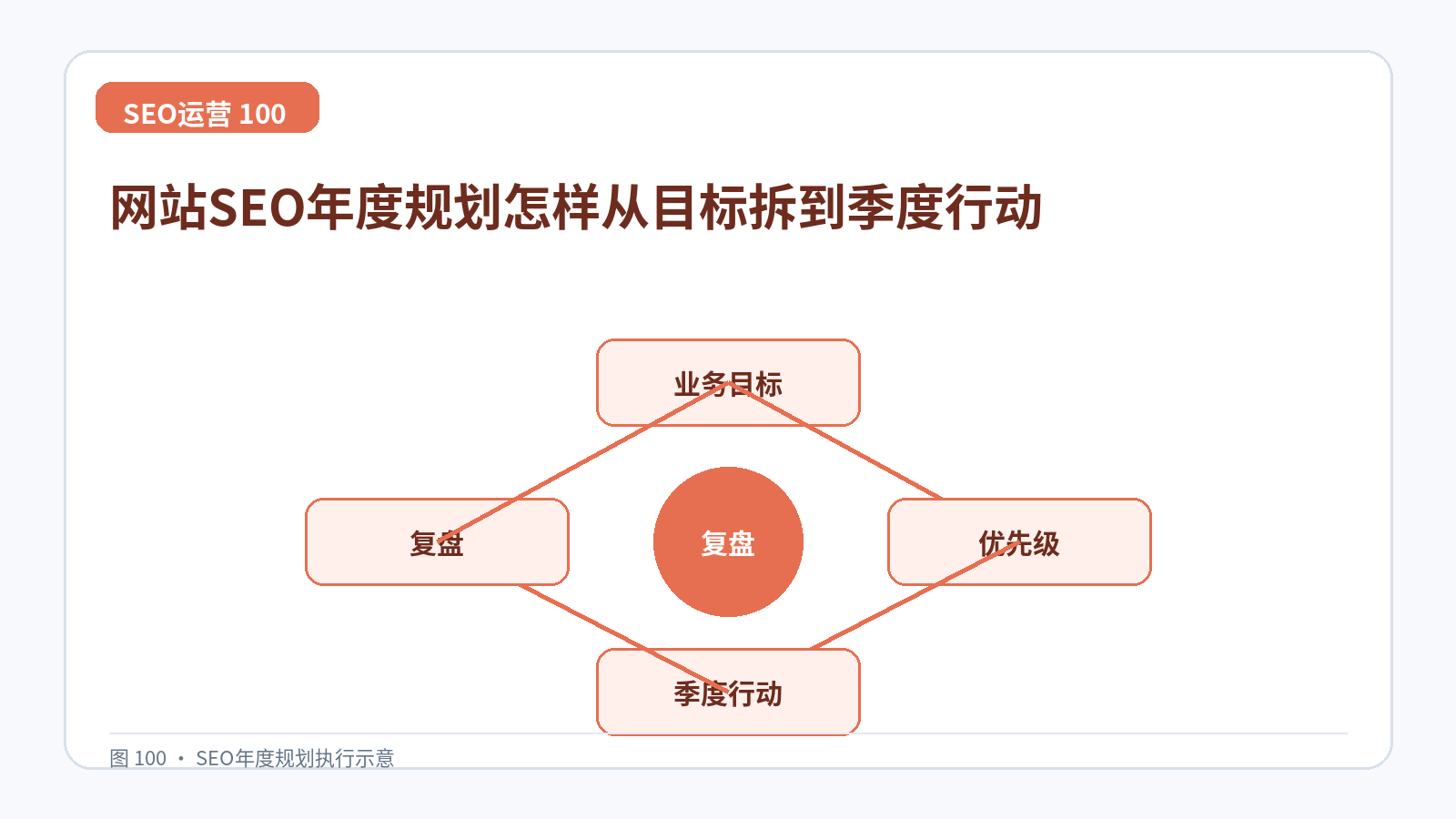
Technically, the technology base, content assets, market demand and content are to be prioritized together with the technical capacity.
The implementation option is to establish non-branding opportunities, qualified information boards and technical health goals, and then to keep the pilot and downtime budgets on a quarterly basis by impact, confidence, and cost.
The monthly round-up lead indicator, the final performance and assumptions of the quarterly round-ups allow for the discontinuation of invalid projects and the realignment of resources.
Locking the whole year plan will ignore algorithms, products and market changes, and only the target of the flow can easily deviate from income. Therefore, SEO executives, content editors, and business people should reset together, using real search terms and client feedback to decide on the next round of updates, rather than simply continuing to add text as recommended by the tool.
At the maintenance level, SEO annual planning can be selected on a quarterly basis: randomly selects old and new business pages, checking that configuration, text, links, and data are still consistent with current operations. Search rules and product information will change, and the correct business pages will need to be clearly updated.
In order to prevent the conclusion from remaining in the report, it is recommended that the operational objectives and the duplicates be issued as acceptances and that the anomalies be analysed by whom and for how long. This way, the new business page follows the same standard and the old business page can be detected in a timely manner after the template changes.



