
A small web site dealing with “how a company creates a governance process for SEO content releases” does not need to replicate complex systems of large platforms. Addressing the absence of role and acceptance criteria first makes keywords, facts, links and technical fields easily lost in delivery, matching the top 10 to 20 business pages, often more effective than deploying a set of expensive tools.
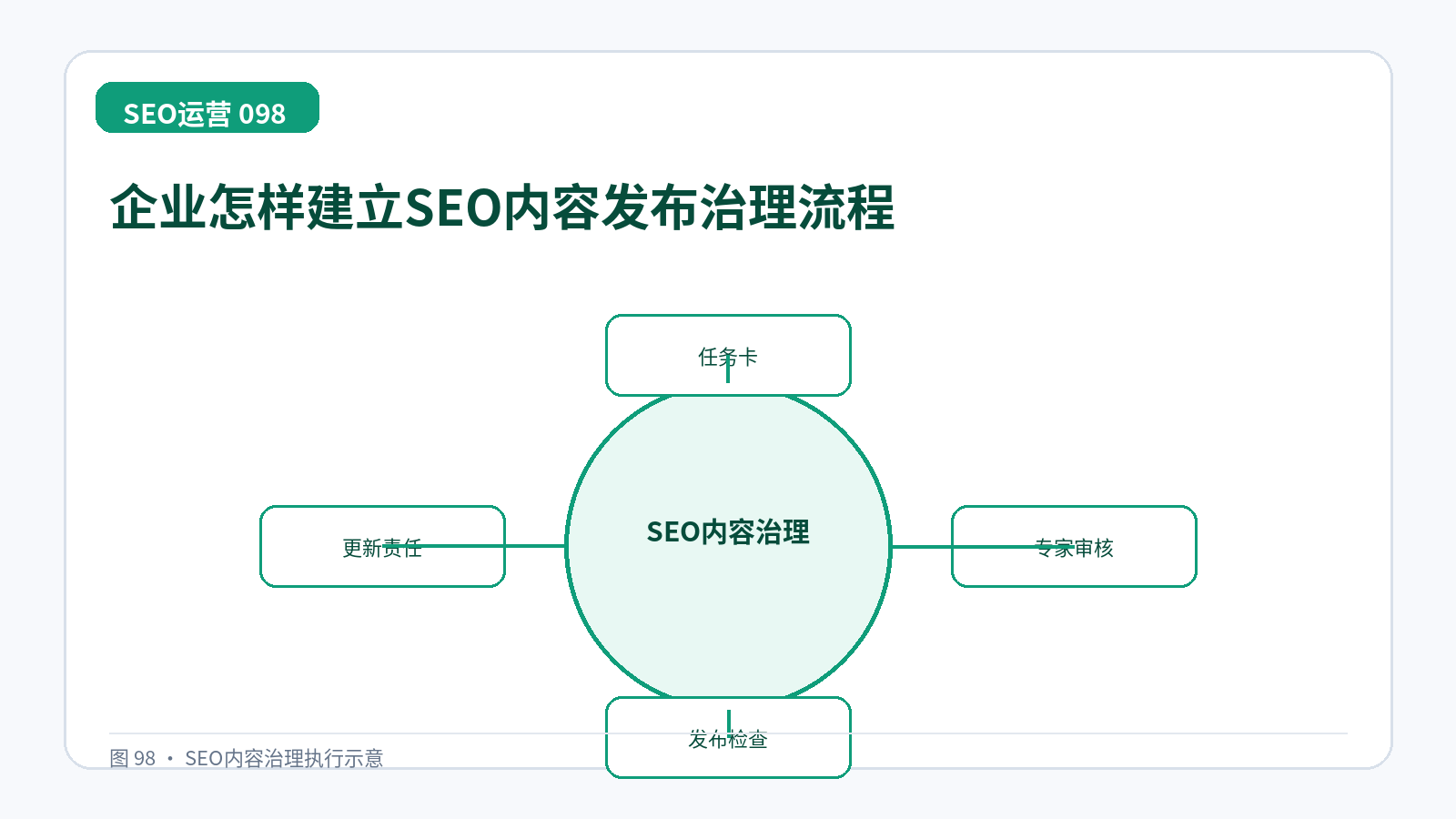
The lowest feasible criteria are derived from this rationale: governance requires that research, writing, expert clearance, SEO cross-certification, release, and rediscretion be linked to a traceable process. As long as URLs, content, links, and status signals are consistent, they will be automated; if the underlying relationships are confused, the tool will only produce more errors more quickly.
This can be done manually first: create a taskcard for each content, specify the target user, the main issue, the source, the responsible person, the reviewer, the standard URL and the update date, and automatically cross-check the key fields before they are published. When the number of business pages increases, then repeat steps into CMS fields, template tests and time monitoring, so as to avoid relying on personal memory for each release.
Statistics on the final performance of the business as a result of the return, the start-up cycle, the error rate, the rate of completion of the update and the content. Validation is passed and extended to the next business page. Care needs to be taken to use only one key word list, which separates writing from business evidence.
If content and technical resources are limited, this method is first used to generate a Query or to take on a key navigation business page. The cross-certification of experts can be carried out steadily, and then extended to the low-flow directory to avoid cross-certifications that are too extensive and unprocessed.
User feedback is also included in the SEO analysis. The search data indicates whether the business page was found, but does not fully explain whether the answer is clear; this can be supplemented by client service questions, form content and sales to form change orders that allow the SEO content to optimize back to real demand.
At the maintenance level, SEO content governance can be included in a quarterly spot-check: randomly selecting old and new business pages, checking whether configurations, text, links, and data are still consistent with current operations. Search rules and product information will change, and the correct business pages will need to be clearly updated.



