A common SEO accident is that SEO executives have “optimized” and content assets can be opened, but the search performance has deteriorated. On the risk point of “the sudden drop in natural search traffic should be traced in order”, the common cause is that the drop in traffic may come from technical malfunctions, algorithm changes, demand seasons, manual measures, or statement configurations.
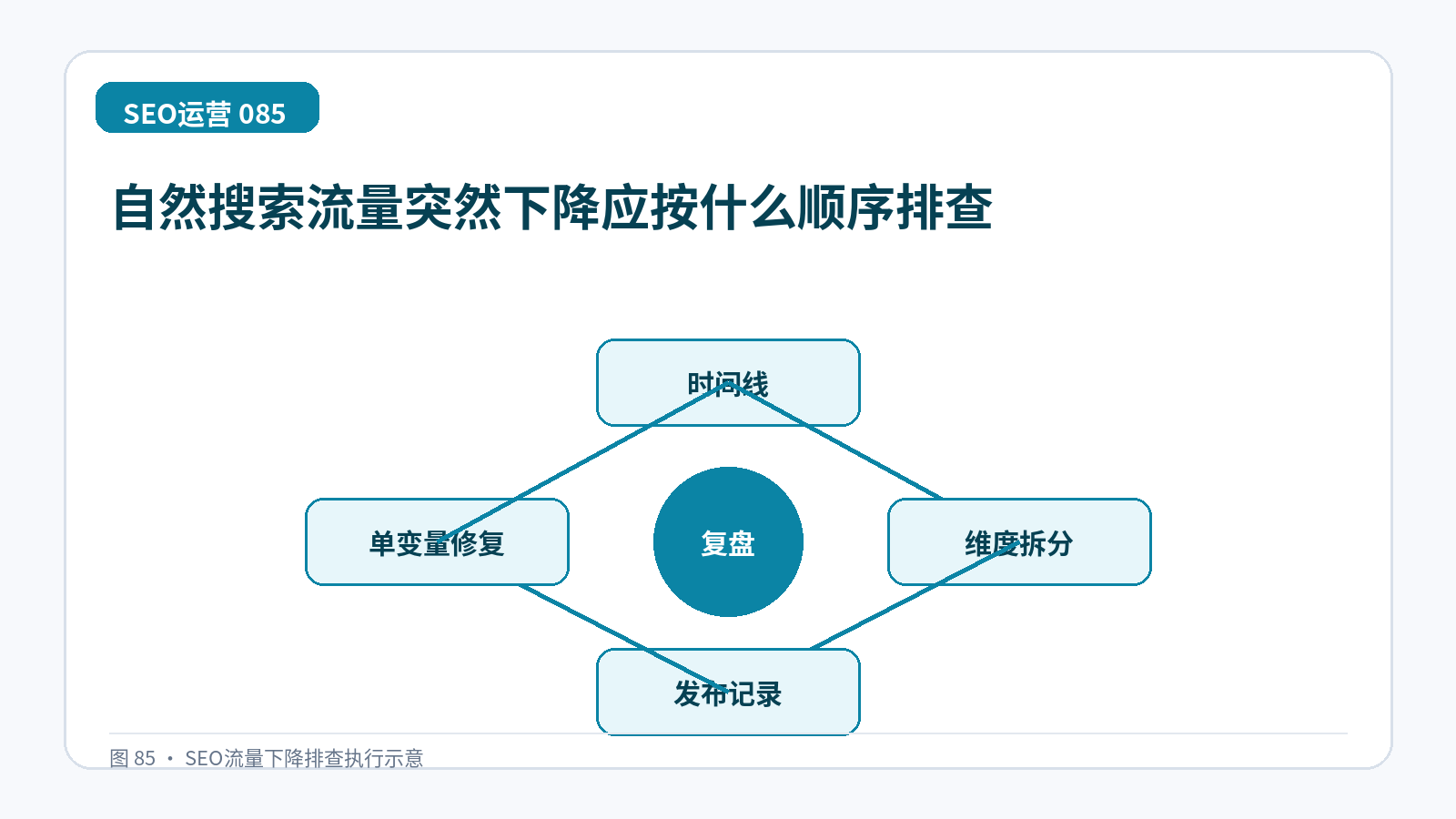
The check goes back to the principle: first, to determine the time, scope and dimensions, and then to avoid any immediate major change in content based on the evidence. Compares the content assets that the browser sees, the HTML that is captured, the server status and the links on the site, usually finding the cause faster than repeated changes to keywords.
The restoration programme is to check the status of the tracking and server, view the Search Console messages and indexes, divide the items by content asset, query, country, equipment, and maintain evidence against the system status and official go-live. Prioritize the restoration of high-flow, high-transformation and critical extra-chain URLs before processing long-end assets; each batch retains a modified retention evidence and a rolled-back version.
Retain the baseline and validate it on a case-by-case basis; observe the complete capture and business cycle after recovery. If changes are observed only on a single day, do not rush to declare success, as retakes, index updates and needs fluctuations take different time.
It must be clear that changing the title, template, inner chain and content at the same time can undermine the cause-and-effect judgment, or may increase the loss. Translating the cause of the accident into a formal pre-on-line automatic technical review and manual sampling is more reliable than relying on someone to remember lessons.
At the maintenance level, the “SEO traffic down-check” can be added to the quarterly spot-check: randomly selecting new and old content assets, checking that configurations, text, links, and data are still consistent with current operations. Search rules and product information will change, and the right content asset will need to be clearly updated with the responsible person.
In order to prevent the conclusion from remaining in the report, it is recommended that the time line and single variables be repaired into a formal up-line receipt and acceptance item, and that the abnormality be judged by whom and how long it will be repaired. This way, the new content asset follows the same standard and the old content asset can be discovered in a timely manner after the template changes.