
A small website dealing with “how professional terms and entity information can help to search for an understanding of the target page” does not need to replicate complex systems of large platforms. First, it addresses the possible abbreviations, models, trade names and top-down relationships of the same object. The target page needs to be clearly linked, with the most important 10 to 20 target pages paired, often more effective than the deployment of an expensive set of tools.
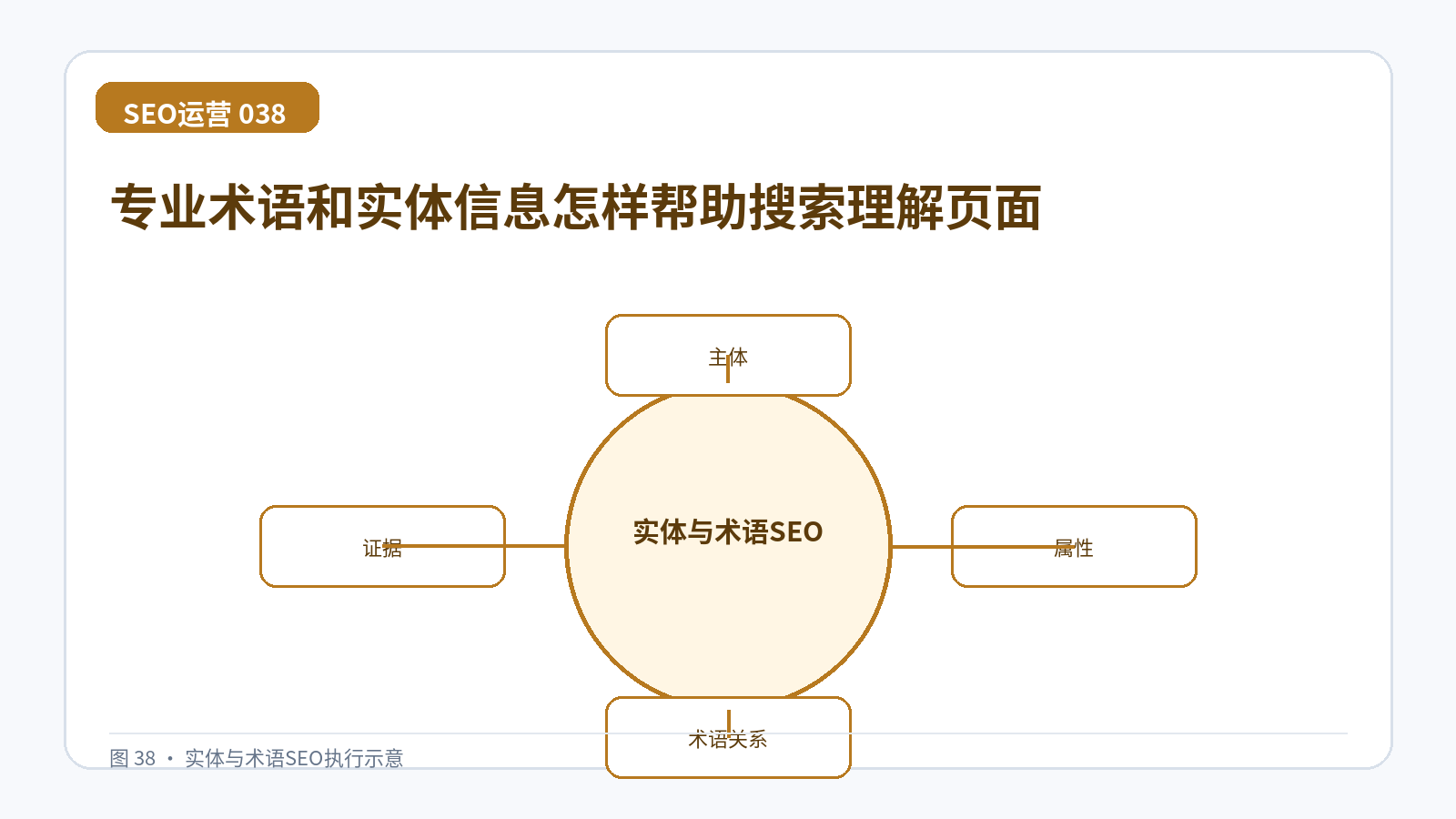
The minimum feasible criteria are derived from this principle: natural descriptions of subjects, attributes, uses, objects and evidence are more likely to reduce ambiguity than the repetition of core keywords. As long as URLs, content, links and status signals are consistent, automation will be added; if the underlying relationships are confused, tools will only produce more errors more quickly.
This can be done manually first: full names and abbreviations are given at the time of first appearance, with consistent product designations, links to authoritative standards and station-defined pages, and structured data only mark the facts. When the number of target pages increases, repeated steps are written into CMS fields, templates testing and time monitoring, so that each input is not dependent on individual memory.
Reviewing the growth of brands, products, and problem group queries and whether the client service reduces conceptual misperceptions. Validation is then extended to the next target page. Care needs to be taken that listing irrelevant terms or a hidden vocabulary for “entity optimization” reduces readability and does not really help.
If the implementation team has limited resources, use this method first on target pages that can generate Queries or take on important navigation. The same attributes and terminological relationships can be steadily passed and then extended to the low-flow catalogue, avoiding over-impact reviews and unprocessed results.
User feedback is also included in the SEO judgement. The search data indicates whether the target page is found, but does not fully explain whether the answer is clear; client questions, form content and sales retention can complement this and allow entities and the term SEO to optimize back to real needs.