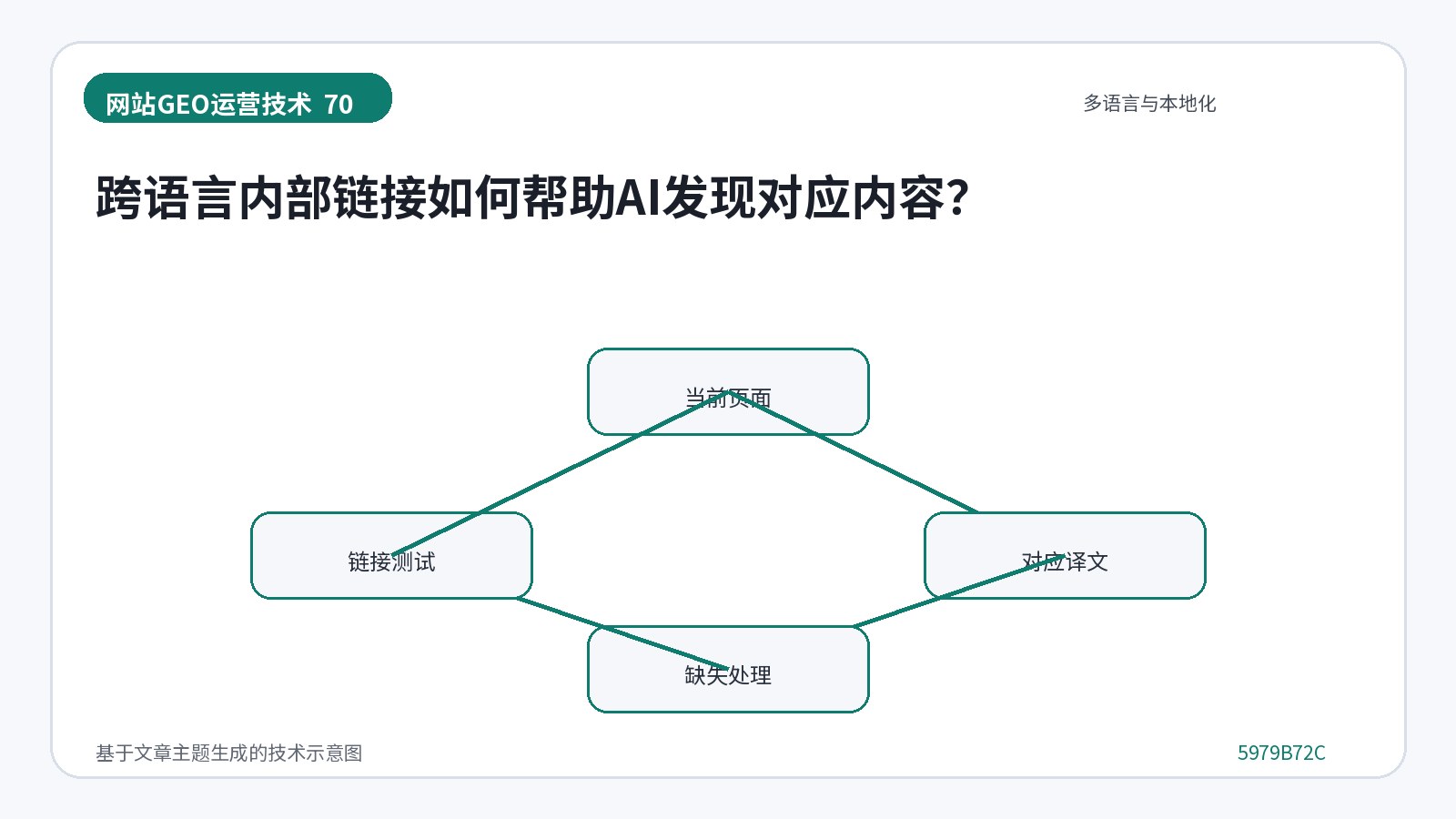
The focus of this paper is not on seeking a cut-off of the answers, but on creating a technical process that can be repeated and continuously updated. Around "How does the inter-linguistic link help AI find the corresponding content? " , the first step is to help AI find the corresponding content back to the full process of "multilingual and localized". The inter-linguistic link should bring the user back to the corresponding version of the same subject; in the absence of a translation, it is clear that the main language page can be returned, rather than automatically jumping to an unrelated page. This means that the page needs to both draw clear conclusions to the user and allow the grabper to access the same information and to keep the source, condition and update time.
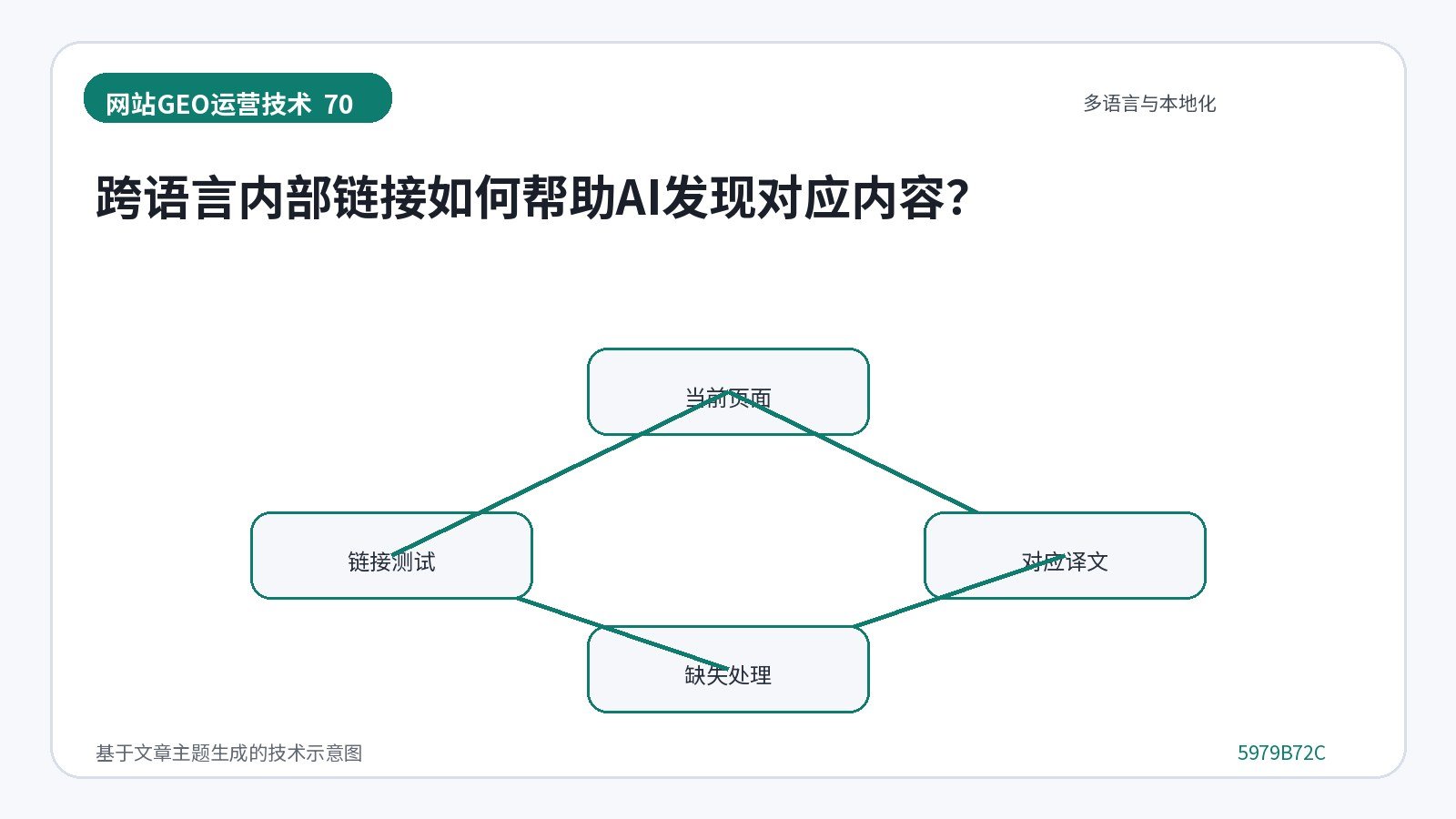
The focus of the multilingual GEO is to make each language version both stand-alone and capable of being identified as a corresponding version of the same brand or content. Localization must reflect differences in markets, units, regulations and procurement practices. A qualified delivery should allow new members to repeat themselves: he can find input, see changes in records, perform checks and understand why they continue or stop.
The action is written in CMS and the operation process, not only in the minutes of the meeting. First, the corresponding page map is created, then the real target URL is used in the language switcher, and then verified by checking the missing translation and re-direction and setting the next review date. For example, an existing B2B page is kept in the old version, only “the real target URL is used in the language switcher” is adjusted, and the rest remains unchanged. If improved access and reference are not changed but the valid query is not changed, it is also necessary to check the page and the sales acceptance, rather than to continue adding articles.
The observation calibration must be fixed. Page-by-page testing of the status code, the subject correspond and the user's exit.
The common return is not a tool set-up error, but a forced jump in browser language prevents users and reptiles from accessing other versions. The solution is to anchor critical judgement into the release of a checklist and to have the reviewers sign to confirm it. Any unproven conclusion should be changed to a conditional recommendation and no speculation should be written as a fact for marketing purposes.