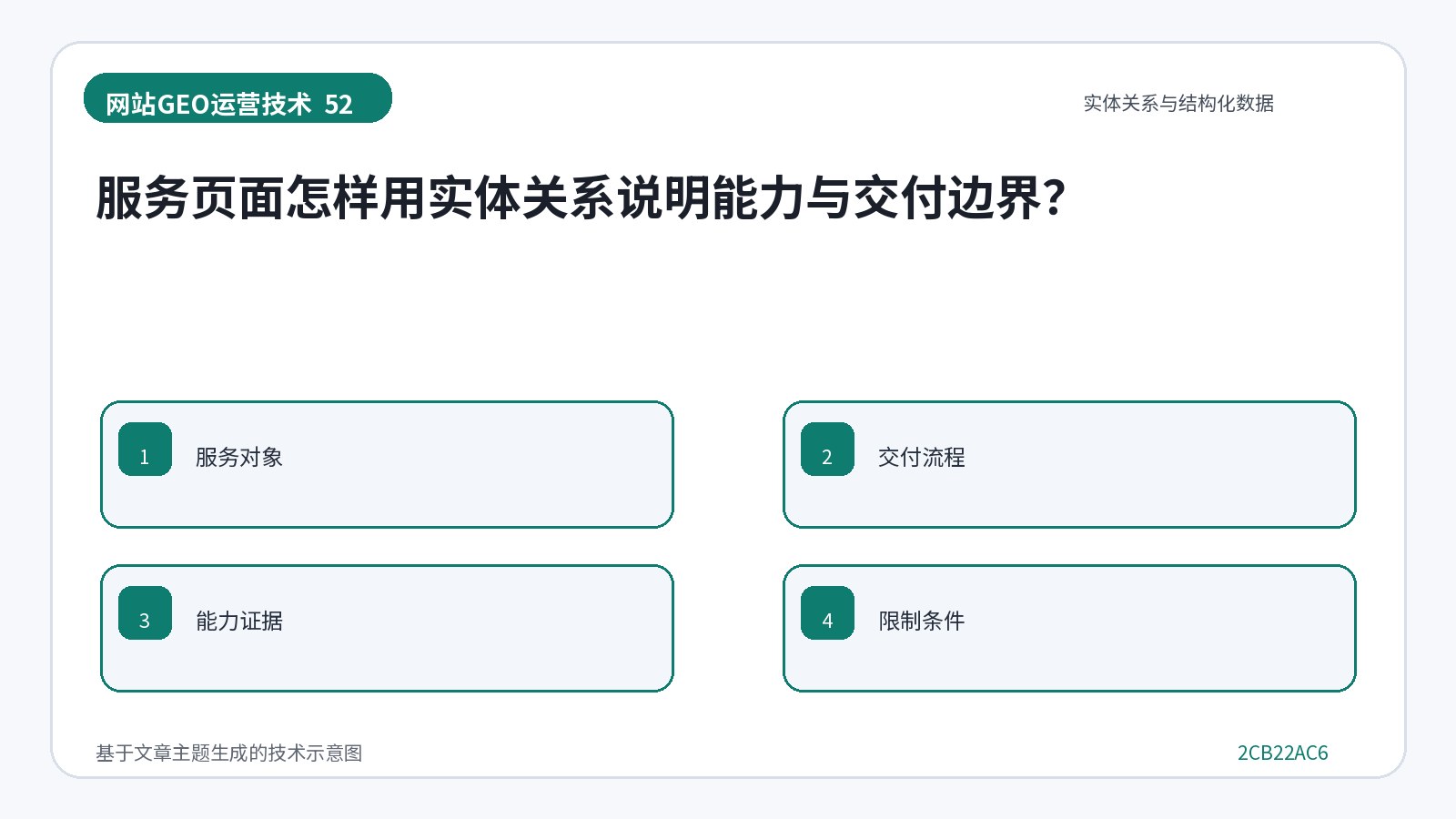
This issue does not fit the fixed configuration of all websites, and the correct approach depends on the range of pages, target markets, data sources, and businesses that can be maintained over time. Around “how does the service page describe capacity and delivery boundaries by physical relationship?” The first step is to judge the service page by placing capacity and delivery boundaries back in the complete process of “entity relationship and structured data”. The service entity page should indicate the provider, object, process, input, output, service area and non-inclusion. The more specific the description of capacity, the less the answer system is going to overwhelm the enterprise. This means that the page requires both clear conclusions for the user and access to the same information, and retention of source, condition and update time.
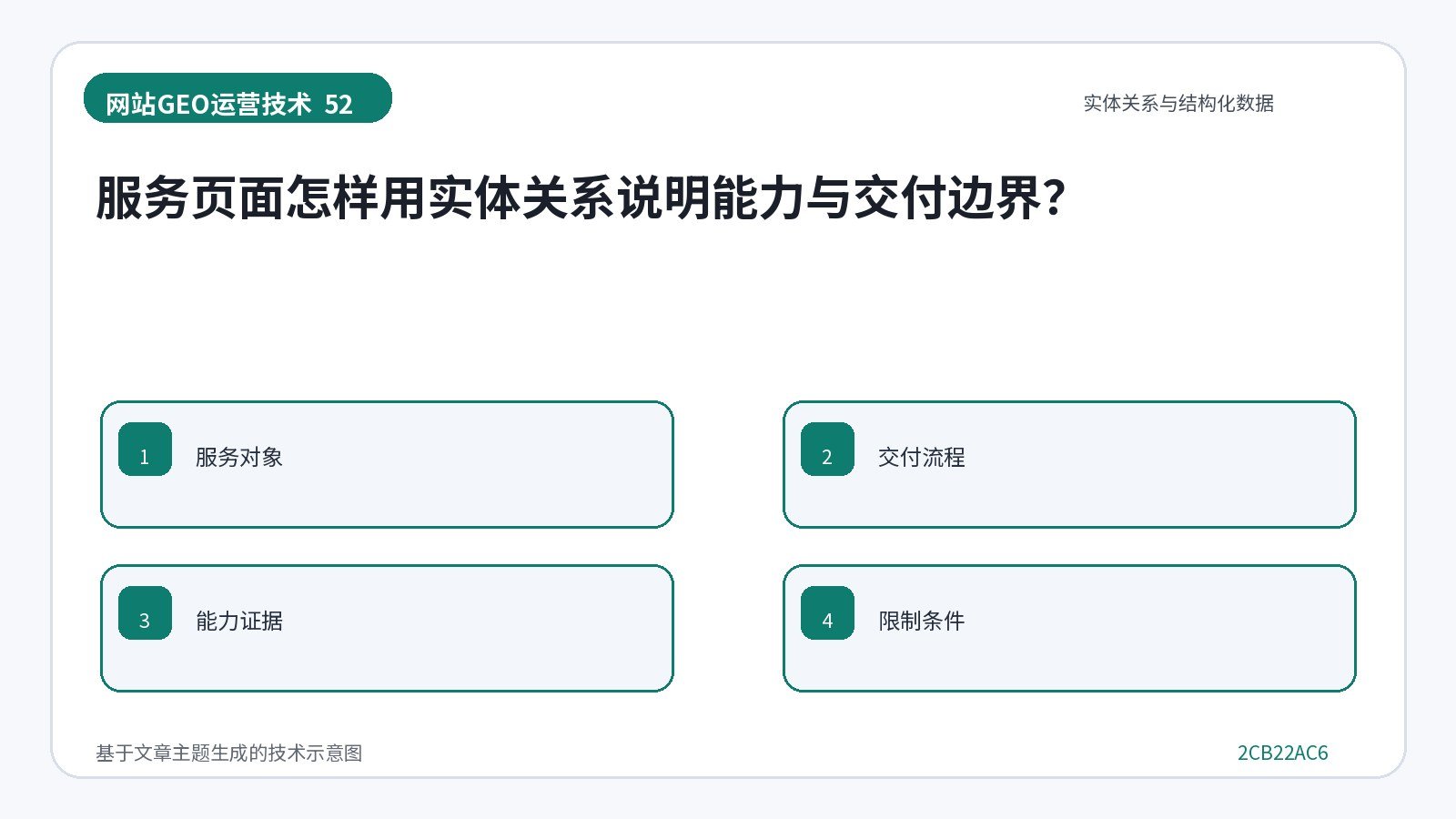
The role of structured data is to identify the entities and attributes of the page and help to obtain the appropriate search display; it does not replace the text, nor does it have a Schema that specifically guarantees access to the generated answers. Different nodes should establish a true relationship by stabilizing the ID. For example, on an existing B2B page, the old version should be retained, and only the “description of the application of the client and the limits” would be adjusted, and the rest would remain unchanged. If the search and reference are improved but the valid queries remain unchanged, the page will also need to be checked for acceptance with the sales, rather than continuing to add articles.
It is recommended that the work be broken down into three paragraphs for preparation, on-line and review. The list of service inputs and deliveries is completed at the preparatory stage, the implementation of instructions for client and restrictions at the online stage, and the implementation of case and team pages at the review stage to provide evidence.
The subject requires data to be created in conjunction with manual checks. Checking whether the client understands the scope of the service in an accurate way. If there is an increase in the number of people, but the citation is wrong, or the quality of the clue is reduced, it should be considered a failure, rather than a total exposure to cover up the problem.