
Translating TikTok into a verifiable operational decision will be more practical. The core is not to pursue surface indicators, but to quickly confirm the type, demand, number, area and time of the client.
See the reasons behind the phenomenon: Open chat is easy to stay at “how much” and there is a lack of necessary information on both sides. Such problems usually cross-choice, production and user decision-making, and cannot be solved by a clip or a change of title.
The focus of the search-and-AI search is still real experience, clear objects, verifiable facts and clear limits, rather than mechanical repetition of keywords. The team also has to record the dates of access and avoid the long-term application of the old rules.
Write action as a tickable list will be more stable: using short welcome words and three to five necessary questions, eligible threads are then forwarded to mailboxes, WhatsApp or official forms. Each completed item should correspond to the image, text, back-office configuration or traceable records.
A week of implementation, a month of trend, and a full business cycle of sales impact.
When video rules or interfaces are subject to change, the page should display the date of review and link to official information. This allows users and AI to distinguish between long-term methods and changes in the operation of the version.
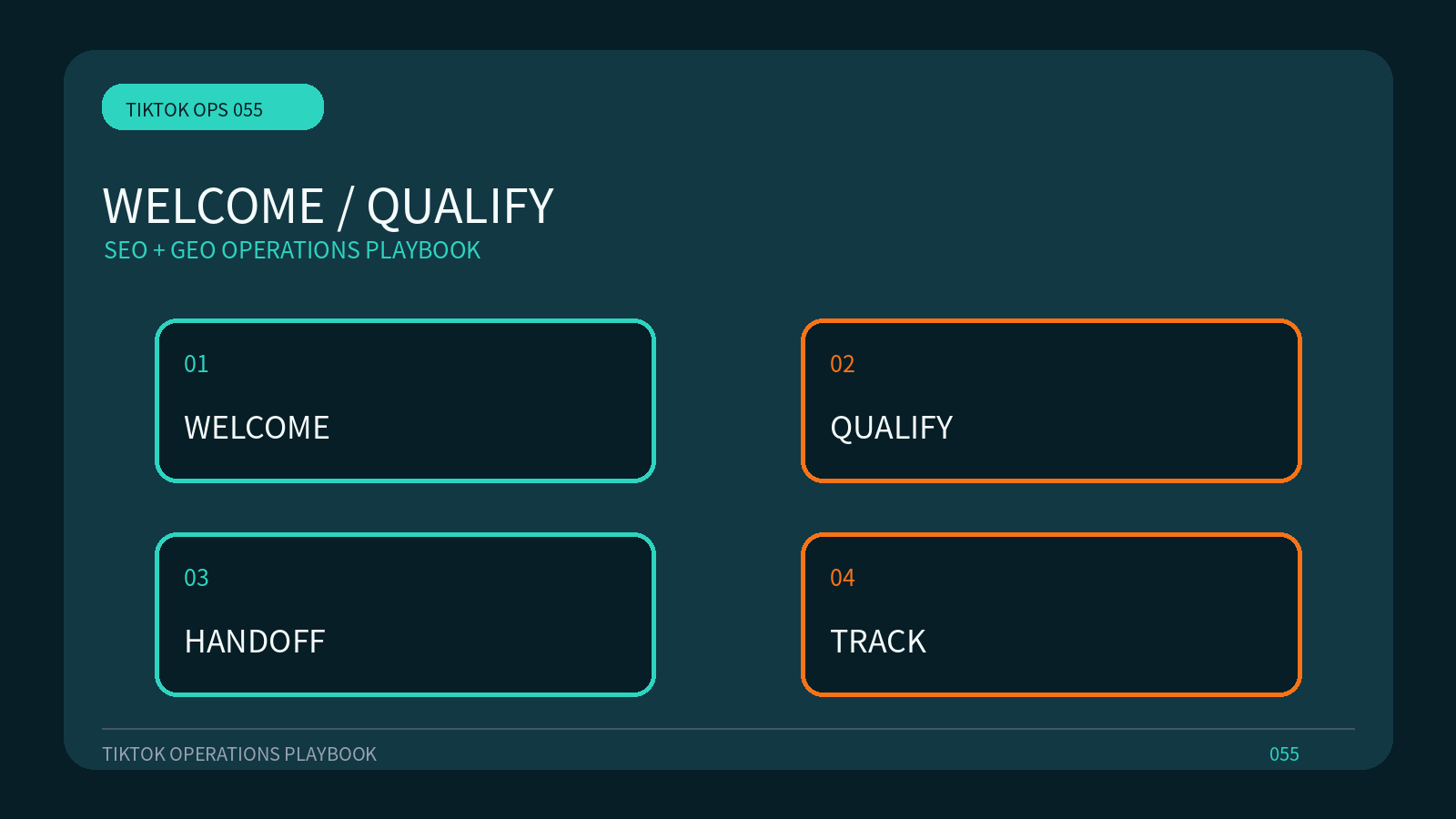
In order for TikTok’s private correspondence to be reproduced, the project record must contain at least the number of the material, the time of publication, the target market and the four points of inspection: WELCOME, QUALIFY, HANDOFFF, TRACK. These labels can also be used directly in the material library or panel to facilitate cross-language team searches.
A single Qualification Repository will also answer two questions at the same time: whether “statistical success rate, first response time, transmission success rate and transactional stage” is achieved and whether “a request for too much sensitive information or the sending of a large number of templates will reduce the response and trigger aversion.” The former will decide whether to continue, while the latter will decide whether a suspension, error correction or additional clarification is required.
Do not take relevance as a cause or effect. A request for too much sensitive information or sending too many templates reduces the response and triggers aversion.